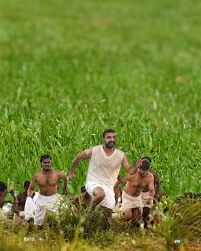
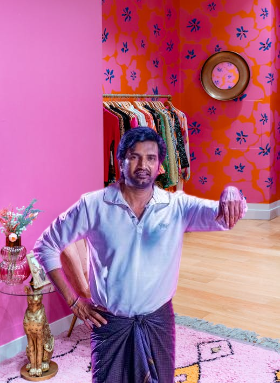
Varavu Joju George Movie 2026 Movierulez Review Details
⏱️ 5 Min Read 🛡️ Trade Verified (May 18, 2026) 📊 Box Office Hub Join Our Telegram Channel 🎬 Exclusive Movie Reviews & Daily Amazon Deals Connect Now 🛡️ 100% Legit Content: Reviews & Affiliate Offers only. Zero piracy or unauthorized downloads. Varavu Joju George Review – A Taut Revenge Thriller or Just Another Mass-Baiting…
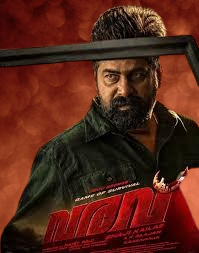
Varavu Joju George Review – A Taut Revenge Thriller or Just Another Mass-Baiting Flick? The Real Analysis
Having sat through countless Malayalam revenge dramas, I approached Varavu with measured expectations. When a film credits eleven stunt coordinators, you brace for spectacle over substance.
But Shaji Kailas and Joju George attempt something more nuanced—a tightrope walk between gritty realism and mass-market catharsis. Does it succeed? Let’s dissect.
The Conflict In One Breath
Paulson, a man fresh out on parole, returns to his Malabar hometown with a singular mission: settle the score that put him behind bars. The local power structures—political muscle, land mafia, corrupt officials—sense the threat and retaliate.
Paulson doesn’t come for redemption; he comes for wreckage.
Main Cast & Crew
| Role | Name |
|---|---|
| Director | Shaji Kailas |
| Paulson (Lead) | Joju George |
| Supporting Cast | Arjun Ashokan, Murali Gopy |
| Supporting Cast | Baiju Santhosh, Baburaj, Vani Viswanath |
| Music & BGM | Sam CS |
| Cinematography | S. Saravanan |
| Editor | Shameer Muhammed |
| Sound Design | Rajakrishnan MR |
| Stunt Choreography | Stunt Silva & Team |
| VFX | Pictorial FX, Dotvfxstudios |
| Lyricists | Vinayak Sasikumar, Harinarayanan |
Who Is This Movie For?
This is aimed squarely at viewers who crave grounded, male-driven revenge narratives with a hard R-rated edge. If you appreciated Joseph or Jallikattu for their raw atmosphere, you are the target.

This is not for families seeking light entertainment—the violence is visceral, the moral landscape is murky, and the pacing deliberately slow-burn.
Script Analysis: The Weight of the Familiar
The screenplay by A. K. Sajan walks a well-worn path—wronged man returns, enemies unite, violence escalates. The first act is methodical to a fault; too much time establishing Malabar geography and not enough on character interiority.
The middle act tightens considerably once Paulson begins dismantling the network. The logic holds, but the beats are predictable. The film earns its two-and-a-half-hour runtime only through the sheer craft of its execution, not narrative innovation.
Character Arcs: Paulson’s Quiet Wreckage
Joju George underplays magnificently. He doesn’t deliver monologues; he lets the silences speak. Paulson’s arc is not about growth—it is about unveiling.
He arrives fully formed as a weapon; the film strips away layers to reveal the wound. The supporting characters—Murali Gopy’s bureaucrat, Arjun Ashokan’s conflicted ally—serve as mirrors, not fully realized journeys.
This limits emotional depth but keeps the focus razor-sharp.
The Climax: Catharsis With a Price
The final confrontation is a symphony of controlled chaos. Staged in a rain-soaked market-set, the choreography is brutal and coherent—no shaky cam obfuscation.
The emotional payoff hinges on a single choice Paulson makes in the final frame. It satisfies on a visceral level, but the resolution is deliberately ambiguous, refusing the easy moral high ground.
You leave unsettled, not cleansed.
Screenplay Highs & Lows
| What Worked | What Didn’t |
|---|---|
| Joju’s restrained, magnetic presence | Overlong first act establishing shots |
| Brutal, coherent action staging | Predictable revenge trope progression |
| Supporting cast (Murali Gopy, Baiju) | Underwritten female characters |
| Tension escalation in second half | Dialogues occasionally overwritten |
| Sound design — every punch lands | Flashback structure feels rushed |
Writer’s Execution: Dialogue That Cuts or Muddles?
A. K. Sajan’s dialogues are sharp when they need to be—threats delivered in quiet register, confrontations built on subtext rather than shouting. But there are moments of exposition-heavy speechifying where characters explain motivations we already inferred.
The balance tips toward effective minimalism in the second half. The best lines are the ones Joju delivers without speaking—a look, a pause, a deliberate slow walk.
Miss vs. Hit Factors
Hit: The technical unification of sound and image. Sam CS’s percussive score and Rajakrishnan MR’s sound design create an almost tactile experience—you feel every impact.

The cinematography by S. Saravanan uses wide frames to isolate Paulson, making him a lone figure against a chaotic backdrop.
Miss: The film hedges its bets. It wants to be a gritty character study and a mass-action film. This leads to tonal whiplash—one scene is uncomfortably real, the next veers toward hero worship. The music cues sometimes betray the mood, swelling too early.
Hit: Practical stunts. In an era of CGI-heavy action, Varavu commits to real bodies in real space. The eleven stunt coordinators earn their paycheck—there is no cheating the impact.
Technical Brilliance: Where Craft Meets Vision
Sam CS delivers his most textured score since Vikram Vedha. The BGM uses a recurring leitmotif for Paulson—a low, pulsing synth that grows aggressive as his rage surfaces.
Editing by Shameer Muhammed is patient; he lets scenes breathe in the first act, then cuts with surgical precision during action beats. The VFX (Pictorial FX and Dotvfxstudios) are invisible—used for blood enhancement and environment clean-up, never decorative.
This is functional, high-quality filmmaking.

Story vs. Visuals
| Aspect | Rating / Comment |
|---|---|
| Narrative Originality | 6/10 — Familiar but solidly executed |
| Character Depth | 7/10 — Lead strong, supporting thin |
| Cinematography | 8/10 — Expansive, moody, purposeful |
| Music & BGM Impact | 8.5/10 — Elevates tension significantly |
| Action Choreography | 9/10 — Practical, brutal, clear |
| Pacing (Act-wise) | 7/10 — Slow start, gripping finish |
| Emotional Payoff | 7.5/10 — Satisfying but not cathartic |
Frequently Asked Questions
1. Is the ending truly ambiguous or is there a hidden resolution?
The ending shows Paulson walking away after a decisive confrontation, but his fate—legal consequences, moral cost—remains open.
It is deliberate ambiguity, not a cliffhanger. The film trusts the audience to read the silence.
2. Does the film address the original crime that imprisoned Paulson?
Yes, through fragmented flashbacks. The crime is revealed to be a murder, but the circumstances were manipulated by the antagonists. The full reveal arrives at the midpoint, shifting the moral calculus.
3. Are there any sequel hooks or unresolved subplots?
One supporting character—a young journalist played by Vincy Aloshious—gets a final shot that suggests her own investigation continues. It is subtle, not a hard setup, but leaves the door ajar.
This analysis is based on the theatrical experience and cinematic merit.
Was this trade analysis helpful?
Your feedback helps Movierullz editors maintain trade database integrity.