Toaster Movie 2026 Movierulez Review Details
⏱️ 5 Min Read 🛡️ Trade Verified (Apr 14, 2026) 📊 Box Office Hub Join Our Telegram Channel 🎬 Exclusive Movie Reviews & Daily Amazon Deals Connect Now 🛡️ 100% Legit Content: Reviews & Affiliate Offers only. Zero piracy or unauthorized downloads. Toaster (2026) Review – A Brilliantly Absurd Tragedy or a Half-Baked Idea? The…
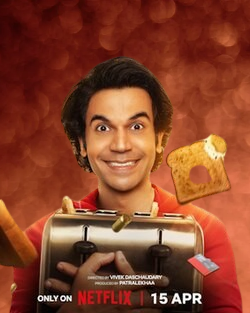
Toaster (2026) Review – A Brilliantly Absurd Tragedy or a Half-Baked Idea? The Real Analysis
Can a kitchen appliance truly become the MacGuffin for a man’s undoing? As a critic who has seen countless films about obsession, from *Citizen Kane*’s “Rosebud” to more modern fixations, *Toaster* presents a uniquely Indian, middle-class brand of madness that is both hilarious and deeply unsettling.
The Core Conflict: A Gift That Keeps on Taking
Ramakant (Rajkummar Rao), a man whose frugality is a psychological condition, gifts an absurdly expensive toaster at a wedding. When the marriage is abruptly annulled, his desperate, escalating quest to retrieve this symbol of wasted money spirals into a chaotic murder investigation, dragging his weary wife Sanya (Sanya Malhotra) and a host of eccentric characters into a web of lies and petty crime.
| Role | Name |
|---|---|
| Director | Vivek Daschaudhary |
| Writers | Akshat Ghildial, Anagh Mukherjee, Parveez Shaikh |
| Ramakant | Rajkummar Rao |
| Sanya | Sanya Malhotra |
| Teashop Detective | Abhishek Banerjee |
| Nosy Aunt | Farah Khan (Cameo) |
| Music Composer | Aman Pant |
Who Is This Movie For?
This film is a perfect match for audiences who relish character-driven black comedies in the vein of *The White Lotus* or early Coen Brothers. It’s for viewers who find humour in human folly and appreciate Rajkummar Rao’s genius for portraying deeply flawed, yet oddly relatable, individuals.
If your taste leans towards high-concept, plot-heavy spectacles, this tightly wound domestic thriller might feel too contained.
Script Analysis: The Tightrope of Tone
The screenplay’s greatest strength is its unwavering commitment to a ludicrous premise. The writers understand that the comedy must stem from absolute sincerity; Ramakant’s world-ending despair over a toaster is played not for broad laughs, but with a tragic gravity.

The first act is a masterclass in setup, efficiently establishing his pathology. However, the middle act stumbles as it attempts to pivot into a genuine whodunnit.
The plot mechanics of the murder feel grafted on, a necessary concession to genre that slightly betrays the more interesting study of a crumbling marriage under the weight of obsession.
Character Arcs: From Obsession to Hollow Resolution
Ramakant’s arc is less about growth and more about exhaustion. Rao brilliantly charts a descent from anxious calculation to hollow-eyed mania. The revelation of a childhood trauma linked to a kitchen fire is a poignant, if slightly convenient, key to his psyche.
The true, subtle arc belongs to Sanya. Malhotra delivers a performance of quiet devastation, her journey from embarrassed compliance to weary defiance forming the film’s emotional backbone.
Her final, silent stare at the retrieved toaster speaks volumes about the cost of her husband’s fixation.
The Climax Impact: An Anti-Climax That Works
The climax is deliberately, brilliantly unsatisfying in a narrative sense—and that’s the point. The murder is solved through coincidence, underscoring the absurdity of the entire ordeal.

The true resolution is emotional: the toaster, now a cursed object, sits unused on the counter. Ramakant and Sanya’s shared silence in its presence is more powerful than any dramatic confession.
It’s a climax of realization, not action, and it lands with a profound, melancholic thud.
| What Worked | What Didn’t |
|---|---|
| The bold, committed premise. | The undercooked murder-mystery plot. |
| Rao & Malhotra’s central dynamic. | Pacing wobbles in the second act. |
| Sharp, satirical view of middle-class value. | The core gag risks overextension. |
| The superb, chaotic supporting cast. | Limited cultural impact as a streaming-only release. |
Writer’s Execution: Dialogue as a Diagnostic Tool
The dialogue is the film’s secret weapon. It functions as a diagnostic tool for Ramakant’s mind, where every conversation is subtly hijacked into a cost-benefit analysis.
His exchanges are littered with transactional language, even when discussing love or family. The supporting characters speak in a heightened, gossipy vernacular that perfectly builds the film’s claustrophobic social ecosystem.
The writers avoid easy punchlines, finding humour in the grim seriousness of trivialities.
Miss vs Hit Factors: A Delicate Balance
The hit factor is unequivocally Rajkummar Rao. He is the engine that makes this improbable vehicle not only run but soar. His performance validates the entire conceit.

The major miss is the film’s inability to fully integrate its thriller elements with its domestic drama. The two genres sometimes talk past each other, creating tonal friction.
Furthermore, while the satire is sharp, its target—petty miserliness—lacks the layered depth to sustain a truly transcendent allegory.
Technical Brilliance: The Sound of Obsession
The technical standout here is not visual, but aural. The sound design is a character in itself. The toaster’s *click*, *hiss*, and *ping* are rendered with ASMR-like precision, becoming sonic triggers for Ramakant’s anxiety.
Aman Pant’s jazz-tinged, lo-fi score is a stroke of genius, its off-kilter rhythms mirroring the protagonist’s unbalanced mind. Cinematography opts for a gritty, shadow-rich intimacy, framing characters in tight spaces that visually manifest their trapped circumstances.
| Aspect | Rating / Comment |
|---|---|
| Story Originality | 9/10 – A brilliantly absurd high-concept premise. |
| Visual Execution | 7/10 – Effective, claustrophobic, but not showy. |
| Character Depth | 8/10 – Central duo is profoundly realized. |
| Pacing & Editing | 6/10 – Snappy but uneven between comedy and thriller beats. |
| Sound & Music | 10/10 – The film’s secret weapon and most innovative element. |
Frequently Asked Questions (FAQs)
Who actually committed the murder in *Toaster*?
The killer is revealed to be a minor character involved in an unrelated financial swindle with the victim. The toaster was merely a coincidental prop at the crime scene, highlighting the absurdity of Ramakant’s obsession.
What is the significance of the final scene with the unplugged toaster?
It symbolizes the hollow victory of obtaining the object of desire.

The toaster, now stripped of its symbolic power and associated with trauma, becomes a silent monument to the emotional and relational cost paid for it.
Is *Toaster* based on a true story or a book?
No, *Toaster* is an original screenplay. It taps into the very real, heightened anxieties of middle-class economics and social perception, but its specific plot is a work of fictional satire.
This analysis is based on the theatrical experience and cinematic merit.
Was this trade analysis helpful?
Your feedback helps Movierullz editors maintain trade database integrity.