The Narmada Story Movie 2026 Movierulez Review Details
⏱️ 6 Min Read 🛡️ Trade Verified (Jun 15, 2026) 📊 Box Office Hub Join Our Telegram Channel 🎬 Exclusive Movie Reviews & Daily Amazon Deals Connect Now 🛡️ 100% Legit Content: Reviews & Affiliate Offers only. Zero piracy or unauthorized downloads. The Narmada Story Review – A Gritty Crime Thriller or Preachy Social Commentary?…
The Narmada Story Review – A Gritty Crime Thriller or Preachy Social Commentary? The Verdict
I walked into The Narmada Story expecting a routine crime procedural. What I got was a raw, uneven film that tries to be both an authentic police procedural and a social manifesto. The question is: does it succeed?
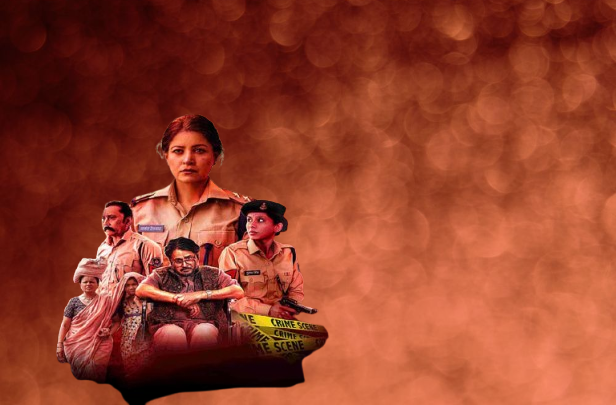
The plot centers on Sub-Inspector Narmada Raikwar (played by real-life IPS officer Simala Prasad), who takes on entrenched criminal networks in Madhya Pradesh.
Against a backdrop of systemic apathy, she fights not just criminals, but a system that refuses to listen to ordinary citizens. The film positions itself as a movement, not just a story—a lofty ambition that creates both its strengths and its weaknesses.
| Role | Name |
|---|---|
| Lead – SI Narmada Raikwar | Simala Prasad (Real IPS Officer) |
| Pivotal Role | Raghuvir Yadav |
| Key Character | Mukesh Tiwari |
| Supporting Lead | Anjali Patil |
| Supporting Cast | Ashwini Kalsekar |
| Supporting Cast | Zarina Wahab |
| Supporting Cast | Ishteyak Khan |
| Supporting Cast | Alok Chatrejee |
| Director / Story / Dialogue | Zaigham Imam |
| Screenplay | Zaigham Imam, Pankaj Kuarav, Akash Tak |
| DOP | Sriram Sethu |
| Music | Ishaan Shivdeo |
Who Is This Movie For?
This is not a film for escapists. If you want slick action without moral weight, look elsewhere. The Narmada Story speaks directly to viewers who crave socially relevant cinema—audiences who appreciate realism over gloss.
It targets the same demographic that embraced Article 15 and Newton: discerning viewers who want their crime thrillers served with a side of systemic critique.
But it also needs to hold the attention of mainstream multiplex audiences, which creates a tonal tension the film never fully resolves.

Script Analysis: A Solid Framework, Wobbly Execution
The screenplay, credited to Zaigham Imam, Pankaj Kuarav, and Akash Tak, establishes a clear conflict early: one honest officer versus a corrupt ecosystem.
The first act is taut, efficiently introducing Narmada’s world and the obstacles she faces. The narrative logic holds—her actions have consequences, and the system pushes back believably.
However, pacing becomes erratic in the second act. The film bogs down in repetitive confrontations, and the social messaging starts to feel like lectures rather than organic drama.
The third act recovers with a climactic sequence that ties thematic threads together, but by then, some viewers may have lost patience. The script is ambitious but lacks the rhythmic discipline of top-tier crime thrillers.
Character Arcs: Growth That Feels Earned—Mostly
Narmada Raikwar is the film’s anchor, and Simala Prasad plays her with commendable restraint. Her character evolves from an idealistic officer to a battle-hardened fighter who understands that justice requires strategy, not just courage.
That arc feels earned because the screenplay shows her setbacks, not just her victories.
The supporting characters—Mukesh Tiwari’s antagonist, Anjali Patil’s ally, Ashwini Kalsekar’s bureaucratic obstacle—are sketched with enough detail to serve the narrative.

But Raghuvir Yadav, in a pivotal role, feels underutilized. His presence signals depth, yet the script doesn’t give him enough material to transcend the archetype of the wise elder.
This is a missed opportunity; a performer of his caliber needed more layers.
The Climax Impact: Satisfying but Predictable
The climax delivers the catharsis the film promises. Narmada’s confrontation with the system is tense, and the resolution avoids easy answers—justice is partial, not triumphant.
That honesty is the film’s greatest strength. However, seasoned genre fans will see the final twist coming from the second act. The emotional payoff works, but the surprise factor doesn’t.
| Screenplay Highs & Lows | What Worked / What Didn’t |
|---|---|
| First Act Efficiency | Clean setup, immediate conflict |
| Second Act Pacing | Bogs down in repetitive confrontations |
| Social Commentary Integration | Feels preachy; lectures substitute for drama |
| Climactic Sequence | Tense, thematically coherent, but predictable |
| Character Depth (Lead) | Earned arc, performed with restraint |
| Character Depth (Support) | Raghuvir Yadav underutilized |
Writer’s Execution: Dialogue That Wobbles Between Authentic and Didactic
Zaigham Imam’s dialogue shows real talent for capturing the cadence of small-town Madhya Pradesh speech. The exchanges between Narmada and her subordinates feel lived-in.
But when characters deliver lines about “the system” or “justice,” the naturalism evaporates. The film too often tells us its themes instead of dramatizing them.
The best crime thrillers embed ideology in action; here, the speeches feel like they were workshopped separately and inserted wholesale.

Miss vs Hit Factors: What Went Right vs Wrong
What went right is the casting of a real IPS officer. Simala Prasad brings an authenticity that no trained actor could replicate. Her body language, her patience during interrogations, her exhaustion—these are details that elevate the film.
The background score by Satya and Manik also works, creating a persistent low hum of tension without overpowering scenes.
What went wrong is the film’s insecurity about its own story. It keeps stopping to explain its importance. The anthem “Aandhi Si Khaki Chali” is powerful, but the film leans on it as a crutch, repeating its motifs too often.
The crime-thriller mechanics are solid, but the social messaging is so heavy-handed that it undermines the suspense. A more confident film would trust its narrative to carry the themes.
Technical Brilliance: Music, Cinematography, and Editing
Sriram Sethu’s cinematography captures the oppressive heat and dust of central India. The frames are deliberately claustrophobic in interior scenes, opening up only when Narmada achieves small victories. It’s a visual language that mirrors her psychological journey.
Editing by Sreejith Sarang is competent but uneven. The first act cuts with precision; the second act lingers too long on static conversations. Sound design by Kailash Singh effectively uses ambient noise—crickets, distant traffic, muffled arguments—to ground the film in reality.
The VFX, handled by Vyom Chatuvedi and Rajendra Shirke, is minimal but serviceable, used mostly for establishing shots and action enhancements.

| Story vs. Visuals Aspect | Rating / Comment |
|---|---|
| Narrative Cohesion | 7/10 – Strong arcs, uneven pacing |
| Character Authenticity | 8/10 – Lead is superb; support is mixed |
| Cinematography | 8/10 – Atmospheric, purposeful framing |
| Background Score | 7/10 – Effective but repetitive |
| Action Choreography | 6/10 – Functional, not innovative |
| Social Messaging Integration | 5/10 – Over-explained; too didactic |
| Overall Technical Polish | 7/10 – Solid, professional finish |
3 Frequently Asked Questions
Is “The Narmada Story” based on a real case?
No, it is a fictional story. However, the lead actress Simala Prasad is a real IPS officer, which gives the film’s procedural details unusual authenticity. The narrative draws on common patterns of systemic corruption rather than any single real event.
Does the film glorify violence?
No. The violence is restrained and used sparingly, always serving the story’s tension rather than spectacle. The focus remains on psychological and systemic struggle, not graphic action. This makes it suitable for the UA13+ rating it has received.
Can I watch it without knowledge of Hindi cinema?
Yes. The film’s themes—institutional corruption, personal integrity, women in law enforcement—are universal. The dialogue is in Hindi, but the visual storytelling is clear enough that non-Hindi speakers with subtitles will have no trouble following the plot and emotional beats.
This analysis is based on the theatrical experience and cinematic merit.
Was this trade analysis helpful?
Your feedback helps Movierullz editors maintain trade database integrity.