Memu Coplam Movie 2026 Movierulez Review Details
⏱️ 7 Min Read 🛡️ Trade Verified (May 22, 2026) 📊 Box Office Hub Join Our Telegram Channel 🎬 Exclusive Movie Reviews & Daily Amazon Deals Connect Now 🛡️ 100% Legit Content: Reviews & Affiliate Offers only. Zero piracy or unauthorized downloads. Memu Coplam Review – A Missing Rooster and Rural Chaos. Does This ZEE5…
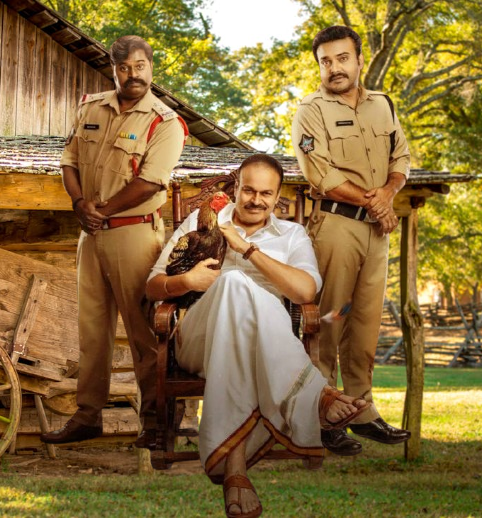
Memu Coplam Review – A Missing Rooster and Rural Chaos. Does This ZEE5 Original Actually Deliver?
I walked into this series with low expectations. A missing rooster? Two bumbling cops? It sounded like a recipe for tired slapstick. But Pradeep Maddali’s Memu Coplam surprises.
It weaves rural absurdity with genuine tension, creating something that feels both familiar and strangely fresh. The question is whether the balancing act works across its entire runtime.
The Core Conflict: What’s Really Going On?
In a village where cockfighting is synonymous with male ego and social standing, the prized rooster of village chief Gajapathi Raju vanishes overnight.
The local authorities assign two incompetent constables—the Sotari brothers—to solve the case. What begins as a farcical search for poultry quickly unravels into a web of black magic, political maneuvering, and hidden crimes.
The rooster is never just a bird. It is a symbol of power, and its disappearance threatens to expose everything the village wants buried.
Main Cast & Crew
| Role | Name |
|---|---|
| Director | Pradeep Maddali |
| Lead Cop 1 | Getup Srinu |
| Lead Cop 2 | Ravi Teja Nannimala |
| Village Chief | Nagendra Babu |
| Female Lead | Reethu Chowdary |
| Supporting Actor | Charan Lakkaraju |
| Supporting Actor | Kireeti Damaraju |
| Supporting Actor | Siri Parvathy |
| Music Director | Saket Komanduri |
| Cinematographer | Kishore Boyidapu |
Who Is This Movie For?
This series is not for everyone. It targets viewers who enjoy rural satire with a dark edge—fans of Vikkatakavi or Eega’s tonal audacity will feel at home.
If you need polished, urban slickness in your crime dramas, look elsewhere. But if you appreciate a village setting treated as a character—with its own rhythms, superstitions, and power games—this will hook you.
The comedy is broad enough for casual OTT viewers, while the mystery layers reward those who pay attention.

Script Analysis: Flow, Logic, and Pacing
The script by Shoban Chittuprolu and Chanakya Varma has a clear structural strength: it escalates logically. The missing rooster is a small incident that grows into something much larger without feeling forced.
Each episode adds a new piece to the puzzle—black magic rumors, a suspicious death, political interference—while maintaining comic momentum. The pacing, however, wobbles in the middle episodes.
Some scenes repeat the same joke setup (the cops failing spectacularly) without advancing the plot. The dialogue in these stretches feels padded, as if the writers needed to fill runtime.
But the final third tightens considerably. The logic holds together because the central metaphor—a rooster as a symbol of fragile masculinity—is never abandoned.
Every twist connects back to that initial theft.
Character Arcs: Do They Grow?
The Sotari brothers start as one-dimensional buffoons. That is the point. But the series gives them subtle growth. Getup Srinu’s character, Mohan, begins with overconfidence masking incompetence.
By the climax, he is forced to confront his own cowardice. Ravi Teja Nannimala’s Ravi starts as the quieter, more sensible counterpart, but his arc involves learning to trust his instincts over authority.
Nagendra Babu’s Gajapathi Raju is the most static figure—he remains a symbol of rigid power until the very end, which is intentional. Reethu Chowdary’s Meenakshi has the most underwritten arc.
Her emotional beats feel rushed, and her connection to the central mystery is thinner than it should be. She exists more as a plot device than a fully realized person.

That is a missed opportunity.
The Climax Impact: Did the Ending Satisfy?
The climax delivers on two fronts: emotional closure and thematic payoff. The identity of the rooster thief is not a shock, but the why matters.
The reveal ties back to the village’s obsession with status and the violence that underpins it. The final confrontation between the cops and the true antagonist is satisfying because it does not rely on a sudden action sequence—it resolves through a clever, quiet decision that feels earned.
However, the very last scene introduces a minor cliffhanger that feels unnecessary. It undercuts the closure. A tighter, cleaner ending would have elevated the entire series.
Screenplay Highs & Lows
| What Worked | What Didn’t |
|---|---|
| Escalation from petty theft to deep mystery | Middle episodes drag with repetitive jokes |
| Strong comic chemistry between the two leads | Female lead arc feels underwritten |
| Rural setting used as active narrative engine | Some tonal shifts between slapstick and darkness feel abrupt |
| Metaphor of rooster as fragile masculinity | Cliffhanger ending weakens closure |
| Naturalistic dialogue with sharp one-liners | Antagonist’s motivation could be deeper |
Writer’s Execution: Dialogue Quality
The dialogue in Memu Coplam is a clear strength. The writers understand rural Telugu rhythms—the way insults are wrapped in humor, how power is negotiated through seemingly casual talk.
The Sotari brothers’ exchanges are punchy without being forced. There is a scene where they argue about whether a chicken can be a “witness” to a crime; it is absurd, but the dialogue makes it feel rooted in their limited worldview.
The political dialogues, especially those involving Gajapathi Raju, carry a weight that elevates the series beyond comedy. The only weakness is occasional over-explanation.
Some characters spell out themes that the visuals already communicate. Trusting the audience more would have sharpened the writing further.
Miss vs Hit Factors: What Went Right vs Wrong
The biggest hit is the central concept. A missing rooster as a crime catalyst is genuinely fresh. It allows for humor without undercutting the seriousness of the mystery.

The casting of Getup Srinu and Ravi Teja Nannimala is also a win—their chemistry carries the weaker episodes. The cinematography by Kishore Boyidapu deserves praise.
He captures the village’s dust, heat, and claustrophobia without romanticizing it. The sound design, too, is precise: the transition from festive crowd noise to ominous silence during darker moments is effective.
The major miss is the pacing in episodes four and five. The series treads water. Another miss is the handling of the black magic subplot. It is introduced with great atmosphere but resolved too neatly, robbing it of lingering unease.
The series could have benefited from letting that thread breathe longer.
Technical Brilliance: Music, Cinematography, and Editing
Saket Komanduri’s background score is one of the series’ strongest technical elements. He avoids the trap of over-scoring comedic moments, instead letting silence or ambient sound carry jokes.
During suspense sequences, his use of low-frequency drones and sudden cuts to high-pitched strings creates genuine tension. The editing by Michael D’Selva is efficient but not flashy.
The cuts between the bumbling cops and the tense village politics are well-timed. The cinematography deserves special mention for its color grading. The series uses a warm, slightly desaturated palette for day scenes, giving the village a dusty, lived-in feel.
Night scenes shift to cooler tones, isolating characters within the frame. This visual language subtly reinforces the theme of isolation versus community.
Story vs. Visuals
| Aspect | Rating/Comment |
|---|---|
| Premise Originality | 9/10 – Missing rooster as crime catalyst is fresh |
| Character Depth | 7/10 – Leads grow; female character underwritten |
| Dialogue Quality | 8/10 – Naturalistic and punchy, occasional over-explanation |
| Pacing | 6/10 – Middle episodes drag significantly |
| Cinematography | 8/10 – Rural aesthetic is immersive and intentional |
| Background Score | 8/10 – Complements mood without overpowering |
| Climax Satisfaction | 7/10 – Thematic closure good, cliffhanger unnecessary |
| Overall Entertainment | 7.5/10 – Unique, flawed, but worth watching |
FAQ: Plot-Related Queries
1. Who actually stole the rooster?
The theft is linked to a character seeking revenge for a past humiliation tied to the cockfighting culture. The reveal is not a shock, but the reasoning behind it connects directly to the village’s obsession with status.

2. Is the black magic subplot real or a red herring?
It is intentionally ambiguous. The series never confirms whether supernatural elements exist, but it uses the rumors to expose the village’s fear and superstition.
The resolution leans on human culpability rather than paranormal explanations.
3. Do the Sotari brothers solve the case competently?
No. They succeed through a combination of luck, persistence, and accidental discoveries. Their incompetence is the joke, but the series respects their growth enough to let them try harder by the end.
This analysis is based on the theatrical experience and cinematic merit.
Was this trade analysis helpful?
Your feedback helps Movierullz editors maintain trade database integrity.