Youth Movie 2026 Movierulez Review Details
Youth (2026) Review – A Nostalgic Trip or Just Teenage Fluff? The Real Analysis
As a critic weary of relentless action spectacles, I walked into Youth with a simple question: can a film about a 15-year-old’s crush genuinely resonate in 2026?
The Core Conflict
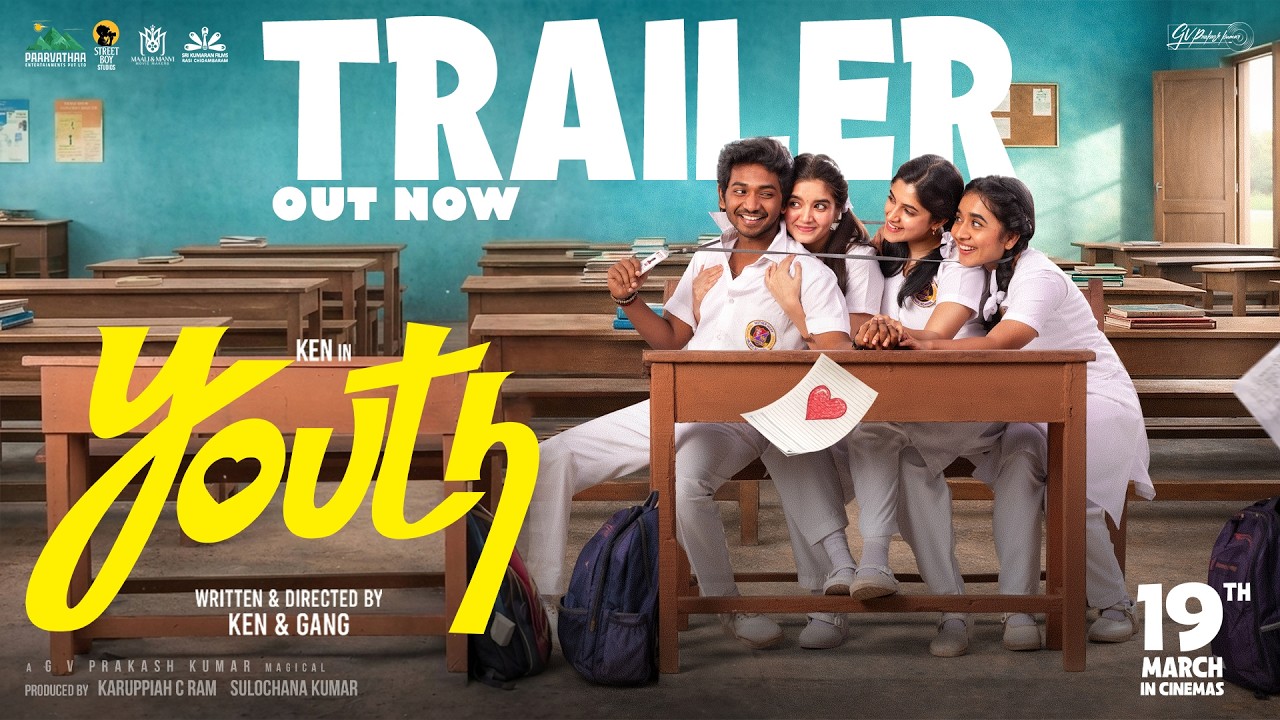
Praveen, a 15-year-old schoolboy, embarks on a single-minded quest to experience “true love” before his academic life ends. The film charts his journey through innocent crushes, awkward confessions, and heartbreaks, all while navigating the pressures of family, friendship, and impending adulthood.
| Role | Name |
|---|---|
| Director / Writer / Lead Actor | Ken Karunas |
| Female Lead | Anishma Anilkumar |
| Music Director | GV Prakash Kumar |
| Cinematographer | Viki |
| Key Supporting Cast | Devadarshini, Suraj Venjaramoodu |
Who Is This Movie For?
This film is a direct love letter to two demographics. First, current teenagers will see their amplified emotions reflected with authenticity. Second, adults nostalgic for the uncomplicated chaos of their school days will find a potent trigger for memory.
It deliberately avoids the mass appeal of action or hard-hitting drama, positioning itself as a comforting, feel-good escape.
Script Analysis: The Flow of Memory
Ken Karunas’s screenplay excels in structure but treads familiar ground. The plot flows in a series of vignettes—stolen glances in class, chaotic group outings, tense family dinners.

This montage-like approach effectively mimics how we recall adolescence: not as a tight plot, but as key emotional moments.
However, the pacing stumbles in the second act. The cycle of crush-to-heartbreak risks repetition, and the narrative logic sometimes bends to serve a nostalgic beat over character consistency.
It’s saved by a clear through-line: Praveen’s gradual understanding that love is more complex than his romantic ideal.
Character Arcs: From Infatuation to Insight
Praveen’s arc is the film’s bedrock. Ken Karunas plays him with a charming, gangly awkwardness that evolves into something more poised. His journey isn’t about winning a girl, but about dismantling his own fantasy.
The growth is subtle, shown in how he listens to his mother (a wonderfully grounded Devadarshini) or supports a friend.

Anishma Anilkumar’s character, while pivotal, is less developed. She often functions as the object of desire rather than a fully realized person with her own arc. The supporting cast, especially Suraj Venjaramoodu in a likely mentor role, provides essential comedic and emotional ballast.
The Climax Impact: A Quiet Satisfaction
The film avoids a grand, melodramatic finale. Instead, the climax is a moment of quiet realization. It’s not about a dramatic confession, but about Praveen making a choice that prioritizes maturity over obsession.
This resolution is deeply satisfying because it feels earned. It swaps cinematic fireworks for emotional truth, leaving the audience with a warm, reflective glow rather than manufactured euphoria.
| What Worked | What Didn’t |
|---|---|
| Authentic, vignette-based structure that captures adolescent memory. | Mid-section pacing that feels repetitive in its crush cycles. |
| Strong, relatable core character arc for the protagonist. | Underdevelopment of the female lead’s interiority. |
| Effective use of supporting cast for humor and heart. | Formulaic plot beats that offer few genuine surprises. |
Writer’s Execution: Dialogue & Tone
Karunas’s dialogue is the film’s strongest technical asset. It crackles with the specific, quirky slang of Tamil schoolyards, feeling neither outdated nor contrived. The conversations between friends are perfectly chaotic, overlapping and digressive.
The tone management is adept, seamlessly weaving slapstick comedy from failed romantic gestures into moments of genuine pathos. The writer-director never lets the film tip too far into saccharine sentiment or cynical parody.

Miss vs Hit Factors
The hit factor is unequivocally its authenticity. From the production design of the classrooms to the rhythm of teen interactions, the film builds a believable, immersive world. This authenticity creates a powerful nostalgic pull that overcomes narrative clichés.
The miss factor is its lack of ambition. It operates securely within the well-defined boundaries of the coming-of-age genre. In a year of high-concept cinema, it makes no attempt to subvert or reinvent, choosing instead to execute a classic formula with warmth and competence.
Technical Brilliance: Crafting Nostalgia
GV Prakash Kumar’s soundtrack is a character in itself. Songs like “Mutta Kalakki” are instant anthems, perfectly scoring the reckless joy of youth. The score underpins emotional moments without overwhelming them.
Cinematographer Viki bathes the film in a nostalgic golden haze. The camera work is intimate, using handheld techniques to capture the energy of school life, then shifting to composed, thoughtful frames for moments of introspection.
The editing syncs beautifully with the music, creating energetic montages that are the film’s visual highlight.

| Aspect | Rating / Comment |
|---|---|
| Story Originality | 6/10 – Classic beats, authentically told. |
| Visual Nostalgia | 9/10 – Cinematography and design are top-tier. |
| Emotional Payoff | 8/10 – Satisfying and character-true. |
| Audio-Scoring Sync | 9/10 – Music is integral to the experience. |
Frequently Asked Questions (FAQs)
Is the film only about a schoolboy’s crush?
No. The romantic quest is the vehicle to explore broader themes of friendship, family expectation, and the painful, beautiful process of self-discovery during adolescence.
How does it compare to other recent Tamil coming-of-age films?
It’s less quirky than some indie offerings and more focused purely on the teen experience than films that blend genres. Its closest kin is in the feel-good, nostalgic space of certain Kannada rom-coms.
Is it suitable for family viewing?
Absolutely. The film is clean, its conflicts are relatable across generations, and it provides a great conversation starter about growing up.
This analysis is based on the theatrical experience and cinematic merit.
Was this trade analysis helpful?
Your feedback helps Movierullz editors maintain trade database integrity.