Return Of The Jungle Movie 2026 Movierulez Review Details
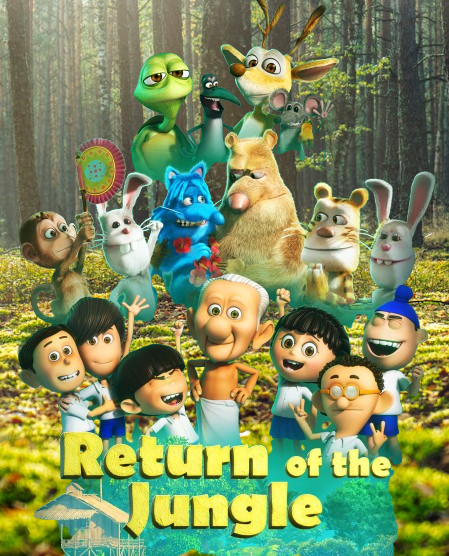
Return Of The Jungle (2026) Review – India’s Zero-Budget Animated Miracle or a Missed Opportunity? The Real Analysis
I have spent over two decades dissecting cinema, from multiplex blockbusters to festival darlings. When I first heard about a self-financed, 20-person animated feature from an Emmy-nominated studio winning a standing ovation at Delhi’s Siri Fort Auditorium, I knew I had to investigate.
Does Return Of The Jungle truly herald a new dawn for Indian animation, or is it simply a noble failure?
Synopsis: The Core Conflict
Nine-year-old Mihir and his classmates are terrorized by Rahul Malhotra, the school’s biggest bully. Instead of direct confrontation, Mihir’s grandfather—Thatha—spins ancient Panchatantra-inspired fables from the jungles of India.
The children must gradually learn that the animal tales are a roadmap to facing their real-world fears, culminating in a nerve-racking cricket match and a journey to Rajasthan.
Main Cast & Crew
| Role | Name |
|---|---|
| Director | Vaibhav Kumaresh |
| Producer | Vaibhav & Suranjana Kumaresh |
| Screenplay | Vaibhav Kumaresh, Prosenjit Ganguly |
| Mihir (Voice) | Arav Bhatia |
| Thatha (Voice) | Surendra Bhatia |
| Rahul (Voice) | Manish Bhawan |
| Music | Roto Shah, Narayan Parasuram, Advait Nemlekar |
| Sound Design | Karan Arjun Singh, Deep Bawa |
Who Is This Movie For?
This is strictly for families with children aged 6–12, and for adults nostalgic for Indian folk tales. If you seek the visual bombast of a Disney or Pixar release, look elsewhere. This film is a quiet, culturally specific antidote to hyper-stimulation—a bedtime story stretched to 93 minutes.
However, it is not for teenagers craving action or dramatic twists. The narrative operates on a gentle, didactic frequency that may bore anyone above the age of 14. Think of it as a beautifully illustrated moral science class.

Script Analysis: Flow, Logic, and Pacing
The dual-narrative structure—present-day school conflict interwoven with jungle fables—is conceptually ambitious but unevenly executed. The bridge between Thatha’s stories and the children’s real-life dilemma is often too literal.
When an animal character learns to share, a child immediately applies the lesson in the next scene. This lack of subtlety weakens the dramatic tension.
Pacing is the film’s biggest villain. The first 40 minutes meander through expository jungle sequences that, while visually pleasant, stall the central plot. The story only gains momentum in the final 25 minutes when the cricket match and Rajasthan journey converge.
Character Arcs: Did They Grow?
Mihir undergoes a credible transformation from a passive, frightened boy to a strategic leader who uses stories as weapons. His arc is the film’s emotional spine, and young voice actor Arav Bhatia delivers a surprisingly nuanced performance.
Thatha remains a static wise-man archetype—a plot device rather than a person. He has no flaw, no internal conflict, and thus no arc. The school bully Rahul Malhotra is cartoonishly one-dimensional, given no backstory or motivation beyond “being mean.” This is a missed opportunity for a redemption angle that could have elevated the entire piece.
The Climax Impact: Did the Ending Satisfy?
The climax—a high-stakes cricket game where the children use jungle strategies to outwit Rahul—is clever in concept but rushed in execution. The resolution arrives too neatly.
Rahul suddenly has a change of heart after losing, with no psychological groundwork laid. It feels like a convenience imposed by the runtime rather than an earned emotional payoff.

The final scene, where Mihir narrates his own story to his grandfather, is lovely and poetic. It bookends the narrative beautifully, but the journey to get there is bumpy.
Screenplay Highs & Lows
| What Worked | What Didn’t |
|---|---|
| Strong cultural authenticity in fable sequences | Overly didactic transitions between stories |
| Emotional core of grandfather-grandson bond | Bully character is flat and unexplored |
| Wholesome violence-free entertainment | Pacing drags heavily in first half |
| Clever cricket match climax concept | Final resolution feels rushed and unearned |
| Good voice direction for child actors | Thatha has no character arc |
Writer’s Execution: Dialogue Quality
The dialogue is the film’s quiet strength. Thatha’s fables are rendered in simple, rhythmic Hindi that mimics oral storytelling traditions. Lines like “Courage isn’t taught in classrooms… sometimes, it begins with a story from Thatha” land with genuine warmth.
However, the school children often speak in stilted, exposition-heavy sentences. They explain their feelings too clinically, robbing scenes of natural childhood chaos. A 9-year-old would never say, “I feel anxious because of societal pressure to conform.” The script needed a pass for organic voice.
Miss vs Hit Factors
The Hits: The film’s greatest achievement is its cultural specificity. It captures the texture of Indian childhood—the relationship with grandparents, the obsession with cricket, the moral weight of Panchatantra—with rare sincerity.
The background score by Roto Shah, blending folk melodies with devotional undertones, is genuinely moving and elevates every emotional beat.
The Misses: The zero-budget constraint is visible. The 2D animation, while bright and colorful, lacks the fluidity of international standards.
Characters move with a stiffness that breaks immersion. Worse, the sound mixing is inconsistent—dialogue is clear in close-ups but muffled in wide jungle shots.

The film also misses a crucial demographic trick. It is too simple for adults watching alone, yet the slow pacing may lose younger children’s attention. It sits in an awkward middle ground.
Technical Brilliance: Music, Cinematography, and Editing
The music is the strongest technical department. Roto Shah’s background score draws from Indian folk traditions without being derivative. The devotional melody that plays during Thatha’s monologues adds spiritual weight to what could have been generic children’s fare.
Cinematography is limited by the 2D format but shows ambition. The jungle sequences use vertical framing and layered depth to simulate scale, a clever trick given the minimal resources.
Editing by Saikat Ray and Prakash Kurup is competent but not artful—transitions between the two timelines are functional rather than inspired.
Sound design by Karan Arjun Singh and Deep Bawa is the weak link. The jungle soundscape lacks richness; bird calls and rustling leaves feel like stock effects rather than an immersive environment.
Story vs. Visuals
| Aspect | Rating/Comment |
|---|---|
| Story Originality | 7/10 – Fresh structure, familiar morals |
| Animation Fluidity | 5/10 – Stiff movements, budget visible |
| Color Palette | 8/10 – Vibrant and culturally resonant |
| Background Score | 9/10 – Folk influences elevate the film |
| Sound Design | 5/10 – Stock effects, lacks immersion |
| Voice Acting | 7/10 – Child actors shine, adults are flat |
| Pacing | 5/10 – First half drags significantly |
| Emotional Impact | 8/10 – Genuinely moving grandfather bond |
Frequently Asked Questions
1. Is Return Of The Jungle appropriate for very young children (ages 4-5)?
Yes, the film is rated U (Universal) and contains no violence, scary imagery, or complex themes. However, the slow pacing in the first 40 minutes may cause younger children to lose interest.
The jungle fable sequences with cute animal characters are more engaging for this age group than the school scenes.

2. Why does Thatha use stories instead of giving direct advice to Mihir?
The film explicitly argues that moral lessons stick better when learned through narrative rather than instruction. This is rooted in Indian pedagogical tradition—the Panchatantra itself was designed to teach kings through animal fables.
However, the movie never answers why Thatha doesn’t just help the children directly, leaving a logical gap for attentive viewers.
3. Does the bully Rahul get any redemption or backstory?
No. This is the film’s most significant narrative flaw. Rahul loses the cricket match and simply stops bullying. There is no exploration of his home life, his motivations, or any moment where he earns his change of heart.
He remains a cardboard antagonist throughout, which undermines the film’s message about empathy and understanding.
This analysis is based on the theatrical experience and cinematic merit.
Was this trade analysis helpful?
Your feedback helps Movierullz editors maintain trade database integrity.