Vengeance Movie 2026 Movierulez Review Details
Vengeance (2026) Review – A Potent Political Thriller or a Missed Opportunity? The Real Analysis
As the credits rolled, I was left with a single, pressing question: does this film weaponize its potent socio-political premise, or does it get lost in the very system it seeks to critique?
The Core Conflict
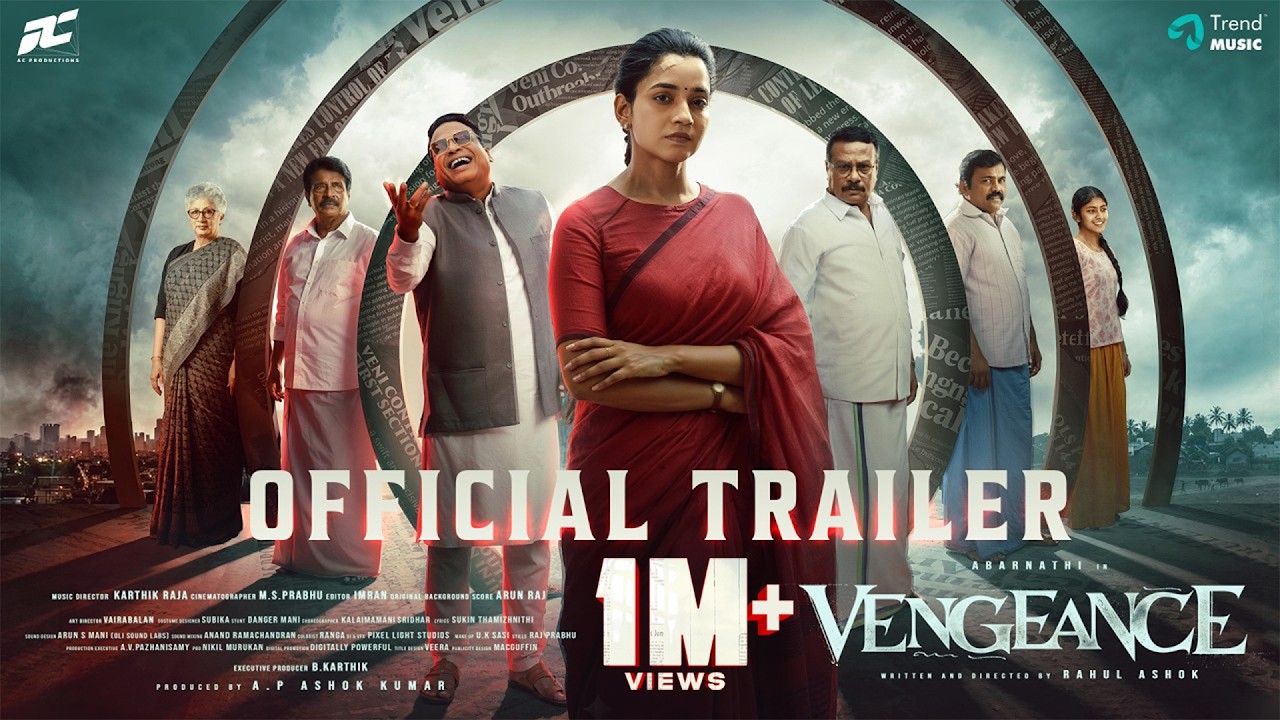
Vengeance positions itself as a female-centric political crime thriller. It follows a young woman, played by Abarnathi, whose life is shattered by a violent incident entangled with local political machinations.
Her journey from victim to active agent of retribution forms the spine of the narrative, set against a gritty, realist backdrop of Tamil Nadu’s power corridors.
| Role | Name |
|---|---|
| Director & Writer | Rahul Ashok |
| Lead Actor | Abarnathi |
| Key Supporting Cast | Kaali Venkat, Ilavarasu |
| Music Director | Karthik Raja |
| Cinematographer | M.S. Prabhu |
Who Is This Movie For?
This film will resonate most with audiences hungry for substantive, issue-driven cinema. It’s for viewers who appreciated the gritty realism of Jai Bhim or the systemic anger of Karnan.
Fans of pure, escapist mass entertainment will find its deliberate pace and moral complexity challenging. This is a thinker’s thriller, not a crowd-pleaser.
Script Analysis: Ambition vs. Architecture
Rahul Ashok’s debut script is admirably ambitious. It attempts to weave a personal tragedy into a vast tapestry of political corruption, media manipulation, and social decay. The initial act establishes the protagonist’s world with efficient, brutal clarity.
However, the screenplay’s main flaw is its sprawl. The introduction of numerous political players—each with their own cadre and motives—often dilutes the central emotional thread.
The logic of the plot occasionally bends to serve the theme, making some twists feel manufactured rather than organic.
Pacing is inconsistent. The film simmers with tension in intimate scenes but stutters during broader political expositions, creating a disjointed rhythm that undermines the thriller mechanics.
Character Arcs: A Singular Flame Amidst the Fog
Abarnathi’s protagonist is the undeniable core. Her arc from trauma to steely resolve is portrayed with raw, compelling intensity. The transformation feels earned, a slow burn of quiet rage rather than a sudden superheroic shift.
The surrounding characters, however, suffer from symbolic shorthand. Kaali Venkat and John Vijay, while effective, often represent facets of corruption rather than fully realized individuals.
Ilavarasu brings gravitas but is confined to a predictable mentor archetype. The protagonist’s journey shines, but the world she moves through can feel like a gallery of types, not people.
The Climax Impact: Catharsis or Compromise?
The climax smartly avoids simplistic, violent triumph. Instead, it opts for a more nuanced, systemic conclusion. Satisfaction here depends entirely on your appetite for poetic justice versus practical victory.
It delivers a powerful emotional catharsis for the lead character, which is the film’s primary goal. Yet, the resolution of the wider political conspiracy feels slightly rushed, leaving a sense that the larger beast remains wounded, not slain.

This is likely intentional, reinforcing the film’s cynical view of entrenched power.
| What Worked | What Didn’t |
|---|---|
| Strong, grounded central premise | Overstuffed supporting cast |
| Abarnathi’s powerful, anchored performance | Uneven pacing and narrative sprawl |
| Commitment to a realist, gritty tone | Underwritten antagonist motivations |
| Effective, tense establishing act | Some predictable plot conveniences |
Writer’s Execution: Dialogue of Intent
The dialogue oscillates between two modes. In intimate moments, it is sharp, authentic, and laden with subtext. The protagonist’s sparse lines carry the weight of her trauma.
In the political chambers, however, it often becomes expositional and on-the-nose. Characters verbalize themes and strategies that would be more powerful if shown. While this clarifies the complex web of alliances for the audience, it occasionally sacrifices subtlety for clarity.
Miss vs. Hit Factors
The hit factor is unequivocally Abarnathi. Her performance is the engine that drives the entire film. Combined with M.S. Prabhu’s cinematography—which paints a stark, unforgiving portrait of both rural and urban landscapes—the film achieves a compelling visceral authenticity.
The primary miss is a lack of narrative discipline. Director Rahul Ashok throws every idea about political rot at the screen. A tighter focus on the core duel between the protagonist and one primary antagonist, with the system as the backdrop, would have amplified the emotional and thriller stakes immensely.
Technical Brilliance: Crafting the Mood
Technically, the film is robust. Karthik Raja’s score is a highlight—a brooding, atmospheric soundscape that uses traditional instruments in dissonant, unsettling ways to mirror psychological fracture. It supports, never overwhelms.
The sound design by Arun S Mani is crucial, layering the cacophony of political rallies, silent moments of dread, and the stark sounds of violence with precision.
Editor Imran struggles slightly with the script’s sprawl but creates several impactful, jarring sequences that connect emotional beats with brutal efficiency.
| Aspect | Rating / Comment |
|---|---|
| Story & Theme | 8/10 – Potent and relevant, but narratively overambitious. |
| Visual Language | 9/10 – Gritty, atmospheric, and deeply effective. |
| Lead Performance | 9/10 – The film’s unwavering anchor and compelling core. |
| Pacing & Editing | 6/10 – Struggles to balance intimate drama with political epic. |
| Background Score | 9/10 – A masterclass in mood-building and psychological tension. |
Frequently Asked Questions (FAQs)
Is the violent incident against the protagonist shown explicitly?
The film employs suggestive, impactful editing rather than gratuitous depiction. The focus is squarely on the traumatic aftermath and psychological impact, not the spectacle of violence.
Does the film have a clear “good vs. evil” stance?
Not at all. It presents a murky moral ecosystem. While the protagonist’s cause is just, the film interrogates the personal cost of vengeance and the corrupting nature of the very systems she must navigate to achieve it.
Is this a standalone story or open for a sequel?
The ending provides definitive closure for the protagonist’s personal quest. However, the nature of the political landscape it portrays is deliberately presented as a cyclical machine, leaving thematic, rather than narrative, doors open.
This analysis is based on the theatrical experience and cinematic merit.