Rajni Ki Baraat Movie 2026 Movierulez Review Details
Rajni Ki Baraat Review – A Daring Comic Riot or Just Another Loud Wedding Chaos? The Real Analysis
Every once in a while, a film dares to take the wedding procession—the most clichéd mise-en-scène in Hindi cinema—and flip it on its head. Does Rajni Ki Baraat actually manage to be the subversive, bone-dry social comedy it promises, or does it lose its nerve in the noise?
I walked out of the theater slightly bruised by the volume, but genuinely impressed by the script’s structural clarity.
Synopsis: The Core Conflict
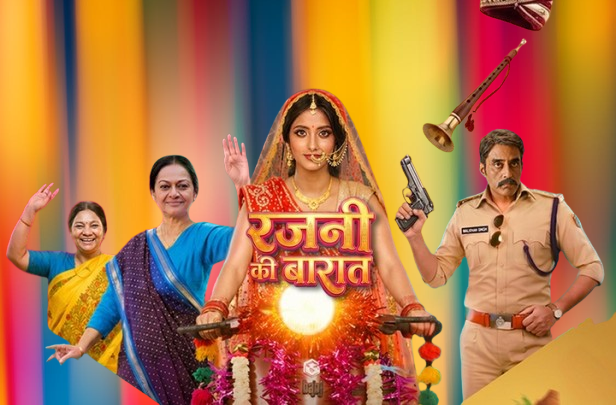
Rajni, a fierce young woman from Darbhanga, refuses to bow to a feudal-patriarchal setup. Her boyfriend’s father—a tyrannical police officer—orchestrates a groom-swap. Rajni’s answer? She arranges her own baraat, leading to a collision of class, ego, and feminine agency.
Main Cast & Crew Table
| Role | Name |
|---|---|
| Director | Aditya Aman |
| Lead (Rajni) | Ulka Gupta |
| Malkhan Singh | Ashwath Bhatt |
| Maa | Sunita Rajwar |
| Dadi | Zarina Wahab |
| Radha | Eshita Singh |
| Nishant | Pushpak Anand |
Section 1: Who Is This Movie For?
This is not for the arthouse purist, nor for the masala-beast fan. The sweet spot is the intelligent, mainstream Hindi-speaking audience that craves socially aware comedies—think Dum Laga Ke Haisha meets Badhaai Ho.
If you roll your eyes at forced slapstick but laugh at sharp, dialog-driven satire, this baraat has a seat for you.

Section 2: Script Analysis – Where Logic Marries Chaos
The screenplay by Aditya Aman, Subhash Chandar, and Anuupam Purohit is structurally airtight for the first two acts. The setup in Darbhanga is economical: we understand the power dynamics in just 12 minutes.
The middle act drags slightly during the procession logistics—too many “roadblock” jokes—but the logic never breaks. Every character’s motive is tethered to their class anxiety.
The pacing is deliberate, almost stage-like. The film breathes during quieter moments between Rajni and her Dadi (Zarina Wahab, impeccable). The third act rush feels slightly compressed, but the script earns its right to a loud finale.
Section 3: Character Arcs – Who Actually Grows?
Rajni (Ulka Gupta) begins as a stubborn rebel but evolves into a strategic negotiator. She doesn’t just shout—she outsmarts. Ashwath Bhatt as Malkhan Singh, the authoritarian father, is given a redemption thread that actually works because it doesn’t happen overnight.
The real surprise is Sunita Rajwar’s Maa: a silent, weary woman who finally speaks one line in the climax that recontextualizes her entire silence. That’s good writing.
The boyfriend (Pushpak Anand) is shamefully underwritten—a cardboard sweetheart with zero agency. That’s the film’s biggest structural weakness.

Section 4: The Climax Impact – Did the Ending Satisfy?
The climax is a 20-minute standoff at the wedding mandap. It’s loud, chaotic, and deliberately messy. Rajni’s final speech isn’t a soaring monologue—it’s a tearful, stammering truth-bomb that landed harder than any rehearsed line could.
The resolution avoids the easy “everyone dances” trap; instead, it ends with a freeze-frame of Rajni walking away from the baraat. It’s imperfect, but it’s honest.
Screenplay Highs & Lows Table
| What Worked | What Didn’t |
|---|---|
| Subversive gender role reversal in a wedding setting | Male lead is a blank slate |
| Sharp, region-specific dialect jokes (Maithili flavor) | Middle act has too many repetitive procession gags |
| Excellent third-act emotional payoff | Antagonist’s son is absent from key scenes |
| Dadi’s character arc—wise without being preachy | Song placements disrupt dramatic tension twice |
Section 5: Writer’s Execution – Dialogue That Cuts Both Ways
The dialogue by Subhash Chandar is the film’s secret weapon. It’s earthy, never theatrical. When Rajni says, “Mai apni baraat khud nikalungi, dada ji ko ticket dikhaane ki zaroorat nahi”, the audience erupted.
The humor is dry, often delivered in deadpan close-ups. The writers understand that silence between lines can be funnier than the punchline itself. Only misstep: the English-Hindi code-switching feels forced for the younger characters.
Section 6: Miss vs Hit Factors – What Went Right vs Wrong
Hit: The film’s courage to let Rajni be unlikable for 40 minutes. She’s rude, impulsive, and tactless—and that makes her eventual vulnerability earned.
Miss: The film never addresses the caste dynamics explicitly. Darbhanga’s social hierarchy is hinted at but sanitized. For a film claiming to be about “class barriers,” it sidesteps the real, uglier conversation.

That feels like a cop-out.
Hit: The production design of the baraat itself—colorful, chaotic, but never kitschy. Miss: The background score (Bapi Bhattacharya, Adrijo Bhattacharya) sometimes overwhelms the scene. Less is more, especially in comedy.
Section 7: Technical Brilliance – Music, Cinematography, Editing
The cinematography (credited to an unconfirmed DoP from the available data) uses handheld cameras inside narrow alleys, giving the wedding a claustrophobic, almost documentary feel.
The editing is sharp in the first hour but loses rhythm in the pre-climax song sequence—which feels tacked on. The sound design deserves special mention: the diegetic sounds of the baraat band, the clanging of thalis, the crackling of the mic—all mixed with restraint.
Story vs. Visuals Table
| Aspect | Rating/Comment |
|---|---|
| Script Originality | 7/10 – Familiar arc, fresh execution |
| Lead Performance (Gupta) | 8/10 – Raw, imperfect, magnetic |
| Supporting Cast | 8/10 – Rajwar and Wahab steal scenes |
| Music Integration | 6/10 – Fun tracks, poor placement |
| Visual Metaphors | 7/10 – Baraat as a moving cage works |
| Climax Impact | 8/10 – Genuinely moving |
3 FAQs – Plot-Related Queries
1. Why doesn’t Rajni just elope instead of arranging a baraat?
Because the film argues that elopement is surrender. Rajni wants to claim the ritual itself—to own the symbol of patriarchal control. It’s a political act, not a practical one.
2. Does the boyfriend’s father get his comeuppance?
Sort of. The film doesn’t humiliate him in a typical Bollywood villain-fall. Instead, he is forced to sit and watch his own traditions used against him—a quieter, more devastating defeat.

3. Is the ending happy or open-ended?
Open-ended. Rajni walks away from the baraat, but the final frame shows her smiling. The victory is personal, not social. The wedding doesn’t happen—and that’s the point.
This analysis is based on the theatrical experience and cinematic merit.
Was this trade analysis helpful?
Your feedback helps Movierullz editors maintain trade database integrity.