Pati Patni Aur Who Do Movie 2026 Movierulez Review Details
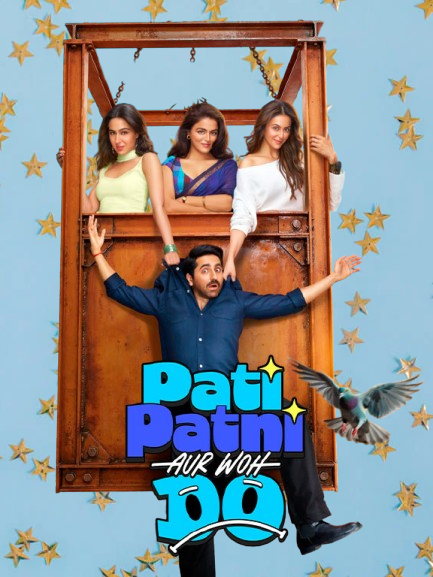
Pati Patni Aur Who Do (2026) Review – A Predictable Affair or a Fresh Look at Modern Marriages? The Real Analysis
I walked into the theatre expecting another recycled Bollywood comedy about marital infidelity, but what I discovered was a film that pretends to be daring while safely playing by the old rules.
Does this 2026 sequel justify its existence, or is it just a cash grab dressed in wedding clothes? Let me break this down with the precision of a surgeon and the honesty of a critic who has seen too many of these films.
Synopsis – The Core Conflict
Prajapati Pandey (Ayushmann Khurrana) is a forest department officer in Prayagraj whose life spirals into chaos when he agrees to help his childhood friend Chanchal (Sara Ali Khan) elope with her boyfriend.
His wife Aparna (Wamiqa Gabbi), a sharp journalist, begins suspecting infidelity, while his colleague Nilofer (Rakul Preet Singh) misinterprets his actions as romantic interest.
What follows is a comedy of errors where one lie breeds ten more, testing the boundaries of trust, friendship, and marriage in small-town India.
| Role | Name |
|---|---|
| Lead Actor | Ayushmann Khurrana |
| Lead Actress (Wife) | Wamiqa Gabbi |
| Lead Actress (Friend) | Sara Ali Khan |
| Lead Actress (Colleague) | Rakul Preet Singh |
| Comic Relief (Father) | Pankaj Tripathi |
| Director | Mudassar Aziz |
| Music Director | Tanishk Bagchi |
Who Is This Movie For?
This film targets the family audience that wants safe entertainment without confronting real marital problems. If you are looking for edge-of-your-seat drama or genuine social commentary, look elsewhere.
This is for couples who want to laugh at exaggerated misunderstandings and feel better about their own relationships. The urban multiplex crowd will find it too simplistic, but tier-2 city audiences will embrace its familiar rhythms and predictable humor.

Script Analysis – The Structure Collapses Under Its Own Weight
The screenplay follows a three-act structure that works efficiently in the first hour but loses steam dramatically in the second half. The setup is crisp: we meet the characters, understand their motivations, and the first misunderstanding lands with genuine comic timing.
However, by the 90-minute mark, the repetitive cycle of “Prajapati lies, someone discovers, chaos ensues” becomes exhausting rather than entertaining.
The script lacks the discipline to introduce new complications or escalate stakes. Instead, it recycles the same joke with different characters, assuming repetition equals humor.
Character Arcs – Stagnant Waters
Prajapati begins as a well-meaning fool and ends as a well-meaning fool who learned nothing except that honesty is convenient. His arc is flat, relying entirely on Ayushmann’s charisma rather than genuine character development.
Aparna, played with surprising depth by Wamiqa Gabbi, starts as an intelligent journalist and is gradually reduced to a suspicious wife stereotype. Chanchal remains a one-note impulsive girl throughout, and Nilofer exists purely as a plot device.
The supporting cast—Pankaj Tripathi and Neena Gupta—bring warmth to their roles but are given zero arcs of their own. They exist to react, not to grow.
The Climax Impact – Safe and Unsatisfying
The climax attempts a reconciliation scene that feels rushed and unearned. After two hours of lies and chaos, the film resolves everything with a single conversation that lacks the emotional weight required.
The third act introduces Tisca Chopra’s character as a moral compass, but her presence feels forced, like a deus ex machina in a sari. The ending is designed to please everyone, which means it pleases no one fully.

The film avoids the messy, difficult conversations that real marriages require, opting instead for a sanitized, Bollywood-style hug that erases all the pain.
| What Worked | What Didn’t |
|---|---|
| First hour comedy timing | Repetitive misunderstanding structure |
| Ayushmann’s physical comedy | Flat character arcs for female leads |
| Supporting cast chemistry | Underdeveloped subplots |
| Small-town Prayagraj setting | Rushed, unconvincing climax |
| Music integration in scenes | Formulaic, predictable writing |
Writer’s Execution – Dialogue That Hits and Misses
Mudassar Aziz’s dialogue oscillates between sharp, observational humor and tired Bollywood clichés. The best lines come from Pankaj Tripathi, who delivers every punchline with the timing of a jazz musician.
However, the emotional dialogue—especially between Prajapati and Aparna—feels borrowed from older, better films. The writer relies heavily on situational comedy rather than clever wordplay, which works in the first half but betrays the film’s lack of textual depth.
When the comedy stops working, there is nothing substantive left to hold the audience’s attention.
Miss vs Hit Factors – What Went Right and Wrong
The biggest miss is the film’s refusal to engage with its own premise. A story about a man lying to his wife about another woman could have explored genuine themes of trust, insecurity, and modern marriage dynamics.
Instead, the film treats everything as a joke, never allowing the audience to sit with the discomfort of the situation. The biggest hit is Ayushmann Khurrana’s commitment to his role.
He elevates mediocre material through sheer physical comedy and genuine warmth. The music, particularly “Roop Di Rani” and “Dheeme Dheeme 2.0,” works as a commercial hook, even if the lyrics lack originality.
Technical Brilliance – Shooting the Ordinary
Manoj Pillai’s cinematography captures Prayagraj with an earthy, warm palette that grounds the film in reality. The handheld-lite aesthetic works for intimate scenes but feels amateurish during larger set pieces.

Chandan Arora’s editing is competent in the first hour but loses discipline in the second, allowing scenes to overstay their welcome. Tanishk Bagchi’s background score is functional, supporting the comedy without overpowering it.
The sound design prioritizes dialogue clarity, which is essential for a comedy, but the ambient sound of Prayagraj’s streets feels underutilized. The VFX is minimal and adequate—no complaints, but no praise either.
| Aspect | Rating/Comment |
|---|---|
| Cinematography | 7/10 – Warm, earthy, but safe |
| Sound Design | 6/10 – Clear dialogue, missed ambient opportunities |
| Music Score | 7/10 – Catchy but formulaic |
| Editing | 6/10 – Tight first half, loose second half |
| VFX | 5/10 – Minimal and unremarkable |
Frequently Asked Questions
Does the film justify the multiple female leads, or are they wasted?
Three actresses, three characters, but only one fully realized arc. Wamiqa Gabbi’s Aparna has potential but is sidelined. Sara Ali Khan and Rakul Preet Singh exist as plot devices rather than people. The film wastes its ensemble.
Is the comedy offensive to modern relationships?
The comedy avoids outright offensiveness but feels dated. The film treats marital dishonesty as a harmless game rather than a serious breach of trust. Younger audiences may find the humor tone-deaf.
How does this compare to the original Pati Patni Aur Woh?
The original 2019 film was sharper, funnier, and more willing to push boundaries. This 2026 version is safer, more formulaic, and less memorable. The original had a point of view; this one just wants to please everyone.
Songs List – The Musical Backbone
- Roop Di Rani – Peppy Punjabi promotional track
- Dil Waale Chor – Romantic ballad with lyrical twist
- Angdayi – Folk-flavored comedic number
- Humne Wahin Lagaya Dil – Soulful reconciliation piece
- Pyar Mein Kyun Hota Hai – Philosophical romantic track
- Dheeme Dheeme 2.0 – Nostalgic re-imagined version
- Dil Waale Chor (Reprise) – Moodier background score version
Box Office – A Modest Success
The film opened at ₹4 crore net in India, jumping to ₹5.75 crore on Saturday, reflecting strong word-of-mouth among family audiences. The worldwide gross reached approximately ₹15 crore after two days, making it one of the better-performing Bollywood comedies of 2026.
Trade analysts note that the film’s moderate budget and pricing strategy ensured profitability despite not breaking records.
Technical Specifications
Shot in Prayagraj with a warm, earthy palette. Minimal VFX used for environment enhancement and crowd replication. Sound mix prioritizes dialogue clarity with layered background music during comedic sequences.

The production design leans toward realistic, lived-in spaces, enhancing the film’s grounded feel.
Final Verdict
Pati Patni Aur Who Do (2026) is a safe, predictable, and occasionally charming comedy that never reaches its potential. Ayushmann Khurrana’s performance and the supporting cast’s chemistry elevate mediocre material, but the film’s refusal to engage seriously with its themes makes it forgettable.
If you want two hours of harmless laughter, this works. If you want cinema that challenges or surprises you, look elsewhere.
This film will play well in family theaters and find its audience among those who want comfort over innovation. For critics and discerning viewers, it represents a missed opportunity to say something meaningful about modern marriage.
This analysis is based on the theatrical experience and cinematic merit.
Was this trade analysis helpful?
Your feedback helps Movierullz editors maintain trade database integrity.