Raja Shivaji Ritesh Sanjay Dutt Movie 2026 Movierulez Review Details
Raja Shivaji Ritesh Sanjay Dutt Review – A Bold Tribute or a Missed Epic? The Real Analysis
As a critic who has sat through every Maratha biopic from Pawankhind to Chhaava, I walked into Raja Shivaji with measured expectations. What I found was a film that swings between genuine reverence and frustrating compromise.
Synopsis: The Core Conflict
This is not Shivaji’s entire life. It is the origin forge. The film chronicles his journey from a boy learning statecraft under Jijabai to the establishment of Hindavi Swarajya, ending just before the 1674 Raigad coronation.
The central engine is the ideological war against Afzal Khan and the Bijapur Sultanate, framed as a battle for cultural survival.
Table 1: Main Cast & Crew
| Role | Name |
|---|---|
| Director & Lead (Shivaji) | Riteish Deshmukh |
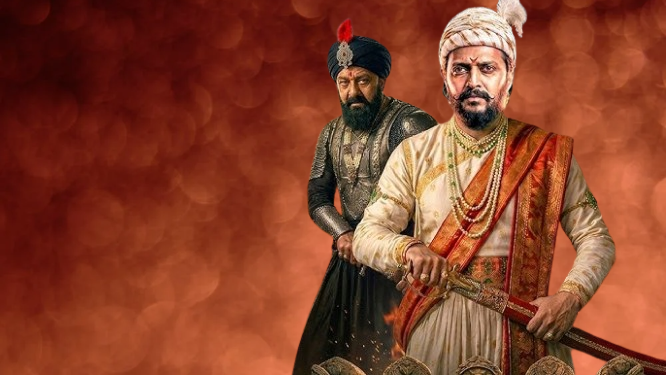
| Afzal Khan | Sanjay Dutt |
| Jijabai | Bhagyashree |
| Saibai | Genelia Deshmukh |
| Shahaji Bhosale | Sachin Khedekar |
| Jiva Mahala (Cameo) | Salman Khan |
| Cinematographer | Santosh Sivan |
| Music | Ajay-Atul |
Section 1: Who Is This Movie For?
This is for the Maharashtra family that wants to see their icon on the big screen with full Dolby Atmos. It is not for the hardcore history buff who demands granular accuracy or the pan-India audience expecting Baahubali-level VFX.
It sits squarely in the zone of respectful, patriotic biopic—more Tanhaji than Padmaavat in tonality.

Section 2: Script Analysis – Deep Dive
The eight-chapter structure is ambitious but uneven. The first hour suffers from comic-book pacing: events tumble into each other without breathing room.
The script assumes you already know the iconography of Shivaji’s life. If you don’t, certain emotional beats land flat. The logic holds—betrayals and alliances make sense—but the screenplay lacks the surgical precision of a great biopic.
It rushes strategic nuance in favor of mass moments.
Section 3: Character Arcs – Deep Dive
Riteish’s Shivaji is restrained to a fault. He plays the king with dignity, not swagger, which is historically honest but dramatically underwhelming.
Sanjay Dutt’s Afzal Khan is pure menace—one-note but effective. Bhagyashree as Jijabai steals every scene she is in. The problem? No character truly transforms.
Shivaji begins as a determined prince and ends the same. The supporting cast, from Salman’s cameo to Fardeen’s Shah Jahan, are functional archetypes rather than evolving humans.

Section 4: The Climax Impact – Did It Satisfy?
The Afzal Khan confrontation is the film’s peak. It is tense, bloody, and choreographed with genuine stakes. The Raigad coronation sequence follows with emotional heft, but the film tacks on an abrupt ending that leaves the post-coronation period untouched.
It feels like a season finale rather than a film conclusion. For a 187-minute runtime, the lack of a proper denouement stings.
Table 2: Screenplay Highs & Lows
| What Worked | What Didn’t |
|---|---|
| Afzal Khan face-off tension | Rushed first-half pacing |
| Jijabai-Shivaji emotional scenes | One-dimensional antagonists |
| Battle strategy sequences | Surface-level historical anecdotes |
| Coronation spectacle | Abrupt, unsatisfying ending |
Section 5: Writer’s Execution – Dialogue Quality
Dialogues oscillate between the stirring and the pedestrian. When Jijabai speaks of swarajya, the Marathi cadence hits hard. But the Hindi version suffers from literal translations that lose the poetry.
Afzal Khan’s threats are generic villain talk. The best lines belong to the Mavala warriors—raw, earthy, believable. The writer’s greatest failure is not giving Saibai (Genelia) a single memorable line; she is reduced to a smiling portrait.
Section 6: Miss vs Hit Factors – Detailed Text Analysis
Hit: The decision to focus on pre-coronation life. We have seen too many post-1674 films. This gives space to Shivaji’s formation—his mother’s lessons, the early guerrilla tactics, the psychological weight of defying the Mughal-Sultanate axis.
The casting of actual Marathi theater actors in supporting roles adds authenticity. Ajay-Atul’s score does the heavy lifting for emotional moments; without it, several scenes would collapse.

Miss: The VFX is the elephant in the room. Battle scenes look like a video game from 2018. Slow-motion is overused to the point of parody.
The film cannot decide between grounded realism and comic-book fantasy—so it lands awkwardly in between. The Hindi dub also sanitizes some of the raw Marathi profanity, diluting the warrior ethos.
And for a ₹100 crore budget, the absence of a single large-scale cavalry charge is bewildering.
Section 7: Technical Brilliance – Music, Cinematography, Editing
Santosh Sivan’s cinematography is the film’s single greatest technical asset. The Western Ghats are photographed with painterly reverence—misty mornings, stark fort silhouettes, monsoon-soaked valleys.
It is his Marathi debut, and it shows a master at work. John Stewart Eduri’s background score is thunderous when needed, subtle when it counts. Ajay-Atul’s “Chhatrapati” is already an anthem.
Editing by Urvathi Saxena is the weak link: the 8-chapter structure creates jarring jumps, especially in the first half where scenes dissolve into the next without organic transitions.

Table 3: Story vs. Visuals
| Aspect | Rating/Comment |
|---|---|
| Story Depth | 7/10 – Solid foundation, rushed execution |
| Visual Grandeur | 8/10 – Sivan’s lens elevates everything |
| VFX Integration | 5/10 – Inconsistent, distracts in battles |
| Emotional Impact | 7/10 – Works best in mother-son scenes |
| Cultural Authenticity | 9/10 – Marathi soul intact despite Hindi dub |
3 FAQs – Plot-Related Queries
Does the film show Shivaji’s escape from Agra?
No. The story ends pre-coronation. The Agra escape is not covered, which is a deliberate choice to focus on his early foundation years rather than later political maneuvers.
Is Salman Khan’s cameo substantial?
It is a 5-minute action beat where his character Jiva Mahala protects Shivaji during an ambush. It serves the plot but is clearly designed for whistle-worthy mass entry.
How historically accurate is the Afzal Khan encounter?
The broad strokes match legend—the meeting, the hidden dagger, the tiger claws. But the film takes creative liberty with the surrounding battle choreography and adds a fictional assassination subplot that historians will contest.
This analysis is based on the theatrical experience and cinematic merit.
Was this trade analysis helpful?
Your feedback helps Movierullz editors maintain trade database integrity.