Karakkam Movie 2026 Movierulez Review Details
Karakkam (2026) Review – Musical Horror-Comedy That Dares to Be Different, But Does It Strike the Right Chord?
I walked into the theater expecting a novelty act. What I got was a film that swings wildly between genuine chills and cringe-inducing chaos. Is Karakkam the genre-bending masterpiece Malayalam cinema needed, or just a noisy experiment that loses its tune? Let’s break down the bones.
The Core Conflict: A Drunken Prank Awakens Hell
On New Year’s Eve, two intoxicated idiots uproot five sacred brass crosses from a church cemetery. Big mistake. This awakens five restless, mischievous ghosts who turn their lives into a nightmare of supernatural chaos.
The duo now must reverse the curse before the spirits drag them into eternal damnation—or at least stop them from whispering “Thirichu Ponam” in their ears at 3 AM.
Who’s Behind the Madness?
| Role | Name |
|---|---|
| Director | Subhash Lalitha Subrahmanian |
| Lead Actor | Sreenath Bhasi |
| Lead Actress | Femina George |
| Composer | Sam C.S. |
| Producer | Kimberly Trinidade & Ankush Singh |
Who Is This Movie For?
This is for the adventurous Malayali audience craving something new. If you loved Kumari or Romancham but wished they had more songs, this is your jam.
It’s also for Sreenath Bhasi fans who enjoy his chaotic energy. But if you’re looking for tight horror or pure comedy, look elsewhere. This is a bizarre hybrid that demands patience.
Script Analysis: A Rollercoaster Without a Seatbelt
The first act is a mess of exposition and forced humor. The prank setup feels rushed—characters make stupid decisions with zero logic. Once the ghosts appear, the script finds its groove.

The middle act delivers solid scares and laugh-out-loud moments, especially when Inspector Kunjan Nambiar (Sidharth Bharathan) enters the fray. But the third act collapses under its own ambition.
The resolution feels rushed, leaving plot threads dangling like loose ghost chains. Pacing is uneven, with musical numbers disrupting tension at critical moments.
Character Arcs: Growth or Stagnation?
Sreenath Bhasi’s character starts as an irritating drunk and ends as a… slightly less irritating drunk. There’s minimal emotional growth. Femina George’s Pinki is criminally underused—she exists mostly to scream and look worried.
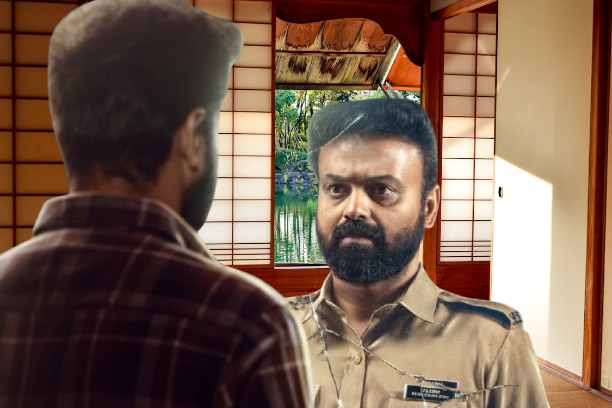
Sidharth Bharathan steals the show as the bewildered inspector, providing the film’s best comedic beats. The ghosts themselves have more personality than some human characters, especially the one with a knack for sarcastic whispers.
But overall, arcs are shallow. No one learns much, which hurts the film’s emotional core.
The Climax Impact: Does It Deliver?
The final confrontation is chaotic in the best and worst ways. On one hand, the VFX-heavy ghost battle is visually inventive. On the other, the logic falls apart.
Why do the ghosts suddenly want to leave? What’s the rule system? The film never establishes clear boundaries, so the climax feels like deus ex machina wrapped in special effects.

It’s entertaining, sure. But satisfying? Barely.
Screenplay Highs & Lows
| What Worked | What Didn’t |
|---|---|
| Ghost character designs and humor | Rushed first act setup |
| Sam C.S.’s haunting score | Underdeveloped female lead |
| Sidharth Bharathan’s comic timing | Confusing ghost rule system |
| Innovative genre fusion | Uneven pacing in second half |
Writer’s Execution: Dialogue That Whispers and Shouts
Nipin Narayanan and team deliver a mixed bag. The comedic lines land well, especially during ghost-human interactions. “Thirichu Ponam” becomes an earworm for all the right reasons.
But dramatic dialogue feels forced. Characters explain their emotions unnecessarily, breaking the “show, don’t tell” rule. The ghost backstories are hinted at but never explored, leaving potential depth untapped.
The writers clearly had fun with the concept but didn’t trust the audience enough to figure things out.
Miss vs Hit Factors: What Went Right vs Wrong
Hits: The musical horror concept is genuinely unique. Sam C.S. composes tracks that blur the line between lullaby and nightmare. The “Ore Yathrayil” sequence is a visual and auditory treat.
The comedic chemistry between Bhasi and Bharathan works well. The 110-minute runtime respects your time—no unnecessary padding.
Misses: Budget constraints show in VFX quality during wide shots. The tonal whiplash between slapstick comedy and genuine horror is jarring.

Songs, while good, often stop the plot cold. The female characters are afterthoughts. The box office failure (estimated under ₹5 Cr worldwide against a ₹14 Cr budget) reflects weak word-of-mouth.
Most critically, the film doesn’t know if it wants to be scary or funny, ending up mediocre at both.
Technical Brilliance: Music, Cinematography, and Editing
Technically, this is where Karakkam shines brightest. Bablu Aju’s cinematography captures the eerie nightscapes beautifully—the cemetery scenes are drenched in atmospheric dread.
Sam C.S.’s soundtrack is the film’s MVP, with “Thirichu Ponam” and “Ore Yathrayil” standing out. The Dolby Atmos mix is immersive; you hear ghosts whispering from all directions.
Nidhin Raj Arol’s editing keeps the film moving, though some musical numbers overstay their welcome. DTM’s VFX is decent for a mid-budget film, with ghost designs that feel fresh rather than generic.
Story vs. Visuals
| Aspect | Rating/Comment |
|---|---|
| Story Originality | 7/10 – Novel concept, weak execution |
| Visual Effects | 6/10 – Good for budget, uneven in wide shots |
| Sound Design | 9/10 – Atmos mix is hauntingly effective |
| Cinematography | 8/10 – Atmospheric and well-lit |
| Pacing | 5/10 – Drags in second half |
FAQs
1. Why did the ghosts target those specific drunk guys?
The ghosts are bound to the brass crosses the men uprooted. Each ghost was tied to a cross, and disturbing them unleashed the spirits. The film hints at a backstory involving a church feud, but it’s never fully explained—leaving it as the script’s biggest loose end.
2. Is the ending open for a sequel?
Yes and no. The main conflict resolves when the crosses are restored. But a mid-credits scene shows one ghost lingering, suggesting unfinished business. Given the box office failure, a sequel is unlikely. But the door is left ajar.

3. Why is the ghost’s phrase “Thirichu Ponam” so central?
It means “Let’s go back” in Malayalam. The ghosts are trapped between worlds, longing to return to their resting place. The phrase becomes a haunting mantra that underscores their tragedy. It’s also the film’s best musical hook—a clever double duty as plot device and earworm.
This analysis is based on the theatrical experience and cinematic merit.
Was this trade analysis helpful?
Your feedback helps Movierullz editors maintain trade database integrity.