Nooru Sami Movie 2026 Movierulez Review Details
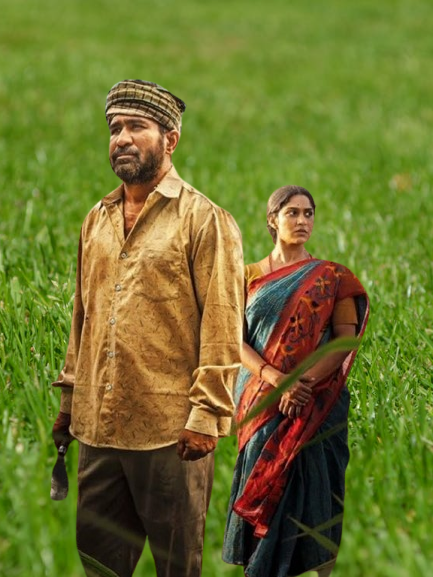
Nooru Saami Review – A Hundred Gods or a Hundred Judgments? The Real Analysis
As a critic who has seen countless rural dramas, I walked in asking: does this film offer a new prayer for Tamil cinema, or is it just another sermon we’ve heard before?
The Core Conflict
In a caste-bound village, a mother’s personal choice becomes a public scandal. Her sons, particularly the patriarch played by Vijay Antony, are torn between their love for her and the crushing pressure of a hundred societal “gods”—the elders, traditions, and unspoken rules that govern their world.
| Role | Name |
|---|---|
| Director & Writer | Sasi |
| Lead Actor | Vijay Antony |
| Female Lead | Swasika Vijay |
| Co-Lead | Lijomol Jose |
| Second Lead | Ajay Dhishan |
| Music Director | Balaji Sriram |
Who Is This Movie For?
This is not a film for the action-hungry or the spectacle-seeker. It’s squarely aimed at the thoughtful viewer who appreciates slow-burn, character-driven narratives.
If you were moved by the raw emotion of Pichaikkaran or the social textures of films like Asuran, this is your lane.
It’s also a crucial watch for those tired of women being mere plot devices in rural dramas. Here, the female characters, though besieged by judgment, are the catalysts and the emotional epicenter.

Script Analysis: The Weight of Truth
Director Sasi’s script, based on real events, is a double-edged sword. Its greatest strength is its authenticity; the village politics feel lived-in, not constructed. The conflict arises from glances, gossip, and unspoken codes, not mustache-twirling villains.
However, the pacing is deliberate to a fault. The first hour is a meticulous, sometimes laborious, layering of social pressure. The script trusts the audience to feel the weight of this atmosphere, but risks losing those accustomed to more propulsive storytelling.
The logic of the village is airtight, but the slow unraveling demands patience.
Character Arcs: From Sons to Men
The central transformation belongs to Vijay Antony’s character. He begins as a man defined by external validation, his posture bent under the gaze of his community.
His arc is not about explosive rebellion, but a quiet, painful internal crumbling. The performance is admirably restrained, his eyes doing most of the work.
Swasika Vijay, as the mother, is the film’s unwavering heart. Her arc is less about change and more about resilient endurance. Lijomol Jose delivers a performance of fierce vulnerability, her character serving as the spark that ignites the communal tinderbox.

The real question is whether the sons’ final stance feels earned or rushed—a point the film navigates with mixed success.
The Climax Impact: Catharsis or Compromise?
The climax wisely avoids a violent, simplistic showdown. The confrontation is verbal and moral, a public reckoning in the village square. Does it satisfy? For viewers seeking a powerful, defiant speech that overturns centuries of dogma, it might feel subtle.
Yet, therein lies its intelligence. The resolution is bittersweet and realistic. It offers a personal victory within a largely unchanged system—a single family choosing its own god over the hundred judging them.
It’s a catharsis of conscience, not conquest, which will resonate deeply for some and feel incomplete for others.
| What Worked | What Didn’t |
|---|---|
| Authentic, grounded setup | Pacing is overly deliberate |
| Strong female-centric focus | Some supporting cast underutilized |
| Emotionally potent climax | Second-act lag before the conflict boils |
| Powerful, restrained performances | Moral resolution may feel too quiet for some |
Writer’s Execution: The Sound of Silence
Sasi’s dialogue shines in its subtext. The most damning lines are often the casual ones—villagers discussing “what a woman did” as if debating the weather. The power dynamics are etched in everyday language, not theatrical monologues.
Where it occasionally stumbles is in the philosophical asides. Characters like Karunas sometimes deliver wisdom that feels slightly grafted onto the scene, interrupting the naturalistic flow to ensure the theme is heard.

Miss vs Hit Factors
The hit factor is undeniable emotional sincerity. The film’s commitment to its somber tone and its respect for the women at its core creates a resonant, haunting quality. The reunion of Sasi and Vijay Antony delivers the grounded, soulful chemistry their fans expect.
The potential miss is its market positioning. In a clash with starrier, faster-paced releases, its meditative speed could limit its reach. It’s a film that believes in its audience’s capacity for reflection, a gamble that defines both its artistic success and its commercial uncertainty.
Technical Brilliance: Crafting Atmosphere
Cinematographer S. B. Darshan Kirlosh paints with a palette of dust and dusk. The camera feels like another villager—observant, sometimes intrusive, capturing the claustrophobia of communal life.
Editor Harish Yuvaraj’s cuts are patient, letting scenes breathe, though this contributes to the slow rhythm.
Balaji Sriram’s music is the film’s emotional bloodstream. The score is sparse, leaning on silence and ambient sound design (excellently handled by Vijay Rathinam) to build tension. When the music swells, as in “Maaya Kanavo,” it feels earned and devastating.
| Aspect | Rating / Comment |
|---|---|
| Story Authenticity | 9/10 – Lived-in and powerfully real. |
| Visual Tone | 8/10 – Beautifully grim, perfect for the mood. |
| Pacing & Editing | 6/10 – A deliberate slow burn that tests patience. |
| Sound & Music Integration | 9/10 – A masterclass in using silence and score. |
Frequently Asked Questions
Is this an action film like some of Vijay Antony’s past work?
No. This is a pure social drama. Any physical conflict is brief and grounded in realism, not stylized heroism.

What is the significance of the title “Nooru Saami” (Hundred Gods)?
It metaphorically represents the multitude of societal pressures—caste elders, traditions, gossip—that are worshipped and feared more than any single deity, and which the family must ultimately defy.
Is the film overly depressing or does it offer hope?
It is emotionally heavy, but its hope is found in intimate, personal defiance rather than in sweeping societal change. The ending is bittersweet, focusing on the victory of a single conscience.
This analysis is based on the theatrical experience and cinematic merit.
Was this trade analysis helpful?
Your feedback helps Movierullz editors maintain trade database integrity.