LIK Love Insurance Company Movie 2026 Movierulez Review Details
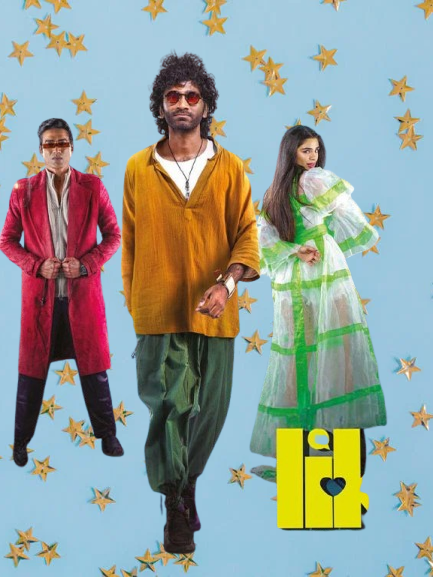
LIK: Love Insurance Kompany Review – A Glossy Future with a Hollow Heart?
As a critic who has seen a thousand love stories, I must ask: can a film critique algorithmic romance while being algorithmically assembled itself?
The Core Conflict
In a hyper-stylized 2040 Chennai, love is quantified, insured, and policed by the omnipotent Love Insurance Kompany (LIK) app. The battle lines are drawn between Suriyan (S.J.
Suryah), its misanthropic CEO who champions AI companionship, and Vaibhav “Vibe Vassey” (Pradeep Ranganathan), a tech-averse LIK app voice artist who falls for influencer Dheema (Krithi Shetty) the old-fashioned way.
Their organic romance becomes a rebellion against a system that deems them statistically incompatible.
| Role | Name |
|---|---|
| Vaibhav “Vibe Vassey” | Pradeep Ranganathan |
| Suriyan (CEO) | S.J. Suryah |
| Dheema | Krithi Shetty |
| Anbukadal (Father) | Seeman |
| Director/Writer | Vignesh Shivan |
| Music Director | Anirudh Ravichander |
| Cinematographer | Ravi Varman |
Who Is This Movie For?
This is squarely aimed at the Gen-Z and millennial crowd fluent in app culture and meme language. It’s for viewers who prioritize a vibrant aesthetic and a killer soundtrack over narrative depth.

If you want a visually dazzling, music-video-style experience with a side of light tech satire, LIK delivers. Traditional romance purists seeking emotional resonance will feel underwhelmed.
Script Analysis: A Patchwork of Ideas
The screenplay is a fascinating, uneven beast. Its greatest strength is its high-concept premise—a sharp, timely satire on data privacy and algorithmic control of human emotion.
The first act efficiently builds its neon-drenched world. However, the plot quickly succumbs to familiar tropes. The pacing is erratic, lurching from romantic comedy to sci-fi action to social commentary without fully committing to any.
The central man-vs-machine conflict feels superficial, resolved more by spectacle than by clever writing.
Character Arcs: Growth Stunted by Code
Pradeep’s Vibe Vassey is charming but static. His “arc” is less about change and more about proving his initial LIK-skepticism right. S.J. Suryah, however, steals the film.
His Suriyan is a flamboyant, scene-chewing villain whose disdain for humanity is both hilarious and chilling. The real casualty is Dheema. Krithi Shetty is energetic, but her character is a plot device—an influencer defined by the app she must learn to reject.

Her transformation lacks interiority, making the central romance feel like a schematic victory rather than an emotional one.
The Climax Impact: Spectacle Over Substance
The finale is a CGI-heavy brawl against robots and corporate overreach. While technically competent, it feels emotionally weightless. The victory is predictable, and the thematic resolution—love conquers algorithms—is stated rather than earned.
It satisfies as a colorful set-piece but fails to deliver the profound catharsis the premise promised. The ending is less a poignant statement and more a brightly wrapped package.
| What Worked | What Didn’t |
|---|---|
| The high-concept, timely satire premise. | Uneven, emotionally shallow romance. |
| S.J. Suryah’s electric villain performance. | Labored, often misogynistic humor. |
| World-building & visual design of 2040. | Scattered, superficial character writing. |
| Seamless integration of chartbuster songs. | Predictable, spectacle-driven climax. |
Writer’s Execution: Dialogue in the Meme Age
Vignesh Shivan’s dialogue is a mixed bag. It crackles with contemporary slang and witty one-liners, especially in Suriyan’s cynical rants. However, it often leans into cringe humor and misses as much as it hits.
The romantic exchanges lack the timeless, heartfelt quality needed to sell the core theme. The writing is clever in moments but rarely wise, mirroring the film’s preference for surface-level gloss over deeper connection.
Miss vs Hit Factors: The Balancing Act
The Hit: The film’s undeniable achievement is its cohesive, optimistic vision of the future. Ravi Varman’s cinematography paints a stunning, hologram-filled Chennai that you want to inhabit.

Anirudh Ravichander’s soundtrack isn’t just background; it’s the film’s pulsating lifeblood. S.J. Suryah’s performance gives the narrative a necessary edge.
The Miss: The soul is missing. The romance, the very thing meant to defy cold logic, feels calculated. The satire loses its bite in the second half, giving way to generic action.
Ambitious ideas about tech dystopia are diluted into a simple, crowd-pleasing fable. It’s a film that thinks loudly but feels quietly.
Technical Brilliance: A Sensory Overload
This is where LIK shines unambiguously. Ravi Varman’s lens makes every frame a vibrant poster. The production design by T. Muthuraj is imaginative and detailed.
The VFX, while not groundbreaking, are serviceable and create a believable, heightened reality. Pradeep E. Ragav’s editing keeps the energy high, even when the narrative meanders.
Peter Hein’s stunt design blends well with the digital elements. This is a technically polished, state-of-the-art commercial product.

| Aspect | Rating / Comment |
|---|---|
| Story Concept | 8/10 – Brilliant, timely premise. |
| Story Execution | 5/10 – Loses focus, becomes generic. |
| Visual Spectacle | 9/10 – Top-tier cinematography & design. |
| Emotional Payoff | 4/10 – The film’s weakest link. |
Frequently Asked Questions
What is the ‘Love Score’ in LIK?
It’s a feature within the movie’s app that algorithmically assigns a compatibility percentage to couples, determining the “success” and insurance premium of their relationship. It’s the central conflict device.
Is the film a sequel or connected to other movies?
No. LIK: Love Insurance Kompany is a standalone, original sci-fi concept, though it shares thematic concerns with Black Mirror and similar tech-dystopia narratives.
How does the film end?
Without major spoilers, it ends with a victory for human agency and organic connection over algorithmic control, achieved through a large-scale confrontation with the corporation’s physical and digital infrastructure.
This analysis is based on the theatrical experience and cinematic merit.
Was this trade analysis helpful?
Your feedback helps Movierullz editors maintain trade database integrity.