Derby Movie 2026 Movierulez Review Details
Derby (2026) Review – A Glossy Campus Ride or Narrative Debris? The Real Analysis
As the credits rolled on this hyper-stylized campus drama, one question lingered: when did our cinema decide that vibes are a suitable substitute for a story?
The Core Conflict
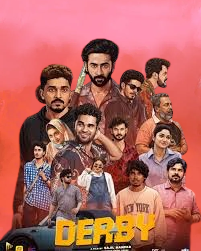
Set against the backdrop of a high-stakes college tournament, *Derby* follows Arjun (Adam Sabiq), a charismatic student whose ambition and rivalry with Shawn (Al Ameen) fuel a personal and institutional war.
It’s a classic tale of ego, friendship, and campus politics, packaged in neon lights and a thumping soundtrack.
| Role | Name |
|---|---|
| Director | Sajil Mampad |
| Writers | Zahru Zuhra, Ameer Suhail |
| Arjun | Adam Sabiq |
| Shawn | Al Ameen |
| Fejin | Sagar Surya |
| Maria | Jasnya Jayadeesh |
| Music Director | Gopi Sundar |
| Cinematographer | Abinandhan Ramanujam |
Who Is This Movie For?
This film is engineered for a very specific, undemanding viewer. It’s for the Gen-Z audience that prioritizes aesthetic reels and catchy hooks over narrative depth.
If you seek a two-hour, mood-boosting diversion filled with attractive people in trendy clothes, set to a peppy score, *Derby* delivers a superficial kick.
Traditionalists seeking character-driven drama or logical plot progression will find it a frustrating experience.

Script Analysis: The Flow and The Flaws
The screenplay operates on a simple, two-act energy curve. The first half coasts on pure, undiluted vibe. The pacing is brisk, introducing the ensemble, the rivalry, and the campus atmosphere with a slick, social-media-ready sheen. It’s all surface, but the surface is polished and engaging enough.
The collapse begins post-intermission. The writers, having exhausted their bag of stylistic tricks, are forced to confront the need for substantive plot development and emotional stakes.
Here, the script reveals its hollow core. The narrative logic becomes contrived, sub-plots are introduced and abandoned, and the pacing drags under the weight of predictable confrontations and a romantic track that feels like an algorithmic afterthought.
Character Arcs: A Study in Stasis
Do the characters grow? In a word: no. Arjun begins as a cocky, ambitious youth and ends as a slightly less cocky, ambitious youth. His rival, Shawn, exists primarily as a narrative counterweight, his motivations thinly sketched.
The promising ensemble, including Sagar Surya’s Fejin, is given little to do beyond filling frames and contributing to crowd scenes.
Jasnya Jayadeesh’s Maria is the most glaring casualty—a “female lead” in name only, serving as a romantic prop without agency or a discernible inner life. The characters are avatars in a campus simulation, not flesh-and-blood individuals undergoing a journey.
The Climax Impact: An Engine That Sputters
The titular derby, built up as the cathartic release for all the film’s conflict, lands with a dull thud. The execution relies entirely on technical razzle-dazzle—slow-motion shots, aggressive background score, and rapid editing—to manufacture excitement the story hasn’t earned.

The emotional payoff is absent. You witness the event, but you feel none of the weight, leaving you with the emptiness of watching a highlight reel for a sport you don’t follow.
| What Worked | What Didn’t |
|---|---|
| High-energy first-half pacing and vibe. | Predictable, derivative plot with no surprises. |
| Strong, Instagram-friendly visual aesthetic. | Severe lack of character development. |
| Catchy musical score by Gopi Sundar. | Second-half narrative drag and incoherence. |
| Competent, energetic performances from the young cast. | Emotionally hollow climax and romantic sub-plot. |
Writer’s Execution: Dialogue in the Digital Age
The dialogue fits the film’s ethos: it’s functional, often leaning into contemporary slang and punchy one-liners designed for trailer moments and shareable clips.
It lacks subtext, poetry, or memorable depth. Conversations serve either to move the plot to the next set-piece or to establish very basic character traits (ambition, rivalry, attraction).
It’s writing as packaging, not as exploration.
Miss vs Hit Factors: The Precarious Balance
The hit factors are all technical and atmospheric. Director Sajil Mampad and cinematographer Abinandhan Ramanujam construct a visually appealing product.
The costume and production design create a aspirational, trendy campus world. Gopi Sundar’s score provides a relentless audio engine that propels the film forward even when the story stalls.
The miss factor is singular and fatal: the story. The narrative is an assembly of worn-out campus drama clichés, offering no new perspective, emotional truth, or intellectual engagement.

The film mistakes activity for achievement and style for substance. In the end, the gorgeous package contains nothing of value.
Technical Brilliance: A Saving Grace
This is where *Derby* genuinely shines. Abinandhan Ramanujam’s cinematography is glossy and dynamic, using neon palettes and fluid camera movements to create a hyper-real college fantasy.
The editing by R. Jerin is sharp in the first half, maintaining a contagious rhythm. Gopi Sundar’s background score is the film’s most consistent performer, pumping adrenaline into every scene, even when it’s undeserved.
The sound design is immersive, particularly in the crowd sequences.
| Aspect | Rating / Comment |
|---|---|
| Story & Plot | 3/10 – Derivative and emotionally barren. |
| Visuals & Cinematography | 8/10 – Slick, stylish, and perfectly pitched for its target audience. |
| Character Depth | 2/10 – Archetypes, not characters. |
| Music & BGM | 8/10 – Energetic and effective, often carrying the film. |
| Overall Execution | 5/10 – Technically proficient but narratively bankrupt. |
Frequently Asked Questions (FAQs)
Is *Derby* a remake of any other film?
No, it is not an official remake. However, its plot heavily follows the well-trodden template of countless campus rivalry dramas, offering no significant innovation on the formula.
What is the central conflict between Arjun and Shawn?
The conflict stems from a clash of egos and ambition, primarily centered around campus dominance and the glory of winning the annual “derby.” The script provides little deeper philosophical or personal reason for their rivalry.
Why did the film perform poorly at the box office?
While it opened with decent hype due to its marketing and music, weak word-of-mouth regarding its shallow story and unsatisfying climax led to a sharp drop in attendance.

Audiences ultimately rejected the style-over-substance approach.
This analysis is based on the theatrical experience and cinematic merit.
Was this trade analysis helpful?
Your feedback helps Movierullz editors maintain trade database integrity.