Band Melam Telugu Movie 2026 Movierulez Review Details
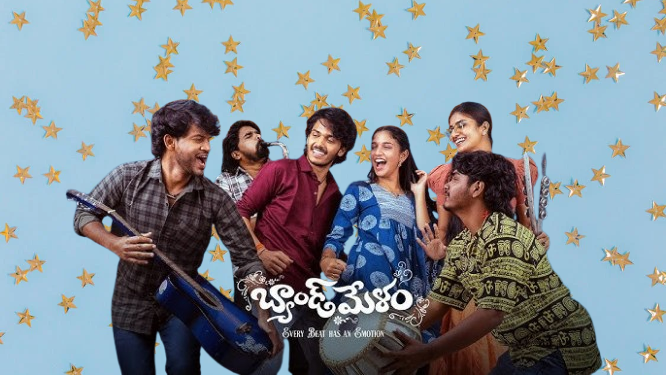
Band Melam Review – A Nostalgic Symphony or a Forgettable Tune? The Real Analysis
As a critic, I’m always skeptical of romantic dramas promising ‘timeless love’—too often, they deliver recycled tropes. Does Band Melam break the cycle or simply play the same old song?
The Core Conflict
Childhood friends Giri and Raaji, inseparable in rural Telangana, are violently torn apart by family and fate. Years later, a chance reunion forces them to confront the scars of their past and the undeniable pull of a connection that never truly faded.
| Role | Name |
|---|---|
| Giri | Harsh Roshan |
| Raaji | Sridevi Apalla |
| Raaji’s Father | Sai Kumar |
| Director | Sathish Javvaji |
| Music Director | Vijay Bulganin |
| Cinematographer | Satish Muthyala |
Who Is This Movie For?
This film is a direct appeal to the traditional Telugu family audience and lovers of music-driven, emotional storytelling. If your cinematic diet consists of the nostalgic ache of 96 and the rural romanticism of early 2000s Telugu cinema, this is your feast.
Viewers seeking high-octane action or subversive narrative twists will leave hungry.
Script Analysis: The Flow and The Stumbles
Debutant director Sathish Javvaji’s screenplay is structurally sound, employing a classic but effective three-act format: idyllic union, painful separation, complex reunion.

The pacing in the first half is deliberate, luxuriating in establishing the pastoral innocence of Giri and Raaji’s bond. However, this strength becomes a minor weakness post-interval, where the plot mechanics of their adult separation feel somewhat manufactured, relying on familiar familial pressure tropes.
The logic holds, but the freshness occasionally falters.
Character Arcs: Growth Amidst the Melody
Harsh Roshan’s Giri undergoes the more visible transformation—from a carefree village boy to a man burdened by regret and quiet resilience. Sridevi Apalla’s Raaji, however, is the film’s secret weapon.
Her arc from spirited child to a woman navigating the conflict between duty and desire is rendered with subtle grace. The true growth is in their dynamic; they don’t just rediscover love, they rebuild a partnership on the rubble of their past.
The Climax Impact: Satisfying Resolution or Safe Bet?
The climax, set against the symbolic fervor of a traditional ‘band melam’ procession, successfully delivers emotional catharsis. It avoids a simplistic, fairy-tale ending.
Instead, it chooses a resolution earned through confrontation and forgiveness, particularly in the well-acted final standoff with Sai Kumar’s patriarchal figure.

It satisfies the genre’s core audience by honoring emotional truth over mere convenience.
| What Worked | What Didn’t |
|---|---|
| Strong, authentic rural atmosphere | Predictable separation plot device |
| Effective use of nostalgic flashbacks | Pacing dips in second act |
| Clear, emotionally driven plot progression | Some supporting characters feel undercooked |
Writer’s Execution: The Dialogue’s Texture
Sathish Javvaji’s dialogue is the film’s backbone. It shifts seamlessly from the playful, rustic banter of childhood to the charged, unspoken tensions of adulthood.
The conversations between Giri and Raaji are layered with years of unsaid words. Where the script excels is in its silence; the most powerful moments are often glances loaded with history, proving the writer-director understands that in romance, what is withheld can be as potent as what is spoken.
Miss vs Hit Factors: The Balancing Act
The Hit Factors are undeniable: the palpable chemistry of the fresh leads, Vijay Bulganin’s soul-stirring score that acts as a narrative character, and Satish Muthyala’s cinematography that makes the Telangana landscape a canvas of emotion.
The Miss Factors stem from its ambition. As a debut, it plays safe within genre confines. The very cultural specificity that is its strength might limit its crossover appeal.
It’s a beautifully crafted, familiar vessel—not a genre-reinventing ship.

Technical Brilliance: A Sensory Experience
This is where Band Melam truly shines. Satish Muthyala’s camera doesn’t just capture scenes; it caresses them. The golden-hour hues of childhood memories contrast starkly with the cooler, more complex palette of the present.
Vijay Bulganin’s music is not mere accompaniment; it’s the film’s emotional nervous system. The sound design, from the distant echo of the melam to the crushing silence of a goodbye, is impeccable.
Editor Siva Mupparaju weaves timelines together with a fluid, intuitive rhythm.
| Aspect | Rating / Comment |
|---|---|
| Story & Emotional Depth | 8/10 – Classic, heartfelt, if familiar. |
| Visual Poetry & Cinematography | 9/10 – The film’s standout technical achievement. |
| Music & Sound Integration | 9/10 – A masterclass in musical storytelling. |
| Pacing & Narrative Flow | 7/10 – Confident, but suffers minor second-act drag. |
Frequently Asked Questions
Is the separation between Giri and Raaji justified, or just a plot device?
While the catalyst involves familiar family pressure, the film spends enough time grounding Sai Kumar’s motivations in a believable, if rigid, sense of duty, making it feel more earned than arbitrary.
Does the film rely too much on music and flashbacks?
The music and flashbacks are central to its identity. They are used purposefully as emotional anchors, not crutches. The narrative would collapse without them, as they are the language of the film’s memory-driven heart.
Is this a standalone story, or is a sequel hinted?
This is a definitive, self-contained story. The conclusion provides a satisfying sense of closure, leaving no narrative threads dangling for a sequel.

This analysis is based on the theatrical experience and cinematic merit.
Was this trade analysis helpful?
Your feedback helps Movierullz editors maintain trade database integrity.