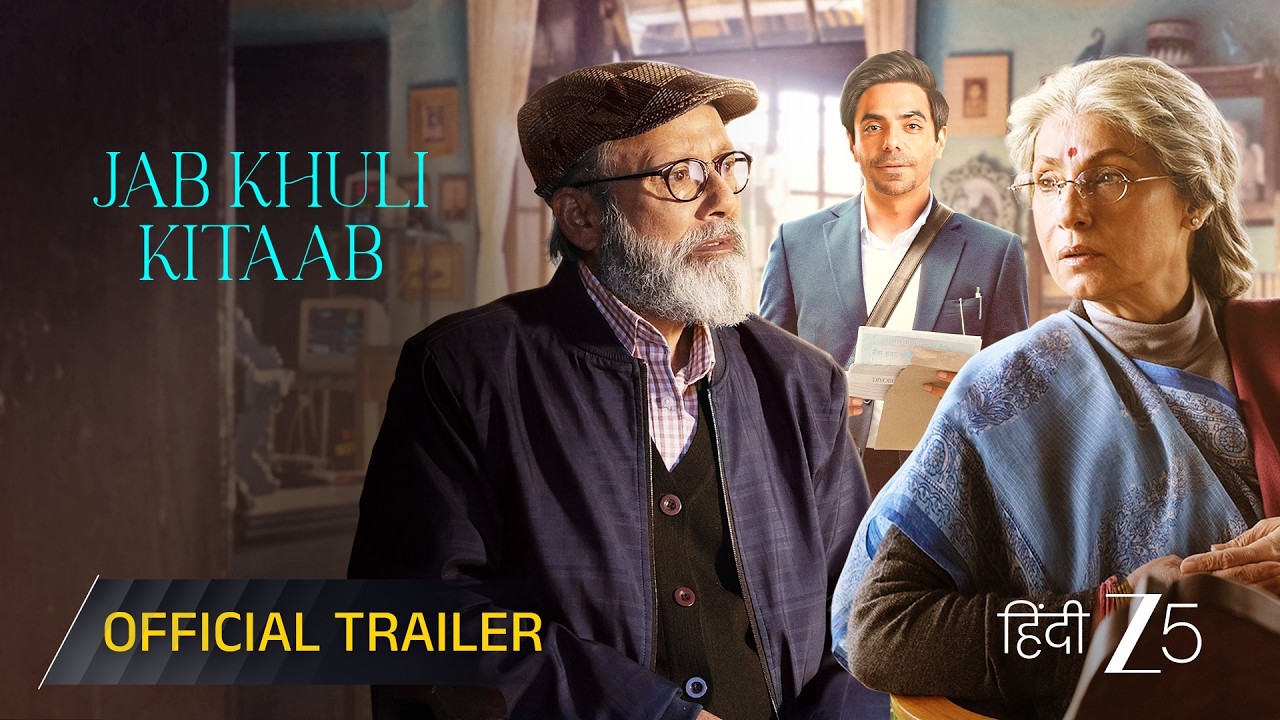
Jab Khuli Kitaab Movie 2026 Movierulez Review Details
Jab Khuli Kitaab Review – A Late-Life Love Story or a Marriage’s Autopsy? The Real Analysis
Watching two masters like Pankaj Kapur and Dimple Kapadia navigate a marital minefield is a masterclass in acting, but does Saurabh Shukla’s film offer more than just impeccable performances?
The Core Conflict
After 50 years of marriage, Anusuya (Dimple Kapadia) confesses a decades-old affair to her husband, Gopal (Pankaj Kapur). This seismic revelation shatters their quiet, routine life, propelling Gopal to demand a divorce.
What follows is less a courtroom drama and more an emotional excavation, as their entire family grapples with the fallout of a secret kept too long.
| Role | Name |
|---|---|
| Gopal | Pankaj Kapur |
| Anusuya | Dimple Kapadia |
| Supporting Role | Aparshakti Khurana |
| Director & Writer | Saurabh Shukla |
| Producers | Naren Kumar, Sameer Nair, et al. |
Who Is This Movie For?
This is essential viewing for audiences starved of narratives centered on mature, complex adults. If you believe romance and existential drama are the sole domain of the young, this film is your corrective.
It’s for anyone who appreciates dialogue-driven cinema where a glance carries the weight of a monologue. Fans of Shukla’s brand of humane, observant humor will find much to savor.
Script Analysis: The Flow of Truth
Saurabh Shukla’s script is structurally deceptively simple. The inciting incident—the confession—happens early, transforming the rest of the film into a patient study of aftermath.

The pacing mirrors the hesitant, stumbling process of grief and re-evaluation. It avoids grand, melodramatic confrontations for quieter, more devastating moments of realization.
The logic lies in its emotional truth: people in their 70s don’t scream and break things; they retreat, they calculate, and their pain is often silent and profound.
Character Arcs: Growing Old, Not Just Older
Gopal’s arc is from certainty to shattered confusion, and finally to a hard-won, different kind of clarity. Kapur portrays not just betrayal, but the erosion of a man’s entire life narrative.
Anusuya’s journey is from the relief of unburdening to the stark loneliness of consequence. The film’s brilliance is in suggesting that growth isn’t about becoming new people, but about finding a new, perhaps more honest, configuration for the same old souls.
The supporting family, especially Aparshakti Khurana’s character, act as effective mirrors and comic relief, highlighting generational differences in handling crisis.
The Climax Impact: A Satisfying Resolution?
Without spoilers, the climax avoids neat, sentimental closure. It opts for a resolution that feels earned and authentic to characters who have lived this long.

It’s less about a definitive “happy” or “sad” ending and more about the acceptance of a complicated, shared history. It satisfies intellectually and emotionally because it respects the audience’s intelligence and the characters’ depth, offering a poignant, open-ended sense of peace rather than a forced reconciliation.
| What Worked | What Didn’t |
|---|---|
| The central premise of mature romance & conflict | Pacing may feel slow for some viewers |
| Kapur & Kapadia’s transcendent performances | Underutilization of a talented supporting cast |
| Shukla’s humane, observant humor | A few familial subplots feel tangential |
| The avoidance of melodrama for quiet realism | Musical score is subtle to a fault |
Writer’s Execution: The Weight of Words
Saurabh Shukla’s dialogue is the film’s bedrock. It’s sparse, loaded, and authentic. Conversations between Gopal and Anusuya are minefields of unspoken history.
The humor, often delivered by Aparshakti Khurana, arises naturally from situational irony and generational gaps, never feeling like forced comic relief.
The writing’s greatest strength is its restraint, allowing the actors’ faces to tell the story the words leave unsaid.
Miss vs Hit Factors
The clear hit is the casting and the central performances. Kapur and Kapadia don’t just act; they inhabit. The film’s commitment to its mature perspective is another resounding success.
Where it slightly misses is in fully integrating its wider family ensemble. Some characters feel like devices to provoke the central duo rather than fully fleshed-out individuals.

The serene mountain backdrop is a visual hit, but the narrative occasionally leans on it a bit too heavily to signify “escape” or “reflection.”
Technical Brilliance: A Frame for Feeling
The cinematography is intimate and unflashy, using close-ups to devastating effect, capturing every flicker of pain and regret. The editing is deliberate, giving scenes room to breathe, which amplifies the emotional impact.
The music and sound design are notably subtle, almost minimalist. There are no soaring ballads here—just a gentle, sometimes whimsical score that underscores emotion without manipulating it.
This technical restraint ensures the focus remains squarely on the human drama.
| Aspect | Rating / Comment |
|---|---|
| Story & Theme | 9/10 – Refreshing, mature, and emotionally authentic |
| Visual Language | 8/10 – Effectively intimate, but safe in its composition |
| Performance | 10/10 – A masterclass from the leads |
| Pacing & Editing | 7/10 – Deliberate, but risks feeling slow |
| Overall Impact | 8.5/10 – A poignant, memorable experience |
Frequently Asked Questions (FAQs)
Q: Is the movie a depressing watch?
A: Not at all. While dealing with heavy themes, it’s infused with Saurabh Shukla’s signature wit and moments of genuine warmth and humor. It’s contemplative, not bleak.
Q: Do they get a divorce in the end?
A> The film is less concerned with the legal outcome and more with the emotional and psychological journey of the couple. The ending provides a resolution to their conflict, but not in a simplistic, predictable way.

Q: Is this only for older audiences?
A> Absolutely not. The themes of love, betrayal, forgiveness, and family are universal. It offers a profoundly insightful look at long-term relationships that can be enlightening for viewers of any age.
This analysis is based on the theatrical experience and cinematic merit.
Was this trade analysis helpful?
Your feedback helps Movierullz editors maintain trade database integrity.