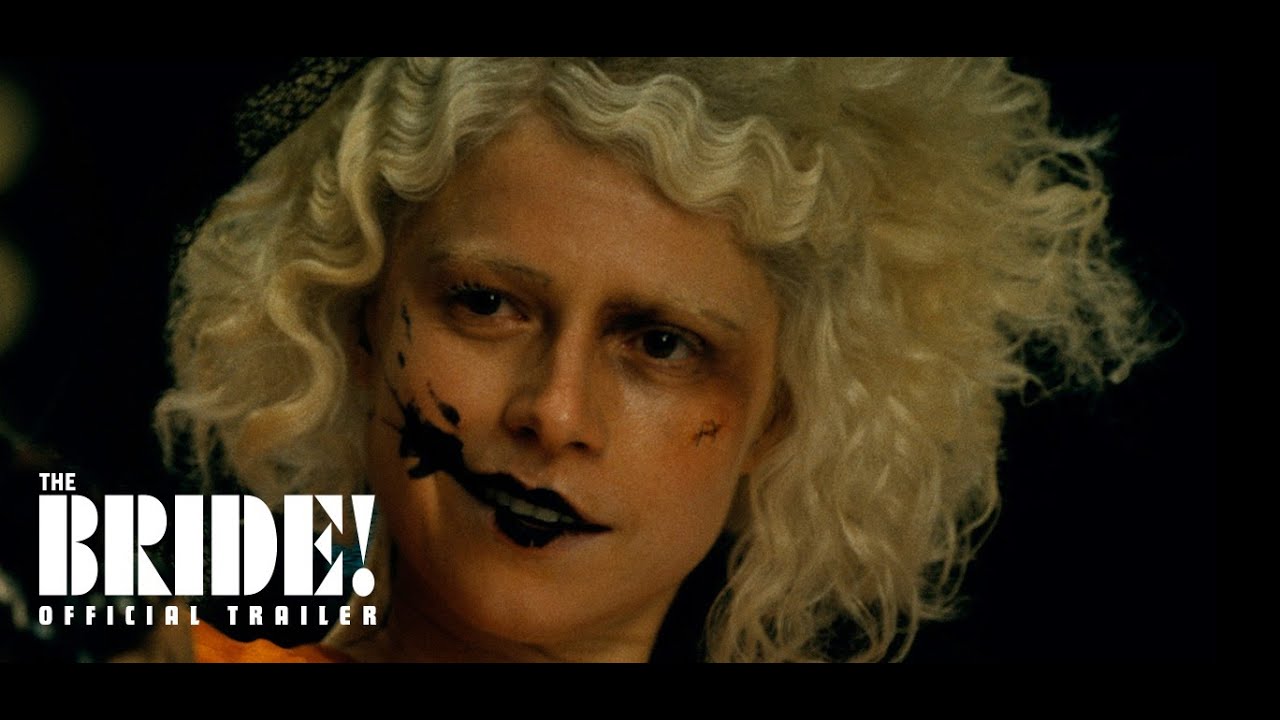
The Bride Movie 2026 Movierulez Review Details
The Bride (2026) Review – A Punk-Rock Monsterpiece or a Beautiful Mess? The Real Analysis
As the lights came up, I was left with a singular, electrifying thought: when was the last time a monster movie made me want to storm the barricades?
The Core Conflict: A Love Story That Sparks a Revolution
In 1930s Chicago, a lonely monster named Frank (Christian Bale) seeks a mate. A mad scientist revives a murdered woman (Jessie Buckley), creating not a docile bride, but an omniscient fury who remembers every injustice inflicted upon women throughout history.
Their fugitive romance becomes the unlikely catalyst for a nationwide feminist uprising.
| Role | Name |
|---|---|
| The Bride / Ida | Jessie Buckley |
| Frank (The Monster) | Christian Bale |
| Detective Jake Wiles | Peter Sarsgaard |
| Myrna Malloy | Penélope Cruz |
| Dr. Cornelia Euphronius | Annette Bening |
| Director / Writer | Maggie Gyllenhaal |
| Composer | Hildur Guðnadóttir |
Who Is This Movie For?
This is not for the casual horror tourist. It’s for the cinephile who craves audacity over tidiness. Fans of Gyllenhaal’s The Lost Daughter will recognize the psychological ferocity.
Admirers of punk-infused period pieces like Birds of Prey or the gothic romance of Crimson Peak will find a wild, kindred spirit. If you believe monsters are the perfect vessels for societal critique, take your seat.
Script Analysis: Ambitious, Uneven, and Unapologetic
Gyllenhaal’s screenplay is a high-wire act of staggering ambition. It attempts to braid a gothic romance, a police procedural, a road movie, and a revolutionary manifesto into a coherent 130-minute narrative.

The flow is less a smooth river and more a series of powerful, choppy waves. The first act, establishing the Bride’s terrifying awakening and her volatile chemistry with Frank, is masterfully paced.
However, the film’s middle section lurches as it juggles the detectives’ pursuit and the burgeoning riots. The logic is emotional, not procedural—a choice that will frustrate some as it empowers others.
Character Arcs: From Creation to Liberation
The arcs here are seismic. Jessie Buckley’s Bride undergoes the most radical transformation: from a blank-slate corpse to a vessel of ancient rage, and finally, to a self-actualized icon.
Her growth is measured not in softening, but in focusing her fury. Christian Bale’s Frank has a quieter, tragic arc—a being who longs for traditional companionship but creates something utterly beyond his control.
The most surprising growth belongs to Penélope Cruz’s Myrna Malloy, who evolves from a sidelined assistant to the film’s moral and active compass.
The Climax Impact: A Satisfyingly Unconventional Resolution
Does the ending satisfy? It satisfies the film’s own punk-rock ethos. The Niagara Falls confrontation strips away the romantic fantasy, leading to a violent, raw reckoning.
The final revival sequence, narrated by a possessed Mary Shelley, is less a happy ending and more a transcendent rebirth into a new kind of myth. It closes the loop on the central relationship while blowing the doors off the narrative’s societal implications.
It’s bold, strange, and thematically perfect.
| What Worked | What Didn’t |
|---|---|
| The core concept: a feminist Bride of Frankenstein. | Underdeveloped detective subplot that saps momentum. |
| Buckley & Bale’s explosive, tragic chemistry. | The revolutionary arc needed more screen time to land fully. |
| Seamless genre blending (horror, romance, road movie). | Pacing lurches in the second act. |
| The audacious, riot-sparking narrative ambition. | Some supporting characters feel like functional plot tools. |
Writer’s Execution: Dialogue That Cuts and Soars
Gyllenhaal’s dialogue is a highlight. The Bride’s speeches are not mere monologues; they are incantations and manifestos, delivered by Buckley with a terrifying, crystalline clarity.
The interplay between Frank and his Bride is a fascinating dance of archaic yearning and modern defiance (“You have an amazing vocabulary”). Where the script stumbles is in the more conventional cop-movie exchanges, which feel imported from a less interesting film.
Miss vs. Hit Factors: Where Ambition Meets Execution
The hit factor is undeniable: the central performance by Jessie Buckley. She is the film’s raging heart and its greatest special effect. The punk-gothic aesthetic, married to Hildur Guðnadóttir’s throbbing score, creates a unique and immersive world.
The hit is the film’s fearless ideological core.

The miss factor is the lack of narrative discipline. The film’s attempt to be everything—love story, chase thriller, revolution saga—means no single thread feels fully nourished.
The detective storyline, while acted well, is the primary culprit, often feeling like a distraction from the more compelling central duo.
Technical Brilliance: A Sensory Assault
Lawrence Sher’s cinematography is sumptuous, rendering 1930s America in both grimy detail and glamorous sheen, with IMAX sequences that are breathtaking.
Hildur Guðnadóttir’s score, augmented by Fever Ray’s electronic pulses, is a character in itself—a blend of dread, romance, and anarchic energy.
The editing by Dylan Tichenor expertly stitches together moments of tender intimacy with shocking, brutal violence, maintaining a fever-dream rhythm.
| Aspect | Rating / Comment |
|---|---|
| Story Ambition | A+ (Fearlessly conceptual) |
| Visual Execution | A (Gothic-punk perfection) |
| Character Depth | B+ (Central duo: A+, Supporting: B-) |
| Pacing & Cohesion | B- (Uneven but compelling) |
| Overall Impact | A- (Flawed, unforgettable, essential) |
Frequently Asked Questions (FAQs)
Is the Bride actually possessed by Mary Shelley?
Yes, and no. The film uses the narrative device of Mary Shelley’s spirit “possessing” the story and characters (voiced through others).

The Bride herself is not literally Shelley, but she is awakened with the cumulative knowledge and rage of women’s history—a concept channeled through Shelley’s literary voice.
What is the significance of the “trance dancing” scenes?
These sequences are the film’s visual representation of the Bride’s transformative power.
Her dance is a primal, hypnotic force that breaks social conventions and unlocks a repressed, collective frenzy in others, mirroring the societal awakening she sparks.
Why was the original composer, Jonny Greenwood, replaced?
Scheduling conflicts led to Greenwood’s departure. His replacement, Hildur Guðnadóttir, was a masterstroke, as her signature style—combining haunting classical motifs with visceral, organic textures—proved ideal for the film’s themes of creation, rage, and rebirth.
This analysis is based on the theatrical experience and cinematic merit.
Was this trade analysis helpful?
Your feedback helps Movierullz editors maintain trade database integrity.