Charitha Kamakshi Movie 2026 Movierulez Review Details
Charitha Kamakshi Review – A Soulful OTT Experiment or a Forgotten Melodrama? The Real Analysis
Having seen countless romantic dramas chase the theatrical spotlight, I’m fascinated by a film that consciously sidesteps it. Charitha Kamakshi isn’t just a movie; it’s a statement on modern Telugu cinema’s bifurcation.
Does its intimate, OTT-first approach forge a deeper connection, or does it simply get lost in the algorithm?
The Core Conflict
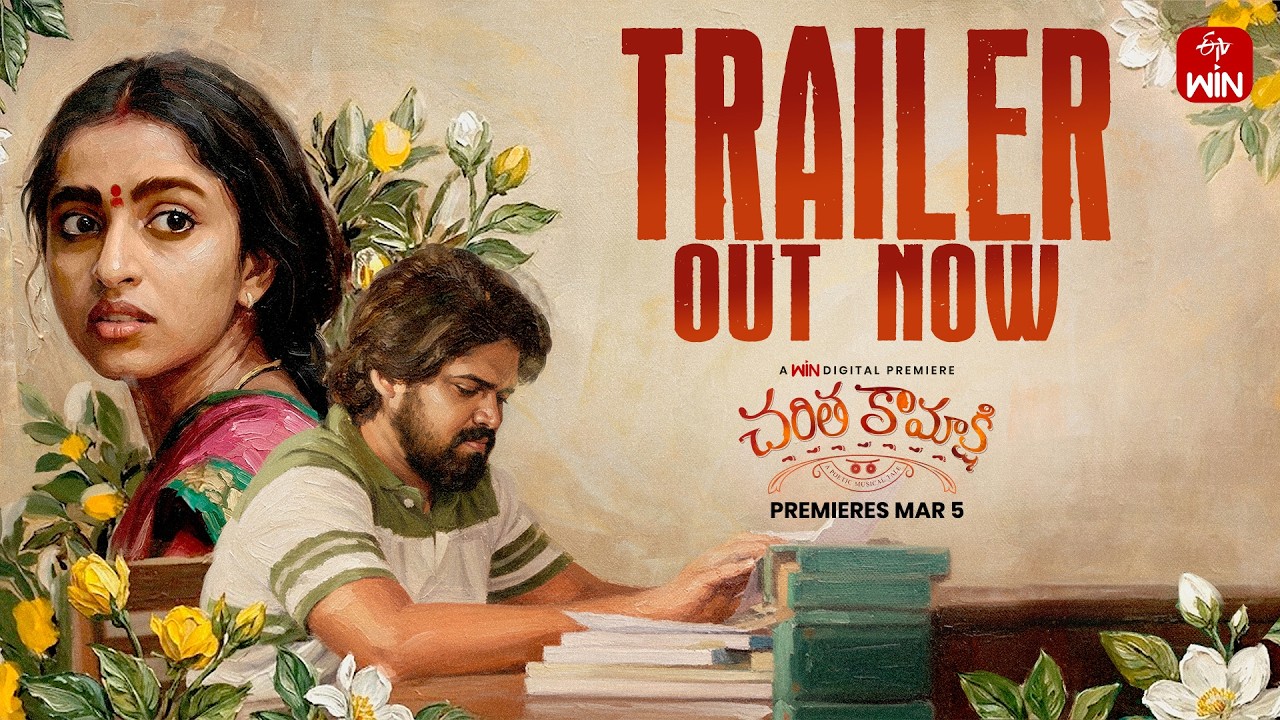
This is a classic tale of heart versus home. Charitha (Divya Sripada), a young woman bound by familial duty and tradition, finds her world upended by a passionate, creative-minded lover (Abhai Naveen).
Their slow-burn romance becomes a battlefield where personal desire clashes with societal expectation, leading to a crisis that tests the very limits of love and sacrifice.
| Role | Name |
|---|---|
| Charitha/Kamakshi | Divya Sripada |
| Male Lead | Abhai Naveen |
| Director | Chandu Saayi |
| Music Director | Abu |
| Cinematographer | Rocky Vanamali |
| Producer | Rajini Reddy |
Who Is This Movie For?
This film speaks directly to the OTT-native audience seeking substance over spectacle. It’s for viewers who crave the emotional texture of a 90s family melodrama, repackaged with a quieter, more performance-centric aesthetic.
If your ideal weekend watch is a heartfelt, character-driven story that prioritizes feeling over fireworks, this is your film. Fans of big-budget star vehicles and high-octane drama should look elsewhere.
Script Analysis: The Double-Edged Sword of Tradition
The screenplay by Gnaneshwar Devarapaga and Shiva Shankar Chinthakindhi is a study in deliberate pacing. It understands its genre intimately, building emotional capital through small, accumulated moments—a glance held too long, a hesitant conversation.

The logic is rooted in a recognizable, middle-class Telugu reality, which is its greatest strength and its primary vulnerability.
However, this adherence to tradition borders on predictability. The narrative arc, from blossoming love to familial opposition to impending crisis, follows a well-trodden path.
The script’s success hinges entirely on execution—on whether the nuances of performance and direction can make these familiar beats feel newly discovered.
The pacing, while intentionally slow, risks feeling lethargic if the emotional beats don’t land with precision.
Character Arcs: The Weight of Expectation
Charitha’s journey is the film’s anchor. Divya Sripada embodies the internal conflict of a woman torn between her heart’s yearning and her ingrained sense of duty.
The arc is less about radical transformation and more about the painful crystallization of choice. Does she grow? She evolves from a state of passive acceptance to one of active, costly decision-making.
Abhai Naveen’s character serves as the catalyst, representing a world of emotional freedom. His arc is arguably simpler, a test of steadfastness against external pressure.

The supporting cast, including Babloo Prithveeraj and Sunitha Manohar, effectively personify the traditional forces at play. Their roles are archetypal but crucial, providing the societal framework against which the central rebellion is measured.
The Climax Impact: A Bittersweet Resolution
The film’s climax, hinted at through health crises and desperate pleas, opts for emotional truth over crowd-pleasing fantasy. It delivers a satisfying conclusion not because it ties everything with a neat bow, but because it remains faithful to its established tone of bittersweet realism.
The resolution feels earned by the characters’ journeys, offering a poignant closure that resonates more deeply than forced jubilation. It’s a climax that lingers in melancholy reflection, perfectly suited for the intimate viewing experience it was designed for.
| What Worked | What Didn’t |
|---|---|
| Strong, focused emotional core | Predictable narrative structure |
| Casting fits the OTT-intimate format | Limited scale may deter some viewers |
| Grounded, consistent aesthetic | Risk of feeling too familiar |
| Effective, mood-supporting score | Delayed release may impact freshness |
Writer’s Execution: Dialogue as a Window to the Soul
The dialogue avoids theatrical monologues in favor of quieter, more fragmented conversations. This is where the writing shines—it captures the unsaid tensions within families, the half-confessions between lovers, and the weight of silence.
The lyrics by Kuchi Shankar and others, woven into Abu’s score, act as an emotional chorus, deepening the subtext. The language feels authentic to its rural-tinged setting, never straining for poetic effect but often achieving it through simplicity.
Miss vs Hit Factors: The OTT Gambit
The film’s greatest hit is its confident identity. It knows it’s a small-budget, intimate drama and doesn’t apologize for it. This clarity of purpose translates into a cohesive, tonally uniform film where performance, music, and visuals work in harmony.
The decision for a direct-to-OTT release was a strategic masterstroke, placing it directly before its ideal audience without the box-office noise.

The potential miss lies in that very specificity. In a crowded streaming landscape, the lack of a standout visual hook or star power could hinder discoverability.
The familiar plot, while well-executed, doesn’t offer a novel hook to generate viral word-of-mouth. It’s a quality product that must rely on platform algorithms and niche audience advocacy to find its viewers.
Technical Brilliance: Crafting Intimacy
Rocky Vanamali’s cinematography is the film’s silent narrator. Using naturalistic lighting and a handheld sensibility, the camera doesn’t just observe but inhabits the spaces—the cramped homes, the dusty lanes, the intimate close-ups that capture fleeting emotions.
Abu’s music is not a separate entity but the film’s emotional bloodstream, with a soothing score that underscores without overwhelming.
Editor Kodati Pavan Kalyan maintains a rhythm that feels organic to the characters’ internal lives, while sound designer Padma Rao creates a rich, believable ambience. The technical package is uniformly excellent, precisely engineered to support the story’s soulful, grounded aspirations.
| Aspect | Rating / Comment |
|---|---|
| Story Originality | 6/10 – Classic beats, faithfully told. |
| Visual Authenticity | 9/10 – Grounded and beautifully intimate. |
| Emotional Payoff | 8/10 – Earned and bittersweet. |
| Pacing & Rhythm | 7/10 – Deliberate, risks feeling slow. |
| Overall Cohesion | 9/10 – A perfectly unified vision. |
Frequently Asked Questions
Is Charitha and Kamakshi the same person?
Yes. The title uses two names for the female lead, symbolizing perhaps her dual identity—the person she is (Charitha) and the goddess-like ideal or burden (Kamakshi) she is expected to embody.
What is the central conflict in the film?
The core conflict is between individual desire and familial obligation. It explores whether a deep, personal love can survive, or should survive, when it directly opposes traditional expectations and duties.

Why was the film released directly on OTT?
As a small-budget, intimate drama with emerging stars, a direct OTT release on ETV Win was a low-risk, high-reach strategy. It placed the film directly before its target audience without the financial pressure of a theatrical run.
This analysis is based on the theatrical experience and cinematic merit.
Was this trade analysis helpful?
Your feedback helps Movierullz editors maintain trade database integrity.