Veera Kambala Movie 2026 Movierulez Review Details
Veera Kambala Review – A Rustic Spectacle or a Cluttered Race? The Real Analysis
Having witnessed countless rural sagas, I must ask: does the sheer authenticity of a 800-year-old tradition justify a film’s narrative stumbles, or are we simply muddying the waters of good cinema?
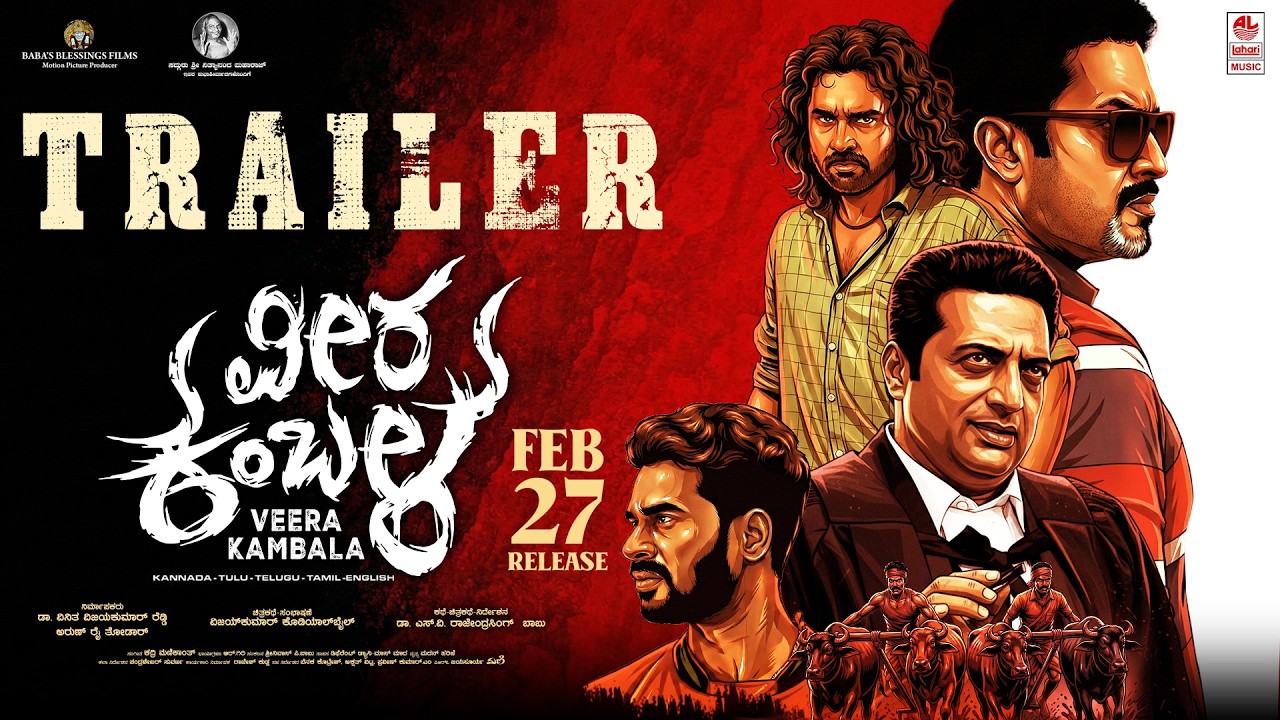
In the misty paddy fields of Tulunadu, Veera (Adithya), a champion of the traditional Kambala buffalo race, finds his world upended when Mumbai’s underworld, led by a ruthless don (P.
Ravi Shankar), encroaches on his village. What begins as a fight for track supremacy becomes a brutal war for honor, family, and survival, forcing Veera to bridge the gap between ancient soil and modern crime.
| Role | Name |
|---|---|
| Veera | Adithya |
| Patriarch / Antagonist | Prakash Raj |
| Mafia Don | P. Ravi Shankar |
| Special Role | Radhika Chethan |
| Kambala Champion | Srinivasa Gowda |
| Director | S.V. Rajendra Singh Babu |
| Music Director | Manikanth Kadri |
| Cinematographer | R. Giri |
Who Is This Movie For?
This film is a direct hit for audiences craving unadulterated mass entertainment rooted in cultural spectacle. If you are energized by the raw, earthy fervor of films like Jallikattu or the rural heroism in Sukumar’s earlier works, you will find your pulse racing here.
It’s a love letter to coastal Karnataka and a testament to veteran director Babu’s understanding of single-screen dynamics. However, viewers seeking nuanced character studies or a tightly woven plot may find themselves bogged down in the narrative mud.

Script Analysis: The Flow of the Track
Vijay Kumar Kodialbail’s script operates in two distinct gears. The first half is a masterclass in building a visceral world. The pacing mirrors a Kambala race itself—starting with immersive cultural texture, building comic and romantic subplots, and accelerating into the adrenaline of the track.
The logic holds strong within the village ecosystem. However, the script stumbles at the interval point with a jarring shift to Dubai. This geographical and tonal leap, while aiming for scale, fractures the carefully established rustic purity.
The second half struggles to balance the mafia intrigue with the cultural core, leading to a sag in pacing before the climactic rush.
Character Arcs: Growth in the Muck?
Adithya’s Veera undergoes a physical and symbolic transformation. He evolves from a track champion to a protector of an entire way of life. His arc is classic but effective, sold through sheer physical commitment and righteous anger.
Prakash Raj, as always, adds layers of gravitas. His character exists in a moral grey zone, bridging two worlds, and provides the film’s most intriguing internal conflict.

The weak link, unfortunately, is Radhika Chethan’s character, who is severely under-served. Her role feels decorative, a missed opportunity to inject a stronger contemporary voice into the traditional fray.
The Climax Impact: A Satisfying Finish Line?
The climax is where the film’s ambitions spectacularly converge. By merging the final, high-stakes Kambala race with the direct confrontation with the mafia, director Babu delivers pure cinematic catharsis.
Buffaloes become instruments of vengeance, mud flies, and Manikanth Kadri’s score reaches a thunderous crescendo. It’s a visually overwhelming and emotionally satisfying payoff that largely redeems the narrative detours of the second half. It reminds you why you bought the ticket.
| What Worked | What Didn’t |
|---|---|
| Authentic, breathtaking Kambala race sequences. | Jarring Dubai subplot disrupts rustic tone. |
| Adithya’s convincing, physically demanding performance. | Pacing sags during mafia buildup segments. |
| Prakash Raj’s layered, grounding presence. | Female lead is underdeveloped and sidelined. |
| Manikanth Kadri’s powerful, folk-infused score. | Comic relief occasionally feels excessive. |
Writer’s Execution: The Dialogue of Dirt and Destiny
The dialogue shines brightest in its native context. The lines spoken in the heat of the race, the confrontations steeped in local pride, and the elder wisdom delivered by veterans like Bhojaraj Vamanjoor crackle with authenticity.
They effectively translate the film’s core conflict—tradition versus corrosive modernity. Where it falters is in the urban, gangster segments. The lines there descend into generic territory, lacking the unique flavor that makes the village portions so compelling.

Miss vs Hit Factors: What Tipped the Scales?
The hit factor is undeniably the cultural spectacle. The decision to use real Kambala champions and buffaloes, filmed with kinetic energy by R. Giri, is a game-changer.
It provides an authenticity no VFX could replicate. Adithya’s committed performance and Kadri’s roaring BGM are the twin engines that power this vehicle.
The miss factor is the lack of narrative discipline. The film tries to be both a deep cultural ode and a pan-Indian mass action film. The Dubai segment is the prime symptom of this identity crisis, pulling focus from the unique selling proposition: the mud, the sweat, and the thunder of Tulunadu.
Technical Brilliance: A Sensory Assault
Technically, the film is a robust achievement. R. Giri’s cinematography is tactile—you feel the spray of the mud, the heat of the competition. The sound design, especially in Atmos, is immersive, layering buffalo hooves, crowd roars, and the churn of water into a potent mix.
Editor Srinivas P. Babu syncs the race montages perfectly with Kadri’s pulsating score. The art direction meticulously recreates the Kambala arena, making it a character in itself. This technical prowess elevates the material, ensuring the spectacle is never in doubt.

| Aspect | Rating / Comment |
|---|---|
| Cultural Story | 9/10 – Authentic, passionate, and immersive. |
| Visual Spectacle | 8/10 – Kinetic, muddy, and grand in scale. |
| Character Depth | 6/10 – Hero & antagonist work; others are thin. |
| Pacing & Narrative Flow | 6.5/10 – Strong first half, uneven second. |
| Overall Audio-Visual Impact | 8.5/10 – Where the film truly wins. |
Frequently Asked Questions (FAQs)
Is the Kambala racing real or CGI?
The racing sequences are overwhelmingly real, featuring champion jockeys like Srinivasa Gowda and trained buffalo herds, filmed on custom-built tracks in Moodbidri. This authenticity is the film’s backbone.
Why does the story shift to Dubai?
The Dubai segment serves to escalate the conflict, taking the rural hero into the urban underworld’s heartland to raise the stakes. However, many critics and audiences found this shift tonally disruptive to the rustic narrative.
Can I watch this film without knowing about Kambala?
Absolutely. The film efficiently explains the tradition’s basics and emotional significance through its narrative. The racing is presented as visceral action, understandable and thrilling to any viewer.
This analysis is based on the theatrical experience and cinematic merit.
Was this trade analysis helpful?
Your feedback helps Movierullz editors maintain trade database integrity.