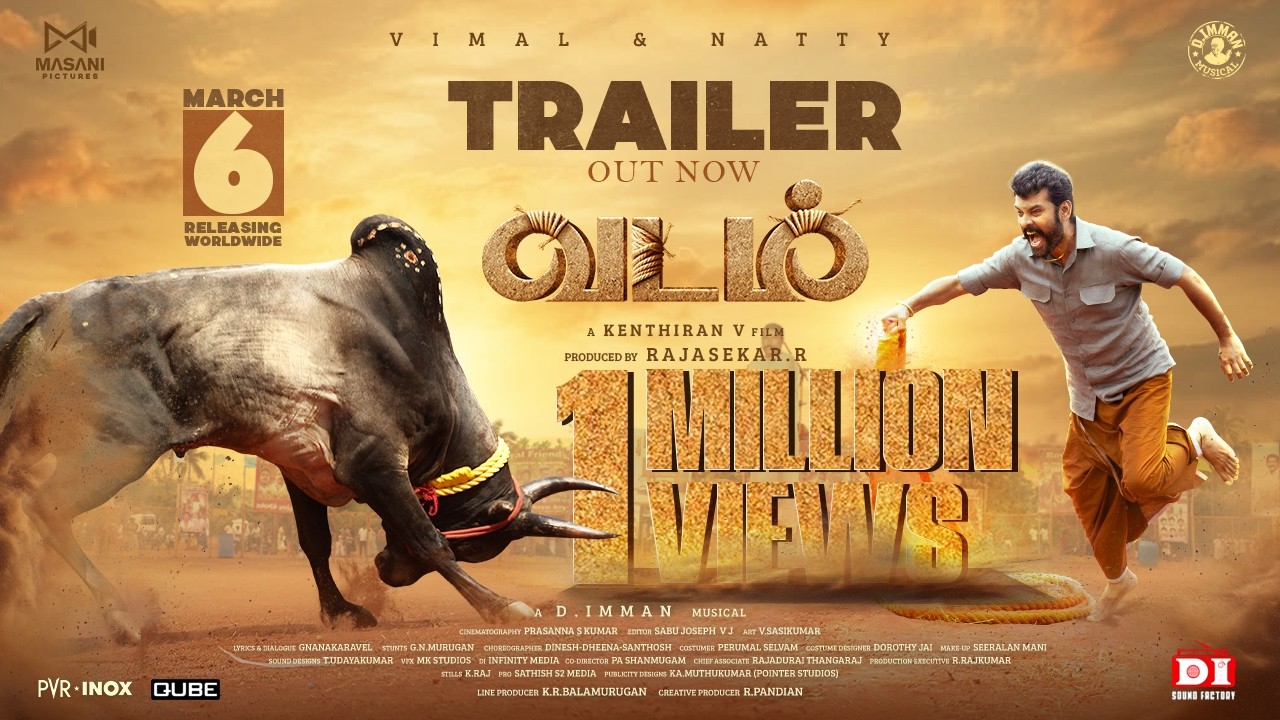
Vadam Movie 2026 Movierulez Review Details
Vadam (2026) Review – A Gritty Tug-of-War Epic or Just Another Rural Rumble? The Real Analysis
As a critic who has seen countless village sagas, I walked in skeptical: can a film about a rope-pulling sport truly hold tension for over two hours? The answer, surprisingly, is a visceral yes—if you surrender to its raw, unvarnished machismo.
The Core Conflict
In a village where honor is measured in inches of coir rope, a disgraced son (Vimal) must master the ancient sport of Vada Manjuvirattu to reclaim his family’s legacy, facing off against a ruthless rival (Natty) in a brutal clash of muscle, mud, and morality.
| Role | Name |
|---|---|
| Director | Kenthiran V |
| Lead Actor | Vimal |
| Antagonist | Natarajan Subramaniam (Natty) |
| Female Lead | Sangeetha Kalyan |
| Music Director | D. Imman |
| Cinematographer | Prasanna S Kumar |
Who Is This Movie For?
This is a film crafted with surgical precision for the single-screen mass audience. If you crave the earthy authenticity of a Paruthiveeran paired with the sports drama adrenaline of a Sarpatta Parambarai, you are the prime target.
Urban multiplex viewers seeking nuanced subtext may find the beats familiar. But for those who want their cinema loud, proud, and drenched in sweat, Vadam delivers a potent punch.
Script Analysis: The Strain and The Slack
The screenplay’s greatest strength is its singular focus. Every subplot—a romantic thread, a comedic aside, a familial betrayal—ultimately ties back to the central rope. This thematic discipline is commendable.
However, the first act suffers from predictable exposition. We meet the stoic hero, the arrogant villain, and the virtuous love interest through well-worn archetypes. The plot mechanics are visible, relying on audience familiarity with the rural revenge template to fill in gaps.

Where the script finds its groove is in the technicalities of the sport itself. The rules of the tug-of-war, the politics of team selection, and the economics of victory are explained with a documentary-like grit that lends the spectacle genuine stakes.
Character Arcs: Growth Through Grip
Vimal’s protagonist arc is less about transformation and more about intensification. He begins as a man defined by a past failure and ends as a force of nature, his resolve hardened like the ropes he pulls. It’s a physically commanding performance that sells the myth.
Natty’s antagonist, conversely, is disappointingly static. He is cruel because the plot requires a foil. A missed opportunity was to explore the shared obsession that binds hero and villain, rather than painting in simple shades of good and evil.
The supporting cast shines. Bala Saravanan provides necessary levity without breaking tone. Aadukalam Naren, as a grizzled elder, adds layers of regret and history that the main plot sometimes lacks.
The Climax Impact: A Cathartic, Muddy Release
The final tug-of-war, staged in a torrential downpour, is a masterclass in visceral filmmaking. Director Kenthiran V understands that the climax isn’t just about who wins the match, but what the struggle symbolizes.
The editing, sound design, and Imman’s thundering BGM converge into a sensory overload. It’s emotionally satisfying in a primal way, delivering the heroic catharsis the film meticulously builds toward. The resolution, while neat, feels earned by the sheer physical ordeal depicted.

| What Worked | What Didn’t |
|---|---|
| The raw, practical spectacle of the Vada sequences. | A formulaic first act that checks familiar boxes. |
| D. Imman’s anthemic score elevating mass moments. | Underwritten female characters relegated to the sidelines. |
| Strong ensemble casting, especially in comic & elder roles. | A villain lacking compelling motivation or depth. |
| Authentic, gritty cinematography that grounds the drama. | Pacing drags in the mid-section with predictable conflicts. |
Writer’s Execution: Dialogue of Dust and Blood
Dialogues by Gnanakaravel are a mix of punchy, rustic one-liners and occasional, heavy-handed proverbs about strength and unity. The rural lingo feels authentic, not caricatured, which is a significant achievement.
Where the writing stumbles is in its quieter moments. The emotional exchanges between characters often tell us what they feel rather than letting subtext and performance convey it. The dialogue serves the plot efficiently but rarely transcends it to become truly memorable.
Miss vs Hit Factors: What Tipped the Scale
The hit factor is unequivocally the sport itself. Vadam takes a niche, physical tradition and makes it cinematically colossal. The decision to prioritize practical stunts and real locations over sterile VFX gives the film a tangible, bruising weight that is its core selling point.
The miss factor is a lack of narrative ambition. It plays safely within the confines of its genre. A bolder script could have used this unique backdrop to explore deeper themes of toxic masculinity, caste dynamics within the sport, or the economic exploitation of rural athletes.
It flirts with these ideas but always pulls back for a safer, more commercial tug.
Technical Brilliance: A Sensory Assault
Prasanna S Kumar’s cinematography is the film’s backbone. The camera doesn’t just observe the action; it’s in the mud, feeling the strain of every muscle and the spray of every droplet.

The color grading, all earthy browns and stark contrasts, visually reinforces the film’s harsh, unforgiving world.
D. Imman’s music is a character in itself. From the folk-fury of “Pandi Muni” to the stirring background score during the clashes, his work doesn’t just accompany the images—it drives the emotional engine of the film.
Editor Sabu Joseph VJ deserves credit for the rhythm of the sports sequences. He understands the geography of the tug-of-war, cutting between straining faces, taut ropes, and slipping feet to build almost unbearable tension.
| Aspect | Rating / Comment |
|---|---|
| Story Originality | 7/10 – Familiar template, unique sport. |
| Visual Authenticity | 9/10 – Cinematography is gritty and immersive. |
| Character Depth | 6/10 – Archetypal heroes/villains, strong support. |
| Pacing & Editing | 8/10 – Climax is masterful, mid-section sags. |
| Overall Impact | 8/10 – A targeted, effective mass entertainer. |
Frequently Asked Questions (FAQs)
Is the sport of Vada Manjuvirattu real?
Yes. It is a traditional Tamil bull-taming tug-of-war, and the film depicts a heightened but grounded version of it, which forms the central conflict.
Does the film have a message beyond the action?
Superficially, it champions unity and honor. While it critiques blind machismo indirectly, its primary goal is to entertain rather than deliver a profound social commentary.
Is the film suitable for family viewing?
With its U/A rating, it is. The violence is intense but not graphic, stemming from sports and brawls. The themes are simple and the morality clear-cut, making it accessible for older children and family audiences.

This analysis is based on the theatrical experience and cinematic merit.
Was this trade analysis helpful?
Your feedback helps Movierullz editors maintain trade database integrity.