The Rise Of Ashoka Movie 2026 Movierulez Review Details
The Rise of Ashoka Review – A Gritty Epic or a Missed Opportunity? The Real Analysis
As a critic who has seen countless historical dramas try and fail to capture the soul of an era, I walked into *The Rise of Ashoka* with profound skepticism. Can a film with a modest budget truly deliver the weight of a legend? The answer is a fascinating, flawed, and ultimately earnest attempt.
The Core Conflict
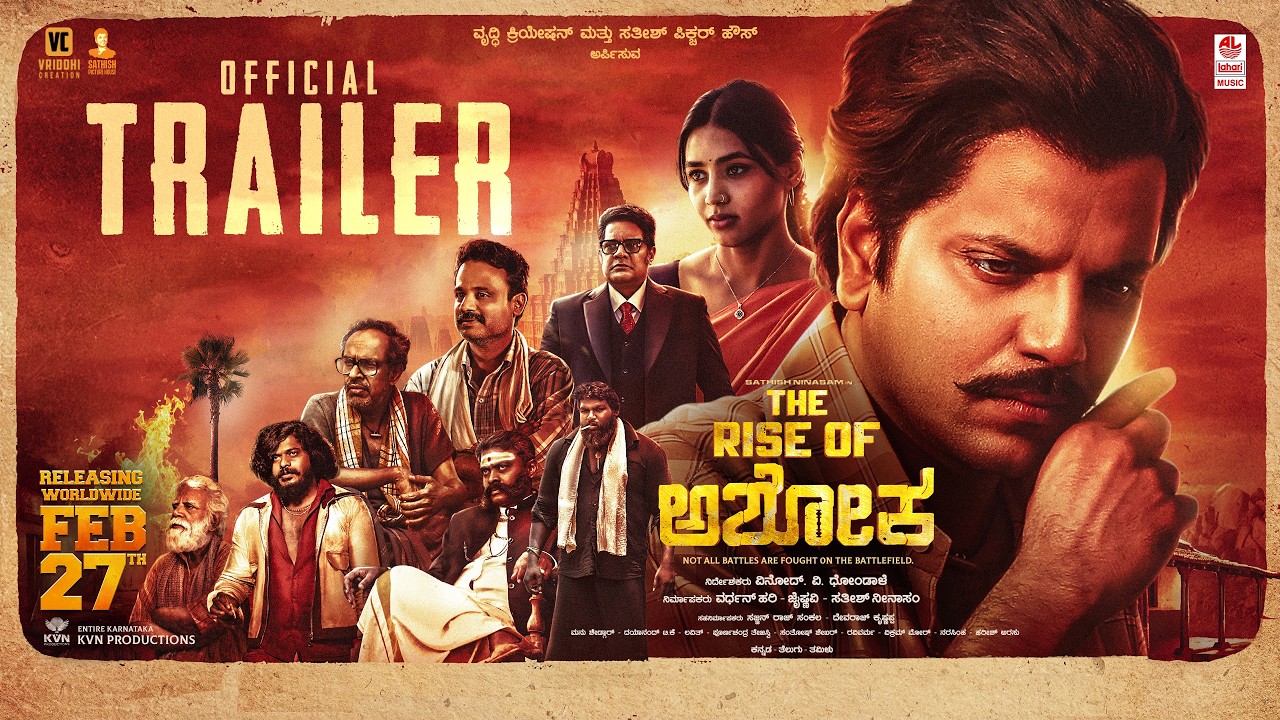
This is not a textbook biopic. Director Vinod V Dhondale transposes the essence of Emperor Ashoka’s transformative journey onto a gritty, 1970s rural Karnataka canvas.
It’s the story of a hot-blooded warrior, Ashoka (Sathish Ninasam), whose fierce ambition to liberate his oppressed people from feudal lords clashes with the corrupting nature of power itself.
His evolution from a weapon of vengeance to a leader of conscience forms the film’s moral spine.
| Role | Name |
|---|---|
| Ashoka | Sathish Ninasam |
| Ambika | Sapthami Gowda |
| Director | Vinod V Dhondale |
| Music Director | Poornachandra Tejaswi |
| Cinematographer | Lavith |
| Story & Dialogues | TK Dayanand |
Who Is This Movie For?
This film will resonate most with audiences seeking substance over sterile spectacle. It’s for viewers who appreciate Kannada cinema’s strong social-action vein and enjoy seeing familiar history refracted through a regional, socio-political lens.
If you prefer your heroes morally complex and your battles grounded in emotional stakes rather than pure CGI, this is your film. Fans of Sathish Ninasam’s intense, understated performances will find his best work here.
Script Analysis: Ambitious Blueprint, Uneven Execution
The screenplay’s greatest strength is its conceptual ambition. By weaving themes of caste oppression, land rights, and moral leadership into a historical action framework, it aims for depth.

The first act effectively establishes the stifling atmosphere of feudal cruelty. However, the pacing is inconsistent. The village setup, while authentic, lingers a beat too long, testing patience before the rebellion ignites.
The narrative logic holds, but the plot structure leans into predictable genre tropes in the second half. The shift from a collective struggle for dignity to a more personal revenge arc feels jarring.
It’s as if the script couldn’t fully commit to its more nuanced social allegory, defaulting to familiar beats of cinematic vengeance to drive the runtime.
Character Arcs: A Central Triumph, Peripheral Neglect
Sathish Ninasam’s Ashoka is a masterclass in internalized performance. His arc from rage-fuelled fighter to a weary, introspective leader is palpable. You see the conflict in his eyes long before the dialogue spells it out. This is a character study that works.
Unfortunately, the same depth is denied to almost everyone else. Sapthami Gowda’s Ambika is warmth and resilience personified, but the script sidelines her agency, reducing her to an emotional anchor rather than a fully realized partner.
While supporting actors like B Suresha and Jagappa provide authentic texture, their characters are archetypes—the loyal friend, the comic relief—missing opportunities for growth.
The Climax Impact: Satisfactory, Not Transcendent
The final battles are technically impressive, a credit to the VFX and stunt teams working on a budget. The climax delivers on the promised visceral catharsis.

However, the true ending—the moment of Ashoka’s self-realization—feels slightly rushed. The film earns its conclusion, but it lacks the profound, lingering silence that might have elevated it from a good finale to a great one.
It satisfies the story’s requirements without haunting you.
| What Worked | What Didn’t |
|---|---|
| The core concept of a moral journey in a gritty setting. | Uneven pacing, especially in the first act. |
| Sathish Ninasam’s raw, internalized lead performance. | Predictable second-half revenge plot shift. |
| Strong social commentary on dignity & oppression. | Underwritten female and supporting characters. |
| Authentic 1970s rural atmosphere and production design. | Multilingual dubs that dilute Kannada nuance. |
Writer’s Execution: Dialogues of Earth and Iron
TK Dayanand’s dialogues are a highlight. They avoid archaic, theatrical language, instead opting for a rough-hewn, earthy poetry that suits the setting.
The lines between villagers feel authentic, while Ashoka’s sparse, weighty pronouncements carry the required gravity. The writing shines in quiet moments of conflict, though it stumbles slightly in the more exposition-heavy plot mechanics.
Miss vs Hit Factors: The Delicate Balance
The Hit: The film’s soul is in the right place. Its earnest commitment to a story about human dignity over conquest is palpable. This thematic clarity, combined with Ninasam’s performance and Lavith’s cinematography, creates a compelling core.
The technical ambition on a non-pan-India budget is commendable and largely successful.
The Miss: The direction can’t always match the script’s ambition. The tonal shift midway through fractures the narrative cohesion.

Furthermore, by not fleshing out Ambika or the rival characters beyond their functions, the film misses chances to deepen its emotional and philosophical impact.
It settles for being a very good genre piece instead of a groundbreaking one.
Technical Brilliance: Where Ambition Meets Skill
This is where the film often soars. Poornachandra Tejaswi’s score is a character in itself—epic when it needs to be, haunting in its quieter moments.
Lavith’s cinematography is stunning, using widescreen framing to capture both the sweeping scope of battles and the claustrophobic tension of village life.
The editing is generally crisp, though a tighter trim on the battle sequences could have alleviated fatigue.
The VFX work, particularly by Pinaaka Studio, is impressive for the scale, creating believable crowds and chaos. The sound design is immersive, from the clash of swords to the subtle ambient sounds of the countryside, making the world feel lived-in and tangible.
| Aspect | Rating & Comment |
|---|---|
| Story & Theme | 8/10 Ambitious and socially relevant, but pacing issues hold it back. |
| Visual Execution | 9/10 A triumph of cinematography and production design on a budget. |
| Character Depth | 7/10 Central arc excels; supporting roles feel underserved. |
| Audio & Music | 9/10 The score and sound design are award-worthy. |
| Overall Impact | 7.5/10 An earnest, visually stunning film with narrative flaws that prevent greatness. |
Frequently Asked Questions (FAQs)
Is this a true historical account of Emperor Ashoka?
No. The film takes loose inspiration from the themes of Ashoka’s life—warrior prince, transformative war, embrace of conscience—and transposes them to a fictional 1970s Karnataka setting.

It’s a social allegory, not a biography.
Why does the tone shift in the second half?
This is the film’s key narrative stumble. It begins as a collective struggle against oppression but pivots to a more personal revenge story.
This shift, while servicing the protagonist’s arc, undermines the broader social message and feels like a concession to conventional action-drama formulas.
Is the film worth watching for non-Kannada audiences?
Yes, but with subtitles. The visual storytelling and central performance are universal.
However, be warned that the dubbed versions reportedly lose some of the dialogue’s earthy nuance and cultural specificity, which are key to its authenticity.
This analysis is based on the theatrical experience and cinematic merit.
Was this trade analysis helpful?
Your feedback helps Movierullz editors maintain trade database integrity.