Deewana Movie 2026 Movierulez Review Details
Deewana Movie Review – An Intimate Love Story or a Slow Burn That Fails to Ignite? The Real Analysis
After sitting through Sreekanth Sangishetty’s Deewana, I found myself wrestling with a single question: does a film that prioritizes quiet honesty over dramatic fireworks still deserve your time and attention? The answer, much like the movie itself, is complicated.
Synopsis: The Core Conflict
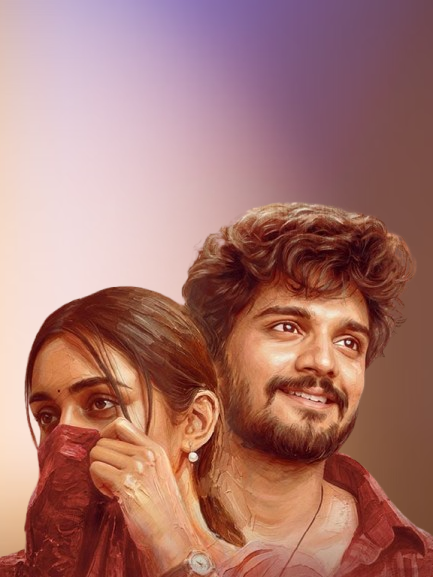
Munna (Harshith Reddy) is an earnest young man whose life orbits around an almost devotional idea of love. Ammu (Smeha Manimegalai) is warm but guarded, carrying emotional baggage that makes her hesitate.
Their relationship unfolds through shared chai stops, roadside conversations, and quiet domestic moments—until a mid-act misunderstanding introduces real stakes.
The film traces their attempts at reconciliation and personal growth, favoring compromise and vulnerability over grand cinematic gestures.
| Role | Name |
|---|---|
| Munna (Lead) | Harshith Reddy |
| Ammu (Female Lead) | Smeha Manimegalai |
| Supporting Cast | Naresh Vijay Krishna, Raghu Kumar Karumanchi, Jhansi |
| Director / Writer | Sreekanth Sangishetty |
| Producers | Vasudev Koppineni, Sridevi Karyampudi |
| Cinematography | Vamsi Patchipulusu |
| Editor | Hrishikesh Pasapal |
| Music Composer | Eswar Chand |
| Production Houses | Arha Media, V Studios, Geetha Arts |
Section 1: Who Is This Movie For?
Deewana is designed for a very specific viewer: the one who craves emotional realism over spectacle. This is not a film for audiences seeking high-energy masala sequences or star-driven heroism.
Its target audience is the discerning romantic who appreciates slow-burn character studies, conversational pacing, and micro-expressions that do the heavy lifting.
If you loved the restrained intimacy of films like Mouna Ragam or recent indie Telugu romances, this is your lane. If you need plot-driven momentum every ten minutes, prepare for restlessness.
Section 2: Script Analysis – Flow, Logic, and Pacing
Sreekanth Sangishetty’s script is deliberately observational, but that strength becomes a double-edged sword. The first half luxuriates in mood-building—scenes of Munna staring at Ammu from across a tea stall, awkward silences, and half-spoken confessions.

Flow-wise, the narrative is linear and logically sound. Characters act consistently within their emotional frameworks. However, the pacing is languid to a fault.
The middle act drags considerably, with repetitive beats of longing and miscommunication that could have been trimmed by ten to fifteen minutes without losing emotional impact.
Dialogue is sparse but effective when it lands. Sangishetty trusts his actors to convey subtext, and for the most part, that trust is rewarded. Yet the script lacks structural surprises—you can predict the arc of every supporting character by the thirty-minute mark.
Section 3: Character Arcs – Did Characters Grow?
Munna begins as a lovesick idealist who views Ammu through a romanticized lens. His growth arc involves learning that love requires compromise, not worship. Harshith Reddy plays this progression with admirable restraint, though the script gives him limited moments of catharsis.
Ammu is the more complex figure. She carries unspoken trauma—hinted at through Jhansi’s scenes as a concerned family member—that makes her cautious.
Her arc is about learning to trust again, but the film underserves her interiority. We see her guardedness but rarely the source of it. This asymmetry weakens the emotional payoff.
Supporting characters like Raghu Kumar Karumanchi’s comic relief are functional but thinly sketched. They serve the leads’ journey without evolving themselves, which feels like a missed opportunity for narrative texture.
Section 4: The Climax Impact – Did the Ending Satisfy?
The climax is a deliberate anti-spectacle. Instead of a rain-soaked reunion or a dramatic airport chase, Munna and Ammu talk. They acknowledge their flaws, compromise, and choose each other without fireworks. It’s mature, realistic, and emotionally earned for the patient viewer.

However, this restraint comes at a cost. The buildup—two hours of longing—demands a release valve that the ending doesn’t fully provide. Some viewers will find the resolution deeply satisfying in its honesty.
Others will feel cheated out of an emotional crescendo. I lean toward the former, but only just.
| What Worked | What Didn’t |
|---|---|
| Naturalistic lead performances | Overlong second act |
| Restrained, emotionally honest dialogues | Predictable supporting arcs |
| Strong chemistry in quiet moments | Underdeveloped female lead backstory |
| Refusal to over-dramatize conflict | Pacing drags between major beats |
Section 5: Writer’s Execution – Dialogue Quality
Sangishetty’s dialogue is a study in economical writing. Lines are short, conversational, and rarely expository. When Munna says “Nuvvu epudu navvina, naaku antha ardham avutundi” (When you smile, I understand everything), it captures his devotion without melodrama.
But inconsistency creeps in. Some exchanges feel too polished for characters rooted in everyday milieus. A roadside vendor speaks with the same rhetorical cadence as the lead—a minor lapse in authenticity that pulls you out of the realism the film works so hard to build.
The writer also struggles with tonal balance. Light comedic beats from supporting actors occasionally undercut dramatic tension, making certain scenes feel like they belong to a different movie. A sharper edit of the script could have unified the voice.
Section 6: Miss vs Hit Factors
Hit Factors: The leads’ chemistry is the film’s strongest asset. Harshith Reddy and Smeha Manimegalai share an unforced intimacy that makes even mundane scenes compelling.
Vamsi Patchipulusu’s cinematography captures this beautifully—his camera lingers just long enough to register micro-expressions without becoming intrusive.
The film’s emotional honesty is another win. Scenes of Munna and Ammu navigating awkward silences or half-spoken apologies feel real in a way that polished Bollywood romances rarely achieve. This is a film that trusts its audience to read between lines.

Miss Factors: The box office returns—around Rs 2.64 crore worldwide in its first eight days—reflect a film that struggled to find its audience. Limited star power and modest marketing meant it competed poorly against mid-size Telugu releases of June 2026.
Technically, the film is competent but unambitious. There’s no standout VFX, no audacious sound design, no stylized color grading. For a film that trades in realism, this is a deliberate choice, but it also means Deewana offers nothing for viewers seeking technical showmanship.
Section 7: Technical Brilliance – Music, Cinematography, and Editing
Eswar Chand’s music is unobtrusive and melodic, serving the mood without dominating scenes. The promotional track “Thella Pori” works as a marketing hook, but the full soundtrack is best appreciated as background texture—it underscores introspection rather than demanding attention.
Vamsi Patchipulusu’s cinematography deserves specific praise. He uses warm, soft grading for romantic moments and cooler tones during conflict, following conventional romantic-drama grammar but executing it with subtlety.
His medium and close-up shots capture the actors’ best work, while wide frames are sparingly deployed to show relational distance.
Hrishikesh Pasapal’s editing keeps the first half deliberately slow, allowing mood to build. The mid-section tightens as conflict escalates, but the final act returns to a reflective rhythm.
A tighter trim of ten minutes from the second act would have improved momentum without sacrificing emotional weight.
| Aspect | Rating / Comment |
|---|---|
| Lead Performances | 8/10 – Restrained and credible |
| Script & Pacing | 6/10 – Observational but slow |
| Cinematography | 7/10 – Intimate, naturalistic |
| Music & Score | 7/10 – Melodic, understated |
| Climax Satisfaction | 7/10 – Earned but anticlimactic |
| Technical Ambition | 5/10 – Competent, not adventurous |
| Box Office Appeal | 4/10 – Limited star power |
Frequently Asked Questions
1. Is Deewana (2026) based on a true story?
No. Sreekanth Sangishetty wrote an original screenplay. The film’s realistic tone may suggest autobiographical inspiration, but no official sources confirm a real-life basis.

2. Why did Deewana perform poorly at the box office despite good reviews?
The film lacked star power, wide multiplex release, and aggressive marketing. Modest opening figures of Rs 4 lakh net on day one reflect limited screen count and competition from bigger Telugu releases in June 2026.
3. Where can I watch Deewana now?
As of this review, the film completed its limited theatrical run. Post-theatrical streaming rights had not been officially announced by Geetha Arts. Check major OTT platforms for future availability.
This analysis is based on the theatrical experience and cinematic merit.
Was this trade analysis helpful?
Your feedback helps Movierullz editors maintain trade database integrity.