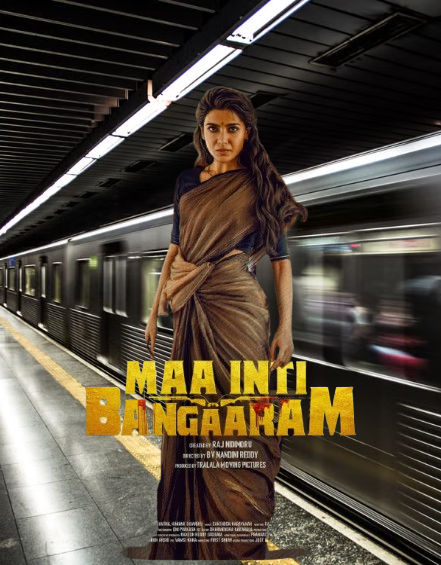
Maa Inti Bangaram Samantha Movie 2026 Movierulez Review Details
Maa Inti Bangaram Samantha Review – A Bold Female Hero or Just Recycled Mass? The Real Analysis
I sat down for the theatrical screening of Maa Inti Bangaram Samantha expecting another loud commercial slog, but what emerged was a curious paradox: a film that follows every beaten path yet feels surprisingly fresh because of who walks it.
Samantha Ruth Prabhu does not simply act here—she owns the frame with a ferocity that most male stars would envy.
Synopsis: What Is This Film Actually About?
Swarna (Samantha) is a woman caught between her domestic identity as a daughter-in-law and her explosive past as Jhansi, a fighter with unresolved trauma.
When old rivalries resurface inside the Alluri family, she must reconcile her violent instincts with her role as a protector of her home. The core conflict is simple: can a woman be both a soft anchor and a brutal shield?
| Role | Name |
|---|---|
| Samantha Ruth Prabhu | Swarna / Jhansi |
| Gulshan Devaiah | Karuna |
| Diganth Manchale | Dr. Alluri Anirudh Raju |
| Gautami | Alluri Kamakshi |
| Anand | Alluri Ramaiah Raju |
| Sreemukhi | Anasuya |
| Chaitanya Krishna | SI Alluri Sharath Raju |
| B. V. Nandini Reddy | Director |
| Raj Nidimoru | Creator / Writer |
| Santhosh Narayanan | Music Composer |
| Om Prakash | Cinematographer |
Who Is This Movie For?
This is a film for audiences tired of waiting for a female-led mass entertainer that does not cheat on action. It is for Samantha fans who want to see her flex muscle, for family audiences who enjoy emotional melodrama, and for those open to a mainstream package where the heroine delivers the punchline—literally.
If you need high-concept originality, look elsewhere. If you want a star vehicle with genuine heart, this rides smoothly.
Script Analysis: Flow, Logic, and Pacing
Vasanth Maringanti and Raj Nidimoru’s screenplay understands structural rhythm but struggles with organic transitions. The first act establishes Swarna’s domestic life efficiently, yet the shift into action territory feels abrupt, as if the writers remembered mid-scene that they needed a fight sequence.

The pacing improves in the second half when emotional stakes align with physical confrontations. However, the logic occasionally bends: characters appear and disappear based on convenience, and the central rivalry with Karuna lacks the detailed buildup it deserves.
The film runs 154 minutes, and at least fifteen of those could have been trimmed without losing emotional heft.
Character Arcs: Did Anyone Actually Grow?
Swarna’s arc is the only one with real dimension. She begins as a woman suppressing her past and ends as someone who integrates her violent history into her present identity without shame.
This is mature writing for a commercial Telugu film. Anirudh (Diganth) remains supportive but one-dimensional—he exists to validate her choices rather than challenge them.
Karuna (Gulshan Devaiah) is a competent antagonist but his motivations are sketched rather than explored. The supporting family members, especially Gautami and Sreemukhi, serve their functions without leaving residue.
The grandmother (Sri Lakshmi) is the only secondary character who earns a genuine emotional response.
Climax Impact: Did the Ending Satisfy?
The climax works because it prioritizes emotional resolution over spectacle. Swarna does not simply defeat Karuna through superior fighting—she wins by reclaiming her identity in front of the family that judged her.

The final confrontation is staged with restraint, allowing Samantha’s eyes to do more work than the choreography. For some audiences this will feel anticlimactic; for others, it will land as earned catharsis.
I lean toward the latter, but I acknowledge the fight sequence could have used one more creative beat.
| What Worked | What Did Not |
|---|---|
| Emotional stakes tied to action | Abrupt tonal shifts |
| Samantha’s layered performance | Underwritten antagonist |
| Clean narrative structure | Noticeable pacing lulls |
| Strong family dynamics | Convenient plot exits |
| Restrained, earned climax | Predictable rival reveal |
Writer’s Execution: How Good Is the Dialogue?
The dialogue oscillates between sharp and generic. Swarna’s lines carry weight because they emerge from her dual identity: “I can cook your festival meal and break your jaw—both take the same patience,” she says in one scene.
That kind of writing feels intentional and character-driven. However, the family exposition scenes rely on tired Telugu commercial tropes—long-winded moral speeches, exaggerated reactions to minor conflicts.
The translation to English subtitles may flatten some nuance, but the original Telugu script by Prahas Boppudi shows moments of genuine wit. The humor, largely delivered by Vennela Kishore’s cameo and Srinivas Gavireddy, lands more often than it misses.
Miss vs Hit Factors: What Went Right vs Wrong
The biggest hit is Samantha’s casting. She brings physicality and vulnerability in equal measure, something rare in mass cinema. The film also succeeds in making family drama feel stakes-heavy without descending into soap opera.
Santhosh Narayanan’s background score elevates every emotional beat, and Om Prakash’s cinematography keeps the frame clean even during chaotic action sequences.

The miss is the screenplay’s reluctance to fully commit to its premise. For a film about a woman with a violent past, there are too many scenes where that past is talked about rather than shown.
The antagonist needed one more layer to make the conflict feel urgent. Additionally, the editing by Dharmendra Kakarala leaves some transitional scenes that could have been cut for tighter tension.
The film plays safe when it could have punched harder.
Technical Brilliance: Music, Cinematography, and Editing
Santhosh Narayanan delivers a soundtrack that serves the film rather than overwhelms it. “Thassadiya” is the celebratory high point, while “Ninnu Choosthu Adige Aakasam” provides melodic relief.
The background score during action beats uses percussive rhythms that sync with Samantha’s movements, a subtle but effective choice. Om Prakash’s cinematography favors warm, golden tones for family scenes and desaturated steel for action, creating a clear visual separation between Swarna’s two worlds.
The editing, while occasionally loose in the middle, tightens considerably during the final act. The VFX by Nikhil Koduru and SARVA.FX is restrained—used only when necessary, never for spectacle inflation.
| Aspect | Rating / Comment |
|---|---|
| Story Originality | 6/10 – Familiar commercial frame |
| Screenplay Flow | 7/10 – Strong structure, weak transitions |
| Lead Performance | 9/10 – Samantha carries the entire film |
| Cinematography | 8/10 – Clean, purposeful framing |
| Music & Score | 8/10 – Emotional lift without drowning scenes |
| Action Choreography | 7/10 – Effective but not groundbreaking |
| Emotional Impact | 8/10 – Climax earns its tears |
| Pacing | 6/10 – Lags in middle section |
| Overall Entertainment | 7.5/10 – Satisfying commercial watch |
Frequently Asked Questions
1. Is Maa Inti Bangaram Samantha a female-led action film or a family drama?
It is both. The film balances mass-action sequences with domestic family dynamics, and Samantha’s character operates in both spaces equally.

Calling it just an action film undersells its emotional ambition.
2. Does the film have a post-credits scene or sequel setup?
No post-credits scene appears in the theatrical cut. The ending is conclusive for Swarna’s arc, though the final shot leaves room for a potential expanded universe if the makers choose to revisit these characters.
3. How does the film compare to other recent Telugu female-led movies?
It sits above most in terms of production scale and mass appeal.
Unlike smaller, prestige-oriented female-led films, this one aims for commercial validation first. It succeeds where others failed because it does not apologize for its mainstream instincts.
This analysis is based on the theatrical experience and cinematic merit.
Was this trade analysis helpful?
Your feedback helps Movierullz editors maintain trade database integrity.