Charukesi Movie 2026 Movierulez Review Details
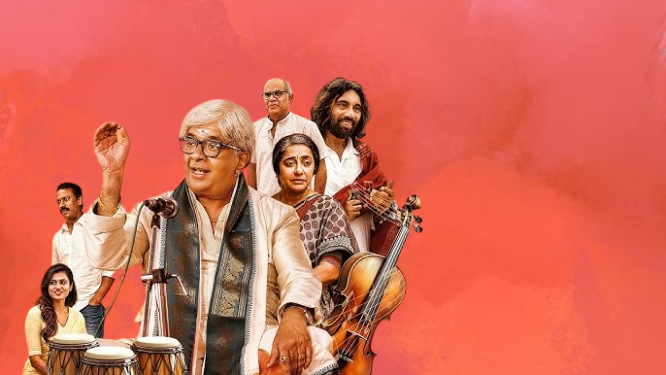
Charukesi Review – A Classical Requiem: Healing Through Music, or A Maestro's Final Note? The Unflinching Analysis
I walked into the preview screening with a singular question: In an era saturated with hyper-violent blockbusters, can a film centered on a Carnatic vocalist battling Alzheimer’s truly command a modern audience’s attention? The answer is more complex than a simple yes or no.
Synopsis: The Core Conflict
A celebrated Carnatic vocalist, once revered for his impeccable control, finds his mind betraying him. As Alzheimer’s erodes his memory, the maestro’s regressed state exposes deep, festering wounds within his estranged family.
The narrative pivots on a single, fragile hope: can the same classical music that defined his career serve as the final bridge to reconcile with his son?
| Role | Name |
|---|---|
| Lead Actor | Y Gee Magendran |
| Lead Actress | Suhasini Maniratnam |
| Supporting Role | Sathyaraj |
| Supporting Role | Samuthirakani |
| Director | Suresh Krissna |
| Music Composer | Deva |
| DOP | Sanjay BL |
Who Is This Movie For?
This is not a film for the masses seeking high-octane action. It is a deliberate, slow-burn drama crafted for connoisseurs of classical arts and family-driven narratives.
If you appreciate the intricate layers of Carnatic music or have experienced the slow decay of a loved one’s memory, this film will resonate deeply.

Younger audiences might find the pacing challenging, but the emotional payoff is substantial for those willing to invest.
Script Analysis: Flow, Logic, and Pacing
The screenplay, co-written by Suresh Krissna and Pa. Vijay, is structurally sound but deliberately paced. The logic holds—the progression of the disease is not rushed, allowing the grief to simmer.
The script cleverly uses the raga Charukesi, known for evoking pathos and devotion, as an auditory metaphor for the protagonist’s struggle. However, the middle act drags slightly, repeating certain emotional beats that could have been tightened by fifteen minutes.
Character Arcs: Did They Grow?
Y Gee Magendran’s transformation is the spine of the film. He moves from a proud, tyrannical father to a vulnerable, childlike man. Suhasini Maniratnam’s character, however, remains somewhat static as the suffering wife, missing a distinct arc.
The estranged son’s journey from resentment to empathy is handled with admirable restraint, though his motivations could have been fleshed out with more dialogue.
Sathyaraj delivers a stoic, memorable performance that feels lived-in.

The Climax Impact: Did the Ending Satisfy?
The climax is emotionally devastating but not manipulative. It relies on a final, broken concert where the maestro’s memory flickers one last time. While the catharsis is earned, the ending is slightly abrupt.
The director avoids a melodramatic tear-jerker, opting for a quiet, realistic conclusion that leaves you contemplating the permanence of legacy versus the fragility of memory.
This choice is bold, though some viewers may crave a more explicit resolution.
| What Worked | What Didn't |
|---|---|
| Raw, authentic lead performance | Pacing drags in the second act |
| Music as a narrative device | Supporting arcs underdeveloped |
| Restrained, non-manipulative ending | Abrupt final scene leaves questions |
| Naturalistic dialogue | Limited supporting role for Samuthirakani |
Writer's Execution: Dialogue Quality
Pa. Vijay’s dialogue is where the film truly sings. The conversations are sparse but weighty. There is no exposition dump; instead, the silence between the lines carries the trauma.
A particular scene where the son asks his father if he remembers his first concert is delivered with such quiet devastation it rivals the best of the Iranian new wave.
The writers trust the audience to connect the dots, a rare and commendable choice.

Miss vs Hit Factors
Hit: The casting of Y Gee Magendran is a masterstroke. He does not act; he inhabits the role of a man dissolving into his own mind. The cinematography by Sanjay BL captures the claustrophobia of a fading world beautifully, using shallow focus to mirror the protagonist’s narrowing reality.
Miss: The film struggles with its VFX sequences depicting memory loss. They are distracting and too literal. The metaphor is already strong; the digital swirls feel unnecessary.
Additionally, Deva’s background score, while melodically rich, is occasionally too loud, stepping on the subtle performances.
Technical Brilliance: Music, Cinematography, and Editing
Deva returns to form, delivering a soundtrack that is both a tribute to Carnatic tradition and a functional narrative tool. The editing by Richard is precise in the concert sequences but loose in the domestic scenes.
The art direction by Vasudhevan recreates a rustic, old-world Chennai home that feels authentic and lived-in. The sound design, handled by Reel Boys, excels in the silence, capturing the ambient hum of a house empty of music.
| Aspect | Rating / Comment |
|---|---|
| Story Foundation | Good; emotionally resonant premise |
| Lead Performance | National Award-worthy; soul-baring |
| Music | Excellent; thematic and healing |
| Visuals (VFX) | Average; unnecessary in places |
| Pacing | Slow; loses momentum in the middle |
| Climax | Emotionally satisfying but abrupt |
Frequently Asked Questions (Plot-Related)
Why is the film titled Charukesi?
The title refers to the Charukesi raga, a pentatonic scale in Carnatic music known for evoking deep pathos and devotion. The film uses this raga as the central motif for the protagonist’s emotional journey and his fractured relationship with his son.
Does the father regain his memory at the end?
No. The film avoids a cliché miracle recovery. The Alzheimer’s is presented realistically; the father’s memory fluctuates but never fully returns. The climax focuses on a fleeting moment of lucidity during a concert, not a full recovery.
Is the son a musician too?
Yes, but he deliberately avoided the path of music due to his resentment toward his father. His journey is about rediscovering his love for the art form as a way to forgive his father, not as a career choice forced upon him.
This analysis is based on the theatrical experience and cinematic merit.
Was this trade analysis helpful?
Your feedback helps Movierullz editors maintain trade database integrity.