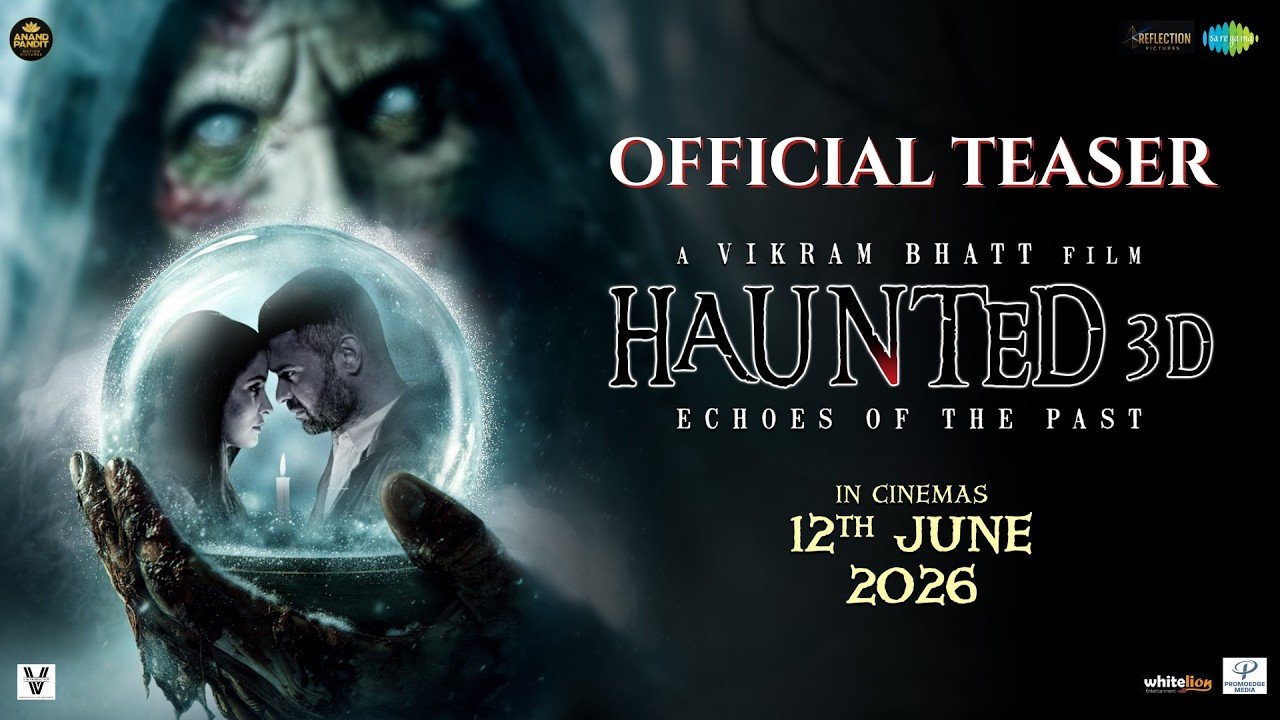
Haunted 3D Movie 2026 Movierulez Review Details
Haunted 3D (2026) Review – A Haunting Legacy Revisited or Just a Faint Echo?
Have you ever wondered what happens when a master of horror returns to the genre that made him a legend? Haunted 3D is Vikram Bhatt’s answer—a film that tries to resurrect the terror of Glen Manor. Does it succeed, or is it a mere shadow of its predecessor? Let’s dissect.
Synopsis – The Core Conflict
The story follows Rehan, a man running from a traumatic past who seeks shelter in the remote Glen Manor. The mansion, however, is not a sanctuary. It is a prison of secrets from 1936, haunted by the restless spirit of Meera.
As Rehan digs deeper, the line between the living and the dead blurs, and the past demands its price.
Main Cast & Crew Table
| Role | Name |
|---|---|
| Lead Protagonist (Rehan) | Mimoh Chakraborty |
| Restless Spirit (Meera) | Chetna Pande |
| Supporting Role | Shruti Prakash |
| Supporting Role | Gaurav Bajpai |
| Director & Writer | Vikram Bhatt |
| Producer | Anand Pandit |
Who Is This Movie For?
This is for the die-hard fans of Vikram Bhatt’s horror universe—those who loved 1920, Shaapit, and the original Haunted 3D (2011).
It is also for audiences seeking a pure, jump-scare-heavy 3D experience without demanding narrative innovation. If you want a slow-burn psychological horror, look elsewhere.
Script Analysis – Flow, Logic, and Pacing
The script by Vikram Bhatt relies on a familiar structure: a haunted house with a tragic backstory, a tormented protagonist, and a ghost seeking closure.

The first act is effective, building mystery around Glen Manor. However, the middle act drags, leaning too heavily on exposition dumps about 1936. The pacing stutters here.
The logic holds up for a supernatural thriller, but the resolution feels rushed. The ghost’s motivations are clear, yet the final explanation lacks the emotional punch it needed.
Character Arcs – Did They Grow?
Mimoh Chakraborty’s Rehan is a man drowning in guilt. His arc is predictable but solid—he moves from escape to confrontation. Chetna Pande’s Meera is the film’s weak link: her ghost is reduced to weeping and floating, missing the terrifying agency seen in Bhatt’s earlier female spirits.
The supporting cast (Shruti Prakash, Gaurav Bajpai) is underutilized, serving as cannon fodder for scares rather than contributing to character growth.
No one truly evolves; they just survive or perish.
The Climax Impact – Did the Ending Satisfy?
The climax attempts a twist: the ghost’s true identity is tied to Rehan’s past. It’s a neat loop, but it feels forced. The final confrontation is visually loud (3D effects) but emotionally hollow.

The ending tries for redemption but settles for a generic “ghost finds peace” resolution. It satisfies the need for closure but lacks the haunting ambiguity that made the original memorable.
Screenplay Highs & Lows Table
| What Worked | What Didn’t |
|---|---|
| Strong 3D immersion in the first act | Dragging middle act with repeated scares |
| Effective sound design for jump scares | Predictable ghost origin story |
| Mimoh’s emotional breakdown scenes | Underwritten supporting characters |
| Glen Manor’s atmospheric production design | Rushed third act resolution |
Writer’s Execution – Dialogue Quality
Vikram Bhatt’s dialogue is functional but not poetic. Lines like “The past is never dead” are repeated too often, losing their weight. The conversational exchanges between Rehan and Meera feel stilted—she speaks in riddles, he responds in clichés.
The dialogue serves the plot but fails to elevate the tension. There is no memorable monologue or sharp retort. It’s serviceable horror writing, not craft.
Miss vs Hit Factors – Text Analysis
Hit: The 3D visuals in the opening sequence—where shadows move independently from their sources—are genuinely impressive. The VFX team (Reflection Studios) deserves credit for blending practical sets with digital ghosts.
Miss: The film’s reliance on loud audio cues for scares. Every jump scare is telegraphed by a sudden sting in the sound design (Shantanu Akerkar, Dinesh Uchil). It works in the theater but feels cheap on reflection.
Hit: The musical soundtrack, especially “Janmo Janam” by Mohit Chauhan, adds emotional depth to Rehan’s grief. The lyrics by Vikram Bhatt resonate with the theme of loss.

Miss: The ghost’s CGI glow. Meera’s spectral form looks dated compared to modern horror standards. It breaks immersion during close-ups.
Technical Brilliance – Music, Cinematography, and Editing
The cinematography by Naren A. Gedia excels in the manor’s long corridors and shadowy staircases, capturing the claustrophobia beautifully. Editing by Kuldip Mehan is tight during action sequences but slackens in the second act, where scenes overstay their welcome.
The sound mix is aggressive—the bass rumbles during ghost appearances, enhancing the 3D effect. Music by Prateek Walia is the film’s strongest asset, blending classical ghazals with electronic undertones to mirror the clash of past and present.
Story vs. Visuals Rating Table
| Aspect | Rating/Comment |
|---|---|
| Story Originality | 6/10 – Familiar haunted house lore |
| Visual Effects | 7/10 – Good 3D, weak ghost CGI |
| Cinematography | 8/10 – Stunning manor shots |
| Sound Design | 8/10 – Immersive but loud |
| Character Depth | 5/10 – One-dimensional arcs |
| Climax Satisfaction | 6/10 – Neat but predictable |
3 FAQs – Plot-Related Queries
1. Does the film directly connect to the 2011 Haunted 3D? Yes, it’s a spiritual sequel. The same Glen Manor appears, but new characters inhabit it. You don’t need to watch the original to understand the plot, though familiarity with the legacy enriches the experience.
2. What is Meera’s real connection to Rehan? Without spoiling the twist, Meera is tied to Rehan’s ancestry. Her death in 1936 is linked to a mistake Rehan’s grandfather made. The film reveals this in the final act, making the haunting deeply personal.
3. Why does the ghost target Rehan specifically? The spirit of Meera is trapped because of unresolved betrayal. Rehan’s arrival—carrying his own guilt—awakens her.

She targets him because his emotional vulnerability mirrors her own pain, making him the perfect vessel for her vengeance.
Box Office & Technical Specs
Released on February 6, 2026, Haunted 3D entered the market with a modest opening, competing against other February releases. The film’s budget was focused on VFX and 3D production, with Sound Designers Shantanu Akerkar and Dinesh Uchil creating a DTS:X mix that amplifies the horror.
The Colorist Hany Halim gave the film a cold, desaturated palette that fits the gloomy setting. While box office numbers are still counting, the film relies heavily on word-of-mouth from Bhatt’s loyal fanbase.
This analysis is based on the theatrical experience and cinematic merit.
Was this trade analysis helpful?
Your feedback helps Movierullz editors maintain trade database integrity.