Raakh Movie 2026 Movierulez Review Details
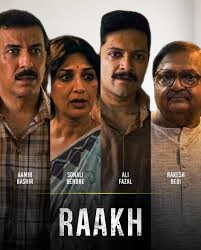
Raakh (2026) Review – A Devastating Crime Drama That Burns Slow But Leaves Scars
I walked into this expecting another formulaic streaming thriller. What I found was a series that weaponizes silence and grief with unsettling precision. Is Raakh the definitive Indian crime drama of the year, or does it crumble under its own ambition? Let’s dissect the ashes.
Synopsis: When Two Teenagers Vanish, a City Burns
The series opens with a quiet suburban evening. Two teenagers step out. They never return. Their parents—Mona and Ashok Arora—are thrust into a nightmare that fractures their marriage and their sanity.
Officer JP (Ali Fazal) leads a nationwide manhunt that descends into a labyrinth of violence and human depravity. The story is not just about finding the missing; it is about what gets consumed by the fire of trauma.
| Role | Name |
|---|---|
| Lead Investigator | Ali Fazal (JP) |
| Mother | Sonali Bendre (Mona Arora) |
| Father | Aamir Bashir (Ashok Arora) |
| Supporting Cast | Dibyendu Bhattacharya |
| Supporting Cast | Rakesh Bedi |
| Key Role | Ramandeep Yadav (Rajjo) |
| Key Role | Akash Makhija (Babu) |
| Young JP | Kabir Pahwa |
Section 1: Who Is This Movie For?
This is not a popcorn thriller. Raakh is for viewers who admired the raw emotional brutality of Delhi Crime but wanted more psychological depth.
It is for people who understand that the real horror is not the crime itself—it is the slow unwinding of a family afterward. If you need car chases and quick resolutions, skip this.

If you want to feel the weight of a mother’s scream, stay.
Section 2: Script Analysis – Slow Burn Logic That Demands Patience
The script, written with meticulous restraint, refuses to spoon-feed. The pacing is deliberately glacial—almost frustrating in the first two episodes.
But this is not a flaw; it is a structural choice. The writer understands that grief does not move fast. The investigation logic holds up: red herrings are planted with care, not laziness.
However, the middle episodes sag under repetitive interrogations. The flow works as a psychological study but stumbles as a procedural thriller.
Section 3: Character Arcs – Growth Through Ashes
Mona Arora (Sonali Bendre) delivers the most layered performance. She begins as a weeping mother and transforms into a steel-willed hunter. Her arc is not about revenge—it is about reclaiming agency when the system fails her.
Officer JP, in contrast, has a flatter trajectory. He starts relentless and ends relentless. His backstory is hinted at but never fully excavated, leaving his character feeling like a tool for the plot rather than a man with his own ghosts.

Section 4: The Climax Impact – A Gut Punch, Not a Resolution
The finale does not offer catharsis. It offers a quiet, devastating truth. The teenagers are found, but the answer is not what you expect. The climax lingers on a single shot: a mother holding a piece of clothing, not a child.
The ending is polarizing—some will call it unsatisfying. I call it honest. It mirrors the reality that closure is a myth, especially when the world is built on ashes.
| What Worked | What Didn’t |
|---|---|
| Realistic police procedural detail | Mid-season pacing drags |
| Emotional weight of family scenes | JP’s character lacks depth |
| Subverting the “happy ending” trope | Some secondary characters are underwritten |
| Use of silence as a narrative tool | Third episode feels repetitive |
Section 5: Writer’s Execution – Dialogue That Cuts Like Glass
The dialogue is sparse, deliberate, and devastating. “We are not looking for children,” one officer says. “We are looking for evidence of what happened to children.” That line encapsulates the show’s cold realism.
The writer avoids melodramatic monologues. Instead, conversations are clipped, unfinished—as if the characters cannot bear to articulate their pain.
The only weakness is an over-reliance on exposition in the first episode to establish the investigation rules.
Section 6: Miss vs Hit Factors – What Went Right vs Wrong
Hit: The humane portrayal of trauma. The series refuses to sensationalize the missing children. It focuses on the bureaucratic hell the parents endure—the waiting, the false leads, the condescending officers.

This is rare in Indian crime dramas.
Miss: The nationwide manhunt angle feels underutilized. We hear about other cities, but the visual scope stays claustrophobically small.
A bigger canvas would have elevated the tension.
Hit: Ali Fazal’s physicality. He communicates exhaustion and obsession through his posture, not his words.
Miss: The score occasionally overpowers quiet moments.
The music tries to tell you when to cry, which undermines the natural grief the actors build.
Section 7: Technical Brilliance – Sound and Vision
The cinematography is soaked in muted earth tones—browns, grays, and pale yellows—creating a world that feels drained of life. The editing uses long, static takes during interrogation scenes, forcing you to sit with the discomfort.
The sound design is the true star: the ambient hum of a hospital, the distant traffic, the silence of an empty bedroom. The VFX are minimal but effective—digital compositing used for subtle atmospheric enhancements rather than spectacle.
| Aspect | Rating/Comment |
|---|---|
| Cinematography | 9/10 – Gritty and painterly |
| Background Score | 7/10 – Effective but overbearing at times |
| Editing | 8/10 – Patient but not indulgent |
| Sound Design | 9/10 – Immersive, ambient realism |
| VFX | 6/10 – Functional, not flashy |
FAQs
1. Are the two teenagers found alive in Raakh? Yes, but the circumstances are deeply disturbing and devoid of the typical Bollywood happy ending. The discovery raises more questions than answers.

2. Is Raakh based on a true story? The writers have not confirmed a direct real-life case, but the series draws heavily from documented patterns of missing children investigations and the systemic failures families face.
3. Why is the show titled Raakh (Ashes)? The title is metaphorical. After a fire, only ashes remain. The series explores what is left of a family, a community, and a person’s sanity after a devastating event—the ashes of a life that once was.
This analysis is based on the theatrical experience and cinematic merit.
Was this trade analysis helpful?
Your feedback helps Movierullz editors maintain trade database integrity.