Bharat Bhhagya Viddhaata Movie 2026 Movierulez Review Details
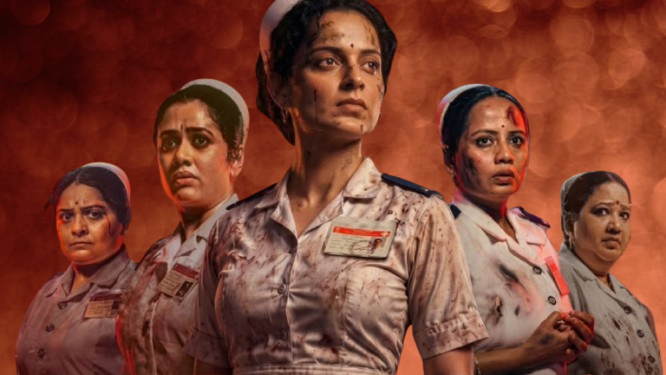
Bharat Bhhagya Viddhaata Review – A Quiet Symphony of Courage or a Missed Beat? The Real Analysis
I walked into the theater expecting the usual template of flag-waving and gunfire. What I got was a pressure cooker of silent resolve set inside a Mumbai hospital during the 26/11 attacks.
Manoj Tapadia’s film dares to ask a question that most blockbusters ignore: What does heroism look like when there is no weapon in your hand and nowhere to run?
The answer is uncomfortable, intimate, and surprisingly powerful. This is a film about people who stayed, not because they were fearless, but because they were nurses, ward boys, and lift operators who refused to abandon their posts.
Let’s dissect whether this cinematic gamble pays off or collapses under its own noble intentions.
Synopsis: The Core Conflict
A hospital in South Mumbai becomes an island of vulnerability. Terrorists are rampaging through the city, but inside these walls, the real battle is against chaos itself.
Kangana Ranaut plays a senior nurse who detects the threat before the official alert arrives. She must coordinate a team of terrified but determined staff to protect more than a hundred patients, including newborns, pregnant women, and the elderly.
The conflict isn’t about bullets; it’s about discipline under duress. Every closed door is a strategy. Every whispered instruction is a lifeline. The film strips away spectacle and forces us to watch ordinary people make extraordinary decisions in real-time.
Main Cast & Crew
| Role | Name |
|---|---|
| Nurse | Kangana Ranaut |
| Supporting Role | Girija Oak Godbole |
| Supporting Role | Smita Tambe |
| Doctor | Prasad Oak |
| Staff Member | Esha Dey |
| Hospital Worker | Suhita Thatte |
| Nurse | Asha Shelar |
| Staff Member | Priya Berde |
| Staff Member | Amrutha Namdev |
| Veteran Nurse | Rasika Agashe |
| Role | Name |
|---|---|
| Director & Writer | Manoj Tapadia |
| Producer | Kangana Ranaut |
| Producer | Dhaval Jayantilal Gada |
| Composer | Aman Pant |
Who Is This Movie For?
This is not a film for those seeking adrenaline-soaked action or patriotic speeches. Bharat Bhhagya Viddhaata is designed for viewers who appreciate character-driven realism, historical fidelity, and emotional restraint.

It speaks directly to audiences tired of bombastic portrayals of national tragedy and hungry for stories that honor the invisible workforce of hospitals.
If you admired the quiet tension of Hotel Mumbai or the grounded humanism of Neerja, this film will resonate. However, viewers expecting Kangana in a combative, larger-than-life avatar will be disoriented.
She operates here as an anchor, not a hurricane.
Script Analysis: Rhythm and Logic
Manoj Tapadia’s screenplay operates on a principle of controlled escalation. The first act establishes normalcy; the second act injects uncertainty; the third act demands impossible choices.
The writing smartly avoids the temptation to turn every corridor into a chase scene. Instead, the tension comes from information asymmetry. We know what is happening outside, but the characters only hear distant sirens and muffled screams.
This creates a suffocating atmosphere of dread. However, the script stumbles in the middle act where the rhythm becomes repetitive. Conversations about logistics and patient movement stretch longer than necessary, and the lack of a counter-narrative from outside the hospital walls occasionally makes the film feel claustrophobic rather than urgent.
The logic holds up well; no character behaves irrationally for the sake of drama.
Character Arcs: Growth Under Fire
Kangana’s character begins as a competent but emotionally guarded professional. Her arc is subtle: she learns to trust her instincts over protocol. The film wisely does not turn her into a superhuman.
She hesitates, doubts, and once, almost breaks down. That rawness is the arc’s strength. Girija Oak Godbole’s character represents the younger generation of nurses, initially paralyzed by fear, then galvanized by purpose.

Prasad Oak’s doctor arc is the weakest, reduced to a series of frantic instructions without internal conflict. The supporting ensemble, particularly Smita Tambe as an elderly matron, provides the film’s most poignant moments through small gestures rather than dialogue.
The collective arc functions well: the staff moves from scattered individuals to a cohesive unit, but the screenplay could have given more memorable beats to the supporting cast.
The Climax Impact: Does It Satisfy?
The climax refuses to provide catharsis through violence or rescue. Instead, it delivers relief through survival. When the final crisis arrives, it is resolved not by a dramatic confrontation but by a series of small, coordinated actions.
This will frustrate viewers conditioned to expect a showdown. However, for those who understand the film’s thesis, the ending is deeply satisfying because it stays true to the premise: heroism is not about defeating enemies; it is about preserving life.
The final frame focuses on a single patient breathing again. That image lingers. The emotional release is muted, which is intentional, but some may find it anticlimactic given the two-hour buildup.
Screenplay Highs & Lows
| What Worked | What Didn’t |
|---|---|
| Realistic pacing that avoids cheap thrills | Middle act drags with repetitive logistics |
| Information asymmetry creates genuine dread | Lack of external viewpoint feels limiting |
| Dialogue feels authentic to hospital settings | Some supporting characters lack distinct voice |
| Subverts traditional hero narrative intelligently | Climax may feel emotionally underwhelming for some |
| Ensemble moments feel organic, not forced | Pacing could be tightened by 10 minutes |
Writer’s Execution: Dialogue and Subtext
Manoj Tapadia’s dialogue is functional and unadorned, which suits the documentary-like tone. There are no poetic monologues or rhetorical flourishes.
The characters speak in short, clipped sentences because that is how people communicate under extreme pressure. This realism is a double-edged sword. It grounds the film in authenticity, but it also limits emotional peaks.
When a character says “We need to move the ventilator,” it carries weight because we understand the stakes, but the lack of lyrical language means the film relies entirely on context for impact.
The subtext is strong: every instruction about closing a door or turning off a light carries the unspoken weight of potential death. The writer trusts the audience to read between the lines, which is admirable but demanding.

Miss vs Hit Factors: What Went Right and Wrong
The biggest hit is the film’s perspective. By focusing on hospital workers, Bharat Bhhagya Viddhaata carves a unique space in the 26/11 filmography.
The film’s moral center is unshakable; it treats its subjects with dignity without turning them into icons. Another hit is the sound design, which uses silence and ambient noise as narrative tools.
The miss factor is the film’s refusal to take risks in its visual language. The cinematography is competent but safe, mostly medium shots and close-ups that serve clarity over artistry.
A more experimental approach to camera movement or framing could have elevated the tension. Additionally, the film misses an opportunity to explore the class dynamics among hospital staff.
The hierarchy between doctors and cleaners is acknowledged but not interrogated, which feels like a missed chance for deeper social commentary.
Technical Brilliance: Music, Cinematography, and Editing
Aman Pant’s score is restrained, using strings and low-frequency drones to create unease rather than dictate emotion. The song “Nabz Nabz” by Shreya Ghoshal functions as an atmospheric piece that mirrors the film’s pulse-driven aesthetic.
The cinematography by the uncredited director of photography relies on naturalistic lighting and handheld movement that never becomes chaotic. The editing is the film’s strongest technical element.
Transitions between the hospital’s internal chaos and the external news reports are seamless, and the editor understands when to hold a shot and when to cut.
However, the film could have benefited from more dynamic visual motifs. The hospital corridors, while authentic, begin to feel visually monotonous by the second hour.

Story vs. Visuals
| Aspect | Rating/Comment |
|---|---|
| Narrative Originality | 8/10 – Fresh perspective on a well-covered tragedy |
| Visual Storytelling | 6/10 – Competent but lacks stylistic ambition |
| Sound Design | 9/10 – Exceptional use of ambient tension |
| Pacing | 7/10 – Strong start and finish, sagging middle |
| Character Depth | 7/10 – Lead is strong, ensemble could be deeper |
| Emotional Impact | 8/10 – Quiet but lasting resonance |
| Historical Accuracy | 9/10 – Respectful and grounded in research |
3 Frequently Asked Questions
Does the film show actual violence from the 26/11 attacks?
No. The violence is suggested through sound effects and reactions. The camera never shows a terrorist or a gunshot wound directly. The focus remains on the hospital staff’s response, not the attackers’ actions.
This makes the film suitable for sensitive viewers who want to understand the event without graphic imagery.
Is Kangana Ranaut’s character based on a real person?
Yes, but the character is a composite of multiple nurses and hospital staff who served during the 26/11 attacks. The name has been altered for dramatic purposes, but the actions and decisions portrayed are drawn from documented accounts of real hospital workers.
Why is the title in Hindi while the film deals with a Mumbai event?
The title “Bharat Bhhagya Viddhaata” translates to “The Fate of India’s Destiny.” The spelling variation is intentional, reflecting a philosophical question about who decides a nation’s fate in moments of crisis.
The film argues that destiny is shaped by ordinary citizens, not just leaders or soldiers, which justifies the grand title despite the intimate setting.
This analysis is based on the theatrical experience and cinematic merit.
Was this trade analysis helpful?
Your feedback helps Movierullz editors maintain trade database integrity.