Governor Movie 2026 Movierulez Review Details
Governor (2026) Review – A Silent Economic Saviour or Just Another Political Drama? The Real Analysis
As a critic who has spent decades watching Bollywood chase masala over meaning, Governor arrives like a quiet storm. It dares to ask: can one man’s silent resolve save a collapsing nation? Let me dissect why this film matters.
Synopsis – The Core Conflict
India, 1990. The nation is on the verge of bankruptcy. Inflation spirals, fuel reserves hit rock bottom, and panic sweeps through every corridor of power.
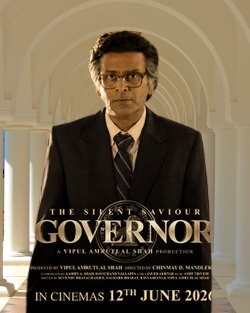
Into this chaos steps Raman, a reluctant bureaucrat thrust into the chair of the RBI Governor. His mission? Make impossible decisions before the country implodes.
The film strips away cinematic heroism. There are no car chases. No romantic subplots. Just a man carrying the weight of a billion lives.
| Role | Name |
|---|---|
| Lead Actor | Manoj Bajpayee |
| Director | Chinmay D. Mandlekar |
| Producer | Vipul Amrutlal Shah |
| Music Composer | Amit Trivedi |
| Lyricist | Javed Akhtar |
| Writer | Ravi Asrani, Saurabh Bharat, Shubhendu Bhattacharya |
| Supporting Lead | Adah Sharma |
| Supporting Cast | Noushad Mohamed Kunju, Madhoo, Paritosh Sand |
Section 1: Who Is This Movie For?
This is not your family weekend entertainer. Governor targets a specific, discerning audience. If you crave intellectual stimulation over item numbers, this is your film. It appeals to urban professionals, history buffs, and anyone frustrated by superficial Bollywood storytelling.

The film is a love letter to those who understand that policy decisions shape our lives more than any politician’s speech. It expects patience. It rewards attention.
Section 2: Script Analysis – Flow, Logic, and Pacing
The screenplay operates like a tightly wound spring. Writer Ravi Asrani and his team build every scene around the central economic crisis. There is no fat, no filler. Each dialogue byte serves the narrative.
The pacing mirrors the protagonist’s exhaustion. Long, silent corridors. Tense boardroom meetings. The clock ticking. The script understands that financial crises don’t explode—they suffocate. This slowness is deliberate. It immerses you in the bureaucratic nightmare.
However, the logic holds only if you accept that one man truly steered India away from disaster. The film simplifies complex economic mechanisms for dramatic effect. Purists might wince. But for cinematic truth, it works.
Section 3: Character Arcs – Did Raman Grow?
Raman begins as a man who follows protocols. He is grey, invisible, and efficient. The crisis forces him to abandon the rulebook. By the climax, he transforms into a leader who understands that saving a nation sometimes requires breaking the system.
Manoj Bajpayee doesn’t play a hero. He plays a man who is terrified, exhausted, yet immovable. His arc is internal. Watch his eyes during the final board meeting. That is not acting. That is presence.

Adah Sharma’s character provides the emotional anchor, though her arc feels underwritten. The supporting cast serves the plot without overshadowing the lead. This is Bajpayee’s film entirely.
Section 4: The Climax Impact – Did It Satisfy?
The climax avoids cheap fireworks. There is no dramatic speech to the nation. No villain getting arrested. Instead, we get a single signature on a document. The film trusts the audience to understand the weight of that ink stroke.
Does it satisfy? For those expecting explosions, no. For those who understand that history is written in quiet rooms, yes. The ending lingers. It haunts. It is the kind of finale you discuss over coffee, not forget during credits.
| What Worked | What Didn’t |
|---|---|
| Silent, tension-filled scenes | Slow pacing may bore casual viewers |
| Historically grounded dialogue | Economic jargon feels dense |
| Bajpayee’s restrained performance | Supporting arcs lack depth |
| Authentic 1990s atmosphere | No traditional commercial elements |
| Realistic crisis portrayal | Simplifies complex policy decisions |
Section 5: Writer’s Execution – Dialogue Quality
Javed Akhtar’s lyrical touch shines through the background score, but the spoken words belong to Ravi Asrani. The dialogue is sharp, economic, and devoid of melodrama. Every line advances the argument or reveals character.
Key exchanges happen in whispers. When Raman says “If I fail, India fails,” it is not shouted for trailers. It is spoken as a tired fact. This restraint elevates the film. The writers respect your intelligence. They don’t explain. They imply.
Section 6: Miss vs Hit Factors – What Went Right vs Wrong
The biggest hit is the film’s confidence in its audience. It refuses to dumb down economics. It assumes you know about inflation, reserves, and sovereign debt. This is rare in Bollywood. The film treats you as an adult.

The miss? The emotional stakes remain abstract for too long. We hear about the crisis but see little of the common man’s suffering. The film stays inside government buildings. A single street-level scene could have grounded the tension in human reality.
Another miss is the villain. The system is the antagonist, but a more human face of corruption would have added immediate stakes. As it stands, the conflict feels intellectual, not visceral.
Section 7: Technical Brilliance – Music, Cinematography, and Editing
Amit Trivedi’s score is a masterclass in restraint. The music doesn’t tell you how to feel. It creates atmosphere. The single released track “Jhagmag Jhagmag” offers a melodic contrast to the film’s grey tension.
Cinematography captures the oppressive nature of 1990s bureaucracy. Dim corridors. Heavy curtains. Faces half-lit. The camera lingers on papers, telephones, and silent waiting rooms. These choices build a world where decisions feel physically heavy.
Editing maintains a relentless forward momentum. Even slow scenes feel necessary. The runtime justifies itself. No scene overstays its welcome.
| Aspect | Rating/Comment |
|---|---|
| Story Depth | 8/10 – Intelligent, historically rich |
| Visual Authenticity | 9/10 – Perfect 1990s reconstruction |
| Music Integration | 7/10 – Effective but sparse |
| Sound Design | 8/10 – Satya’s score elevates tension |
| Pacing | 6/10 – Demands patience |
| Emotional Impact | 7/10 – More intellectual than visceral |
FAQs
Q: Is Governor based on a true story?
A: The film is inspired by the 1990 Indian economic crisis. While the character Raman is fictional, his decisions mirror real historical policies that saved India from default.

Q: Do I need to understand economics to enjoy the film?
A: Basic knowledge helps, but the film explains enough. The emotional weight comes from leadership under pressure, not balance sheets.
Q: Why is there no traditional villain?
A: The filmmakers chose to focus on systemic failure rather than a single antagonist. This makes the crisis more realistic but less conventionally dramatic.
This analysis is based on the theatrical experience and cinematic merit.
Was this trade analysis helpful?
Your feedback helps Movierullz editors maintain trade database integrity.