Mango Pachcha Movie 2026 Movierulez Review Details
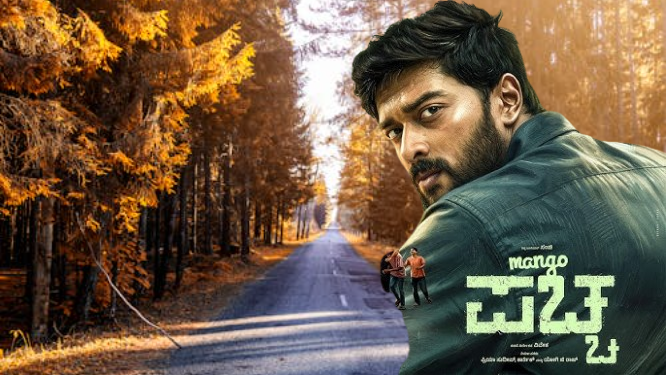
Mango Pachcha Review (2026) – A Mysuru Crime Saga That Hits Hard, But Does It Leave A Scar?
Every once in a while, a debut film arrives with a premise so rooted in local soil that it demands attention. Mango Pachcha is that film for Kannada cinema in 2026.
But does the emotional weight of its protagonist’s journey justify the violence that follows? Let’s dissect this crime drama without the sugarcoating.
Synopsis: The Core Conflict
Prashanth, aka Pachcha, runs a CD rental shop in Mysuru. He lives a quiet life with his mother, brother, and girlfriend. When his father dies, a hidden world is revealed: a secret marijuana empire disguised as marigold farms, and a stepbrother who wants it all.
Pachcha is forced into a brutal drug war, transforming from a naive shopkeeper into a feared kingpin.
Main Cast & Crew
| Role | Name |
|---|---|
| Prashanth “Pachcha” | Sanchith Sanjeev (Junior Kichcha) |
| Suji (Girlfriend) | Kaajal Kunder |
| Nagappa (Antagonist) | Mayur Patel |
| Director & Writer | Viveka Prakash |
| Music | Charan Raj |
| Cinematography | Shekar Chandru |
Section 1: Who Is This Movie For?
This film is for the adult who craves raw, violent crime thrillers set in a specific time capsule. It is not for family audiences or those seeking light entertainment.
If you loved the gritty texture of K.G.F but wanted a narrative that stays smaller and more personal, this is your lane. It is strictly for viewers who can stomach revenge served cold.
Section 2: Script Analysis – A Familiar Climb
The script by Viveka Prakash and Nagbhushan Deshpande follows a predictable rise-to-power arc. The pacing in the first act is deliberately slow, grounding us in Pachcha’s mundane life.
However, the transition from innocent to ruthless feels rushed. The logic holds up within the film’s universe, but a few plot conveniences—like how easily a CD shop owner gets access to the drug pipeline—stretch credibility.
The narrative momentum is steady, but it never surprises you.
Section 3: Character Arcs – Growth or Stagnation?
Pachcha’s arc is the film’s heart. He starts as a passive, kind brother and ends as a calculating kingpin. The tragedy of his father’s death acts as a catalyst, but the emotional toll of his transformation is under-explored.
He becomes violent, but we don’t see him mourn his lost innocence. Nagappa, the stepbrother, remains one-dimensional—evil for the sake of the plot.
Suji (Kaajal Kunder) is reduced to a worried girlfriend, a missed opportunity for a stronger female perspective.
Section 4: The Climax Impact – Satisfying or Hollow?
The climax delivers the promised violence, with Pachcha facing Nagappa in a confrontation that is brutal and visceral. It is cathartic for those who followed his journey, but it lacks the emotional gut-punch of a truly tragic ending.

The resolution feels earned, yet predictable. It does not subvert expectations, leaving the audience satisfied but not haunted.
Screenplay Highs & Lows
| What Worked | What Didn’t |
|---|---|
| Authentic Mysuru 2000s vibe | Predictable rise-to-power arc |
| Sanchith’s raw debut presence | Rushed transformation of protagonist |
| Strong period detailing in sets | Underutilized female lead |
| Emotional father-plot catalyst | One-dimensional antagonist |
Section 5: Writer’s Execution – Dialogue That Lands
The dialogue is sharp, local, and grounded. Viveka Prakash writes lines that feel organic to the streets of Mysuru. The exchanges between Pachcha and his mother, especially in the quiet moments before the violence erupts, carry genuine weight.
However, the political rants by Mayor Mahendra feel heavy-handed, as if the writer is lecturing the audience about the drug menace rather than showing it.
The balance between poetic local lingo and exposition is mostly well-struck.
Section 6: Miss vs Hit Factors – What Went Right and Wrong
Hit: The period authenticity is the film’s strongest asset. From the CD shops to the autorickshaws, you are transported back to 2001-2011 Mysuru.
Hit: Sanchith Sanjeev delivers a physically commanding debut. He doesn’t just act; he embodies the desperation of a man forced into darkness.
Miss: The drug trade logic is simplified. The film glosses over how a local CD shop owner suddenly manages a network of boys and a mayor.

Miss: The violence, while intended to create awareness, sometimes borders on glorification through stylistic slow-motion shots. Hit: Charan Raj’s background score elevates the tension, making the silent moments feel heavier.
Miss: The box office performance (₹0.18 Cr Day 1) suggests the film struggled to find its audience outside hardcore crime drama fans.
Section 7: Technical Brilliance – Music, Cinematography, and Editing
Shekar Chandru’s cinematography is a character in itself. The frame is saturated with the dusty gold of Mysuru’s summer afternoons, contrasting sharply with the dark, humid interiors of the drug dens.
The editing by Sharath V Vashisht is taut in action sequences but drags in the middle act. Charan Raj’s soundtrack is melancholic, with ‘Araginiye’ offering a soft reprieve from the tension.
The sound design is aggressive, with every punch and gunshot vibrating through the theater seats. The VFX is minimal but effective, relying more on practical lighting and set design than CGI.
Story vs. Visuals
| Aspect | Rating / Comment |
|---|---|
| Narrative Depth | 7/10 – Solid but familiar |
| Visual Authenticity | 9/10 – Exceptional period detail |
| Emotional Impact | 6/10 – Lacks deep psychological scars |
| Music Integration | 8/10 – Score elevates the tension |
3 FAQs
1. Is Mango Pachcha based on a true story?
No, but it is heavily inspired by the real-life marijuana trade in Mysuru during the 2000s, aiming to create awareness about the drug menace.
2. Why is the protagonist called ‘Mango Pachcha’?
The nickname ‘Pachcha’ (meaning green in Kannada) refers to the raw, unripe mango—symbolizing his initial innocence and the green marijuana leaves he eventually deals in.

3. Does the film have a post-credit scene?
Yes, there is a brief mid-credit scene showing the beginning of a new rival gang, hinting at a potential sequel.
This analysis is based on the theatrical experience and cinematic merit.
Was this trade analysis helpful?
Your feedback helps Movierullz editors maintain trade database integrity.