Satrangi Badle Ka Khel Movie 2026 Movierulez Review Details
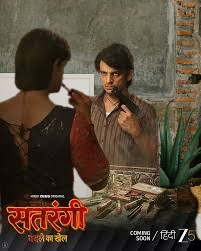
Satrangi: Badle Ka Khel Review – A Calculated Revenge Wrapped in Sequins? The Real Analysis
Can a man’s grief truly be masked by glitter and a ghagra? Jai Basant Singh’s Satrangi: Badle Ka Khel bets everything on that very contradiction.
As a critic who has sat through countless desi revenge sagas, I walked into this seven-episode ZEE5 series with cautious optimism. What I found was a story that swings between brutal authenticity and dramatic convenience, anchored by a lead who refuses to blink.
This is not your typical “thali” entertainment—it is a focused, gritty meal that demands your attention.
Synopsis: The Core Conflict
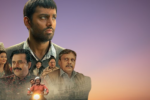
Bablu Mahto’s father is murdered by a feudal politician for the crime of being born into a “lower” caste and daring to perform Launda Naach—a folk art where men dance in women’s attire.
Instead of running, Bablu adopts a dual identity: the everyday man and the performer “Lalli.” He uses the very art form that cost his father’s life to infiltrate the power structures of rural Uttar Pradesh, seeking vengeance while preserving a dying cultural tradition.
It is a plot that sounds like a tightrope walk between melodrama and tragedy; the question is whether the writers found their balance.

Main Cast & Crew
| Role | Name |
|---|---|
| Director | Jai Basant Singh |
| Lead Actor (Bablu/Lalli) | Anshuman Pushkar |
| DSP Pankaj Kumar | Satish Badal |
| Pratap Singh (Antagonist) | Upendra Chauhan |
| Supporting Role | Kumud Mishra |
| Supporting Role | Prateek Kashyap |
| Writers | Dilip Jha, Vikram Khanna, Sharad Tripathi |
| Action Designer | Mukesh Rathod |
Section 1: Who Is This Movie For?
This series does not cater to the casual Netflix scroller looking for a light weekend watch. It is designed for the audience that appreciates gritty social realism wrapped in a thriller structure.
If you enjoyed Paatal Lok or Sacred Games for their unflinching look at power and caste, you are the target. However, it also risks alienating viewers who prefer their revenge stories with high-octane action every 15 minutes—this one breathes slowly, deliberately, often suffocating in its own atmosphere.
Section 2: Script Analysis – Flow, Logic, and Pacing
The script by Dilip Jha, Vikram Khanna, and Sharad Tripathi is a study in controlled tension. The first two episodes are a masterclass in establishing milieu—the heat, the dust, the casual cruelty of the upper-caste landlord.
However, the middle episodes (3-5) suffer from a repetition of beats: Bablu schemes, gets close to the enemy, faces a micro-aggression, and retreats to plan again.
Logic does have its hiccups. A bodyguard with a sharp eye would notice a man who vanishes at odd hours to change into a costume. The writers rely heavily on the suspension of disbelief regarding the “dual identity” trope.
Yet, the dialogue rarely wastes a word, and the episodic cliffhangers are genuinely sharp, forcing you to click “Next Episode.”
Section 3: Character Arcs – Did Characters Grow?
Anshuman Pushkar does more than act; he embodies the conflict. As Bablu, he is a coiled spring. As Lalli, he is not a caricature but a man using performance as armor.

The real growth, however, belongs to the antagonist, Pratap Singh (Upendra Chauhan). He is not a cartoon villain. He is a man who genuinely believes in the hierarchy he was born into, making his eventual downfall feel earned rather than convenient.
The supporting characters, particularly DSP Pankaj Kumar, serve as the moral compass but are given frustratingly little screen time to evolve. They remain functional to the plot rather than living, breathing humans.
Section 4: The Climax Impact – Did the Ending Satisfy?
Without giving spoilers, the final episode achieves what few Indian thrillers manage: a climax that is emotionally devastating but not nihilistic.
The revenge is executed not with a bullet or a knife, but with a public performance that exposes the oppressor’s hypocrisy. It is poetic, yes, but it relies on the villain’s sudden incompetence.
The moment is powerful, but the path to it is slightly too convenient for a series that prided itself on realism.
Screenplay Highs & Lows
| What Worked | What Didn’t |
|---|---|
| Gritty, authentic rural UP dialect | Dual identity logic gets stretched |
| Powerful social commentary on caste | Middle episodes lack momentum |
| Strong thematic use of Launda Naach | Underwritten supporting characters |
| Subtle, character-driven dialogue | Climax relies on villain’s bad luck |
Section 5: Writer’s Execution – Dialogue Quality
The dialogue is where Satrangi shines brightest. There is a line where Bablu says, “Yeh ghagra mera kavach hai, kamzor nahi.” (This skirt is my armor, not my weakness).
That is the thesis of the entire show. The writers avoid poetic Urdu that would feel out of place in a village setting, opting instead for the blunt, often cruel simplicity of the Bhojpuri belt.
The political discussions feel natural, not like a lecture.
Section 6: Miss vs Hit Factors – What Went Right vs Wrong
The Hit: The show’s courage to center a stigmatized art form and frame it as a weapon of resistance is its greatest victory. It avoids the voyeuristic gaze often applied to queer or cross-dressing narratives by focusing on Bablu’s agency.
The Miss: The series is simply too short. Seven episodes do not give the side characters time to breathe. Kumud Mishra and Prateek Kashyap are talented actors, but they function as chess pieces rather than co-conspirators.
The show needed at least two more episodes to flesh out the emotional cost of Bablu’s double life—the loneliness of being Lalli.
Section 7: Technical Brilliance – Music, Cinematography, and Editing
The cinematography captures the claustrophobia of feudal structures—low ceilings, narrow alleys, and wide, empty fields that make the characters look small. The sound design by Wasim Ahmad Ansari is subtle but effective; the jingling of payal in a tense scene is used to unnerving effect.
The editing could have been sharper. Some scenes, particularly the Launda Naach performances, linger a second too long, breaking the rhythm. The music track “Chanda Mama” is haunting but underused in the series itself.
Story vs. Visuals
| Aspect | Rating / Comment |
|---|---|
| Narrative Depth | 8/10 – Socially bold, emotionally layered |
| Cinematography | 7/10 – Authentic but occasionally flat |
| Action Choreography | 6/10 – Functional, not groundbreaking |
| Cultural Authenticity | 9/10 – Respectful and researched |
FAQs
1. Is Bablu based on a true story?
No, the character is fictional, but the series is inspired by the real cultural practice of Launda Naach and caste violence in Bihar/Uttar Pradesh.
2. Why does Bablu choose to cross-dress for revenge rather than using violence?
The show argues that he is reclaiming the art form his father was killed for. It is a symbolic act of defiance against the caste system that humiliated his family.
3. Does the series have a second season?
As of its May 2026 release, ZEE5 has not confirmed a renewal. The ending is conclusive enough to work as a limited series.
This analysis is based on the theatrical experience and cinematic merit.
Was this trade analysis helpful?
Your feedback helps Movierullz editors maintain trade database integrity.