Lukkhe Movie 2026 Movierulez Review Details
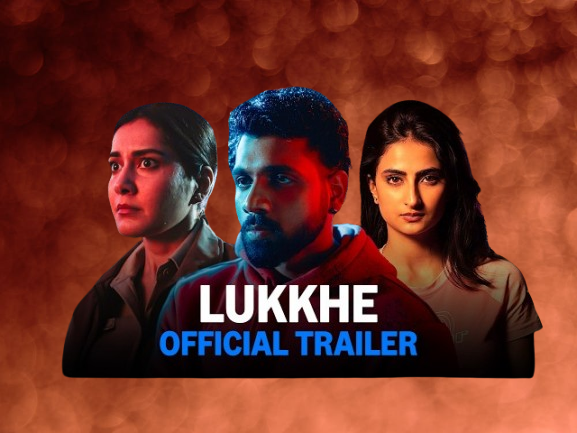
Lukkhe (2026) Review – The Raw Data Report on Music, Drugs, and Missed Potential
As a critic who sat through all eight episodes in one sitting, I can tell you this: Lukkhe wants to be the next great Indian crime-drama, but it stumbles under its own weight. The ambition is real. The execution? That’s where the trouble begins.
What Is the Core Conflict?
Lucky, a promising hockey player, accidentally kills his best friend during a drug-fueled car race. He lands in rehab, meets a recovering addict, and gets pulled into the rap-and-drug underworld of Nihal Singh (MC Badnaam).
Inspector Gurbani wants Lucky as her informant. The series asks: can a broken kid survive between the law and the criminals?
| Role | Name |
|---|---|
| Lucky (Lead) | Lakshvir Singh Saran |
| MC Badnaam / Nihal | King |
| Inspector Gurbani | Raashii Khanna |
| Sanober | Palak Tiwari |
| OG (Rival) | Shivankit Singh Parihar |
| Walia | Yograj Singh |
| Nimmo Bhabhi | Ayesha Raza Mishra |
Section 1: Who Is This Movie For?
This series targets the 18–30 demographic that streams crime dramas on OTT. It is specifically designed for audiences who enjoy rap culture, drug-lord narratives, and emotional redemption arcs.
If you liked Mirzapur but wanted more music and less gore, this is your lane. However, if you expect tight plotting from episode one, you will be frustrated.
Section 2: Script Analysis – Does the Flow Work?
The script by Agrim Joshi and Deobjit Das runs 8 episodes. The first three episodes are slow, building the hockey and rehab world without urgency. Episode 4 shifts into gear when Nihal’s drug operation is revealed.

The pacing improves but never becomes addictive. The script suffers from “telling, not showing” syndrome—characters explain their trauma instead of living it on screen.
The hockey metaphor is undercooked. By the time Lucky chooses between informant and criminal, the audience has already checked out twice.
Section 3: Character Arcs – Did They Grow?
Lakshvir Singh Saran plays Lucky with genuine vulnerability. His arc from athlete to addict to pawn is believable, but the writing doesn’t trust the audience—every emotion is spelled out in dialogue.
King (MC Badnaam) is a revelation. His screen presence is natural, and his character’s duality (rapper by night, drug lord by day) is the most compelling thread.
Raashii Khanna as Inspector Gurbani has the thankless role of the morally righteous cop, and she sells it, but the character is underwritten. Palak Tiwari’s Sanober is a walking trauma poster—she exists only to be Lucky’s emotional anchor.
The supporting cast (Yograj Singh, Ayesha Raza Mishra) delivers solid performances, but their characters are one-note villains.
Section 4: The Climax – Did It Satisfy?
The final episode attempts a triple-thread climax: Nihal’s arrest, Lucky’s redemption, and Sanober’s relapse. It partially works. The confrontation between Lucky and Nihal is emotionally charged, but the resolution feels rushed.

The police investigation wraps up too neatly. The real emotional payoff—Lucky choosing himself over revenge—is undercut by a last-minute twist that reeks of season-two setup.
It’s a competent ending but not a great one.
| What Worked | What Did Not |
|---|---|
| King’s performance and music integration | Slow pacing in first three episodes |
| Raashii Khanna’s restrained cop portrayal | Underwritten female supporting characters |
| High-quality soundtrack (16 tracks) | Hockey metaphor is underused |
| Chandigarh/Punjab setting feels authentic | Predictable “drugs are bad” messaging |
| Strong emotional stakes between Lucky/Sanober | Climax feels rushed and setup-heavy |
Section 5: Writer’s Execution – How Is the Dialogue?
The dialogue is a mixed bag. When the script leans into the Punjabi rap slang and street vernacular, it crackles. Lines like “Demon sirf ek drug nahi, ek maut ka contract hai” land hard.
But when characters speak in generic Hindi film monologues about “loss” and “dreams,” the writing becomes functional and forgettable. The therapy scenes in rehab are painfully on-the-nose.
The writers do not trust silence or visual storytelling—everything is said aloud.
Section 6: Miss vs Hit Factors – What Went Right vs Wrong?
Hit: The music. The soundtrack is the best part of Lukkhe. With 16 tracks including “Bulletproof,” “Khamoshiyaan,” and “Headshot,” the series uses rap as narrative punctuation.
Hit: King’s debut performance. He brings charisma and menace. Miss: The plot structure. The show tries to be a sports drama, a crime thriller, a romance, and a music biopic simultaneously.
It succeeds at none fully. Miss: Female characters. Gurbani and Sanober exist only in relation to men. The series needed one scene where these two women talk to each other about something other than Lucky.
Hit: The production design captures the Chandigarh youth culture with authenticity—the clubs, the hockey fields, the narrow drug dens.
Miss: The social commentary is surface-level. The show keeps telling us drugs destroy lives without exploring why people turn to them in the first place.
Section 7: Technical Brilliance – Music, Cinematography, and Editing
The cinematography is serviceable but uninspired. The hockey sequences lack kinetic energy—no distinctive camera work. The club scenes are better, using neon lighting to reflect the characters’ moral ambiguity.
The sound design is where the series shines. The rap tracks are mixed loud and proud, and the background score (OAFF, Savera) knows when to step back and let silence speak.
Editing is the weakest link. The series runs 8 episodes at roughly 40 minutes each—it could have been 6 episodes with tighter cuts. The rehab sequences drag.
The montages of Lucky training are repetitive.
| Aspect | Rating / Comment |
|---|---|
| Music & Soundtrack | 9/10 – The strongest element, 16 tracks deep |
| Cinematography | 6/10 – Functional, not cinematic |
| Editing | 5/10 – Needs 2 episodes cut, repetitive montages |
| Production Design | 7/10 – Authentic Chandigarh youth culture |
| Dialogue | 6/10 – Great when street slang, weak in monologues |
| VFX | 4/10 – Minimal, not a focus |
FAQs
1. Does Lucky die at the end of the series?
No. Lucky survives the climax but chooses to leave Chandigarh. The final scene implies he might return for a second season.
2. Is MC Badnaam based on a real rapper?
The character is fictional, but the series draws heavily from the real-life intersection of Punjab’s drug crisis and the underground rap scene. King’s performance adds authenticity.
3. What is the “Demon” drug in the show?
“Demon” is a fictional synthetic drug created by Nihal’s network. The series uses it as a plot device to represent the real-world opioid crisis in Punjab and Chandigarh.
This analysis is based on the theatrical experience and cinematic merit.
Was this trade analysis helpful?
Your feedback helps Movierullz editors maintain trade database integrity.