Yellow Yellow Dirty Fellow Movie 2026 Movierulez Review Details
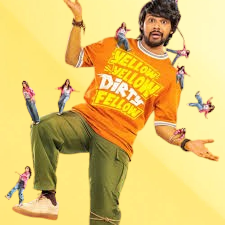
Yellow Yellow Dirty Fellow (2026) Review – A Shallow Wannabe Or A Smart Satire? The Unfiltered Truth
Has Tamil cinema finally found its voice on the chaotic, curated world of Instagram love? Or is this just another noisy commercial vehicle that mistakes volume for depth? I walked into the theater expecting a commentary. I left with mixed signals.
Synopsis – The Core Conflict Made Simple
Karthi, an aspiring influencer played by Rudra, lives his life for the ‘gram. He fakes luxury, edits reality, and chases validation. His entire world collides with Nandhini, a grounded architect (Preethi Asrani) who values authentic connection over curated perfection.
The film explores whether digital personas can survive analog love.
| Role | Name |
|---|---|
| Lead (Male) | Rudra |
| Lead (Female) | Preethi Asrani |
| Supporting Actor | Karunakaran |
| Supporting Actor | Chetan |
| Actress | Devadarshini |
| Actress | Anupama Kumar |
| Comic Relief | Jenson Diwakar |
| Director | Vikkie Bhaskar |
| Producer | Sanjay Arjundas Wadhwa |
Section 1: Who Is This Movie For?
This film targets the 18-30 demographic. If you spend more than three hours daily on reels, this is aimed directly at your dopamine receptors. It also appeals to parents trying to understand why their children obsess over ‘likes.’ However, it fails to satisfy hardcore drama lovers seeking psychological depth.

Section 2: Script Analysis – A Leaky Vessel of Ideas
The first act sets up Karthi’s obsession with virality effectively. The problem begins in the second act where the script meanders into generic romantic tropes.
The logical consistency of character decisions is weak—why does Nandhini tolerate manipulation for so long? The pacing flags in the middle, relying on montage sequences instead of organic conflict.
Section 3: Character Arcs – Did Anyone Actually Grow?
Rudra’s Karthi undergoes a classic ‘awakening’ arc, but the transformation feels rushed. One viral failure, and suddenly he is a monk? Preethi Asrani’s Nandhini is written as a saintly counterpoint with little agency of her own.
Karunakaran’s side role provides genuine comedic relief but lacks narrative purpose. The supporting cast is underutilized, especially Anupama Kumar’s mother figure, who disappears after thirty minutes.
Section 4: The Climax Impact – A Satisfying Resolution?
The climax attempts a public confrontation between the influencer and his followers. It is visually chaotic and thematically smart, but the emotional payoff is compromised by over-editing.

The final revelation about Karthi’s past trauma feels tacked on, as if the writers needed a heavier reason for his addiction to validation. It works as entertainment, fails as catharsis.
| What Worked | What Didn’t |
|---|---|
| Authentic depiction of influencer culture | Rushed character transformation |
| Strong cinematography in urban spaces | Unresolved side plots (Chetan’s arc) |
| Preethi Asrani’s grounded performance | Over-reliance on social media jargon |
| Effective use of background score | Weak antagonist motivation |
| Relatable opening act setup | Predictable love-conflict resolution |
Section 5: Writer’s Execution – Dialogue Hits and Misses
Director Vikkie Bhaskar writes dialogue that lands when satirical. Lines like “Nee upload pannadhu un life ah illa un filter ah?” (Did you upload your life or your filter?) are sharp.
However, romantic exchanges between Rudra and Preethi are painfully clichéd. The comedy tracks with Jenson Diwakar work best because they avoid moralizing.
The writer struggles to balance satire with sentiment, often choosing the easier path of a melodramatic speech.
Section 6: Miss vs Hit Factors – What Went Right, What Collapsed
Hit: The film nails the visual language of Instagram—the fake brunches, rented cars, and desperate group photos. This authenticity is rare in Tamil cinema.
Miss: The female lead is a cardboard cutout of a ‘traditional’ woman used solely as a contrast to the protagonist’s shallowness.

She has no flaws, no desires of her own.
Hit: The editing in the first thirty minutes is kinetic and mirrors scrolling behavior.
Miss: The second half drags with unnecessary songs and repetitive arguments.
Hit: Karunakaran’s timing saves several dragging scenes.
Miss: The film never commits to fully condemning or endorsing influencer culture.
It wants to have its cake and eat it too.
Section 7: Technical Brilliance – Music, Cinematography, Editing
The soundtrack serves the narrative but lacks a standout ‘anthem.’ The cinematography effectively uses close-ups and rapid cuts to mimic social media feeds.
Editing is crisp in the first act but loses discipline in the emotional sequences. The color grading shifts from saturated neon tones in Karthi’s scenes to muted, natural colors in Nandhini’s world—a smart visual cue that works.
However, the sound mixing occasionally buries dialogue under background beats.

| Aspect | Rating / Comment |
|---|---|
| Story Depth | 6/10 – Relevant concept, shallow execution |
| Visual Aesthetics | 8/10 – High production design, great urban frames |
| Music Integration | 7/10 – Functional but not memorable |
| Performance Quality | 7.5/10 – Preethi excels, Rudra tries |
| Emotional Impact | 5/10 – Missed potential for genuine tears |
3 FAQs
Is Yellow Yellow Dirty Fellow based on a true story?
No. The film is a fictional narrative that uses real-world influencer culture as its backdrop. No specific real-life individuals are portrayed.
Does the movie have a post-credit scene?
Yes. A short post-credit scene shows Karthi confronting a younger version of himself in a mirror. It is a meta-commentary on personal branding. Worth staying for.
Is the film suitable for family viewing?
Largely yes. It is a clean romantic entertainer with no explicit content. Some cynical remarks about modern dating may require parental context for younger teens.
This analysis is based on the theatrical experience and cinematic merit.
Was this trade analysis helpful?
Your feedback helps Movierullz editors maintain trade database integrity.